Biography
Pope Felix III
About Pope Felix III
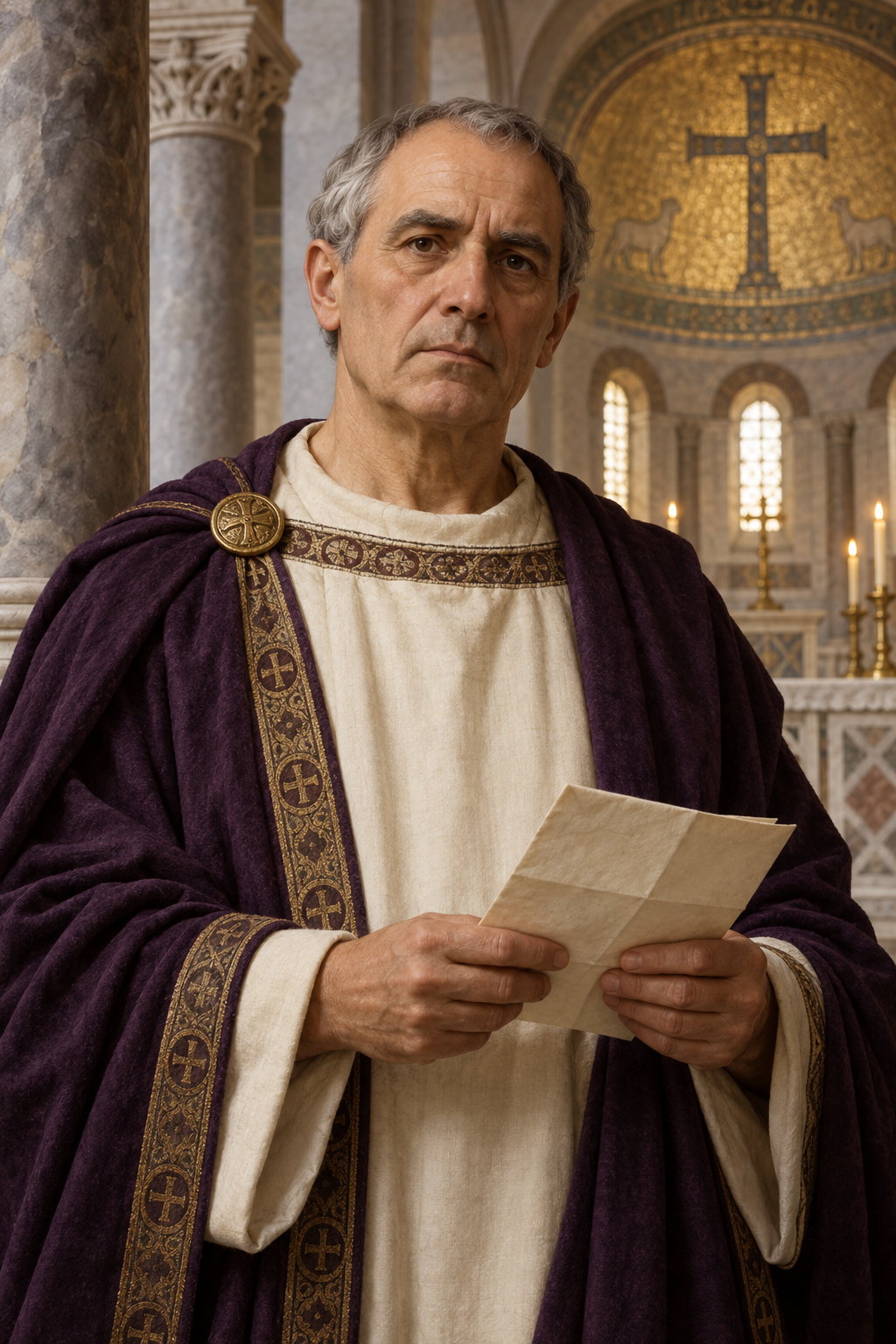
Felix III came from Rome, according to the Holy See's papal list. Treccani finds it probable that he belonged to the Anicii family and describes evidence that he had a wife and children before his papacy. Their inscriptions at St. Paul Outside the Walls make that family history more concrete than many later claims about his ancestry. Treccani rejects the common story that he was the great-grandfather of Gregory the Great. Felix had served as a deacon in the Roman clergy when Simplicius died in 483. The Holy See dates his pontificate from March 13 of that year. Italy's political situation was unsettled after the end of western imperial rule, and Rome's church also faced strained relations with Constantinople. These conditions shaped his ministry from its beginning.The major dispute concerned the teaching and reception of the Council of Chalcedon. Emperor Zeno's Henotikon sought agreement among competing eastern groups, but its omissions and the recognition of Peter Mongus in Alexandria alarmed Felix and other Chalcedonian bishops. Felix sent letters and delegates to the emperor and Patriarch Acacius of Constantinople. Treccani's detailed study shows the process was politically and personally complex: delegates did not carry out the mission as Felix expected, and reports from eastern monks and clergy sharpened the conflict. In 484 a Roman synod judged Acacius and broke communion with him. This is the beginning of the Acacian schism, not a moment when Felix restored all unity. The rupture continued beyond his lifetime.Felix also faced pastoral questions from North Africa. Under Vandal rulers, some Catholics had been pressured into receiving Arian rebaptism, and later sought to return. The Catholic Encyclopedia reports a 487 synod and a letter to African bishops setting conditions for their reception. This issue differs from the eastern dispute even though both concerned boundaries of communion. Describing the people involved as simply traitors would hide the pressure under which they lived; saying everyone returned automatically would ignore the deliberation recorded by the sources. Felix's response was institutional and pastoral, worked through other bishops, rather than an isolated private gesture. It shows that the papacy's responsibilities in this period reached communities far from Rome.His family and burial history also need care. Treccani reports inscriptions for his wife Petronia and children Paula, Gordianus and Emiliana, along with the burial of Felix's father at St. Paul Outside the Walls. Felix himself was buried there, a distinctive choice connected with family graves. These records support a former household; they do not establish every later genealogy repeated in saints' calendars. The older February 25 Roman martyrology calls Felix Gregory the Great's great-grandfather and includes a story of an appearance to Tarsilla. Treccani rejects the genealogy, and the reported appearance belongs to devotional tradition rather than an independently documented episode. The current profile records the firm family evidence without encoding the doubtful connection.Felix died early in 492, but the precise day is uncertain. The Holy See lists February 25 or March 1, and Treccani explains how different calculations produced those alternatives. Storing only the year respects that evidence. Vatican News currently lists him March 1, whereas the older Roman martyrology has a direct February 25 commemoration; the latter can be preserved as a historical observance without treating it as a certain death date. His record uses Bishop as the documented class. The portrait's folded letter alludes to real correspondence but is an imagined scene. Felix's lasting historical importance lies in choices that shaped a long church division and in his handling of return to communion in Africa; neither process was finished by one pope alone.
Wondering how to weigh the stories and sources? Learn how to read a saint biography.