Biography
Pope Felix IV
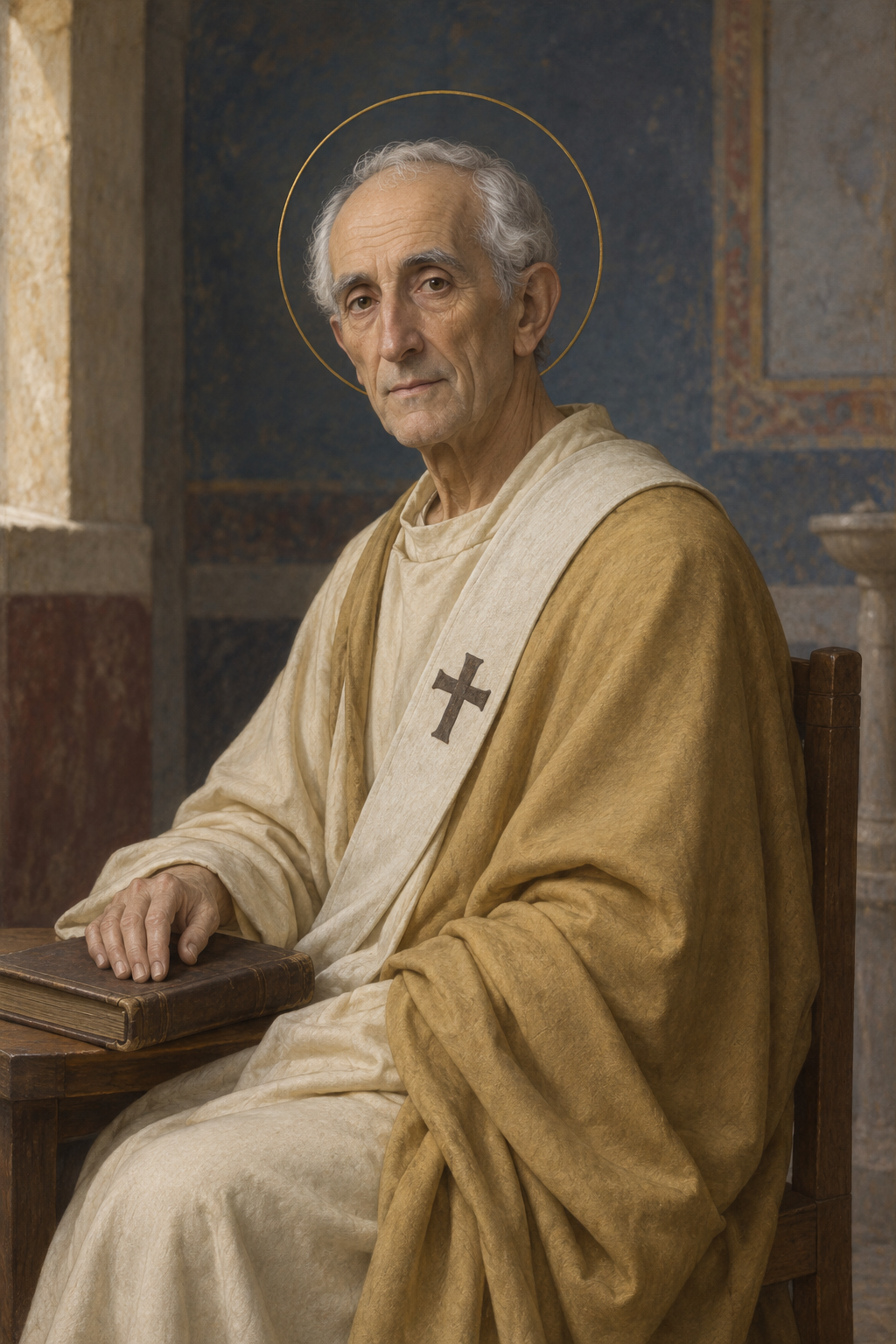
About Pope Felix IV
Felix IV was bishop of Rome from 526 to 530. He came from Samnium, in southern Italy. The Vatican catalog dates the beginning of his pontificate to 12 July 526 and gives two possible days for its end, 20 or 22 September 530.
His predecessor, John I, had died in prison at Ravenna after falling out with the Ostrogothic king Theodoric. Felix was selected with the king’s support and accepted by the Roman clergy and people. Theodoric died shortly afterward, leaving his young grandson Athalaric as king, with the boy’s mother Amalasuntha governing during his minority. Felix’s pontificate therefore began amid a change in both ecclesiastical and royal leadership. Kirsch names his father as Castorius and records the interval between John’s death in May and Felix’s consecration in July. The royal preference operated within the process by which the Roman clergy and people received their new bishop, giving his election an unusually visible connection with the court.
A royal letter preserved by Cassiodorus congratulated the Senate on its response to Theodoric’s choice. It praised the fitness of the new bishop despite the difference between the king’s religion and that of the Roman Church. The letter also called for earlier quarrels to end. Its language expresses the court’s wish for harmony; it does not erase the tensions surrounding an election in which the ruler had intervened.
Another royal letter addressed complaints that Roman clergy were being harassed through legal proceedings. It directed that a complaint first be brought before the pope or his delegate. A person whose reasonable petition was refused could then seek a secular hearing. Bypassing the initial ecclesiastical hearing incurred a fine, assigned to relief of the poor. The arrangement gave Felix a judicial role while retaining a route of appeal beyond his court. The stated penalty was ten pounds of gold, to be distributed through the pope.
Felix’s surviving correspondence also shows his concern with preparation for ordination. Writing to Caesarius of Arles, he opposed promoting laymen to priestly office before a period of testing. The letter describes the harm caused when an ordained man returned to secular habits. It calls for careful examination, trustworthy testimony and observance of the canons. Ecclesiastical rank was to follow tested conduct rather than the speed of a candidate’s advancement.
In a dispute between Ecclesius of Ravenna and his clergy, Felix received petitions from both sides and set out a settlement. His ruling addressed the division of church income, the keeping of accounts and the preservation of documents. It protected the clergy’s allotted support while requiring order in the administration of property. Concern for the poor’s food appears alongside these practical requirements. The decree joins rules about conduct to the daily means by which a church maintained its people. The agreement also required property inventories to be preserved.
His most visible Roman foundation was the church of Saints Cosmas and Damian, made from existing buildings beside the Forum with royal assistance. Its mosaic placed the pope among the figures presenting the church to Christ. Sansterre cautions that the figure of Felix visible today was reconstructed in the seventeenth century after the earlier figure had been destroyed. It cannot be treated as an untouched portrait from his lifetime.
The basilica’s official history connects its foundation with the adaptation of former public buildings for Christian worship. Later generations repeatedly altered the complex. A major seventeenth-century rebuilding divided the ancient space into two levels, changing the relationship between the entrance and the church. The building that bears witness to Felix’s foundation thus preserves several periods of use. Its continued life as a church has outlasted the royal administration under which the original conversion took place.
Felix also took part in the southern Gallic controversy about grace and human freedom. The collection of doctrinal statements used at the Council of Orange in 529 had a Roman connection, although scholars have differed over the stages of its composition and transmission. The council’s later papal confirmation came from Boniface II in 531, after Felix’s death.
When seriously ill, Felix attempted to secure the succession by entrusting his pallium to the deacon Boniface. His direction required its return if he recovered. Sansterre relates this intervention to anxiety about disputed elections and their financial consequences for the clergy and poor. Felix died in September 530 and was buried before the Vatican basilica. His later commemoration moved from 30 January to 22 September in 1922.
His choice did not prevent a division. Gabriella Braga’s study records that most of the clergy supported Dioscorus, while Boniface also received consecration. The disagreement involved the freedom of the clergy and people to elect their bishop, as well as political alignments. Dioscorus died on 14 October 530, ending the immediate split. The treatment of his supporters and his memory remained contentious: a later pope, Agapitus, publicly burned the document condemning him. Felix’s effort to settle the future had left a difficult inheritance.
Wondering how to weigh the stories and sources? Learn how to read a saint biography.