Biography
Pope Gregory II
About Pope Gregory II
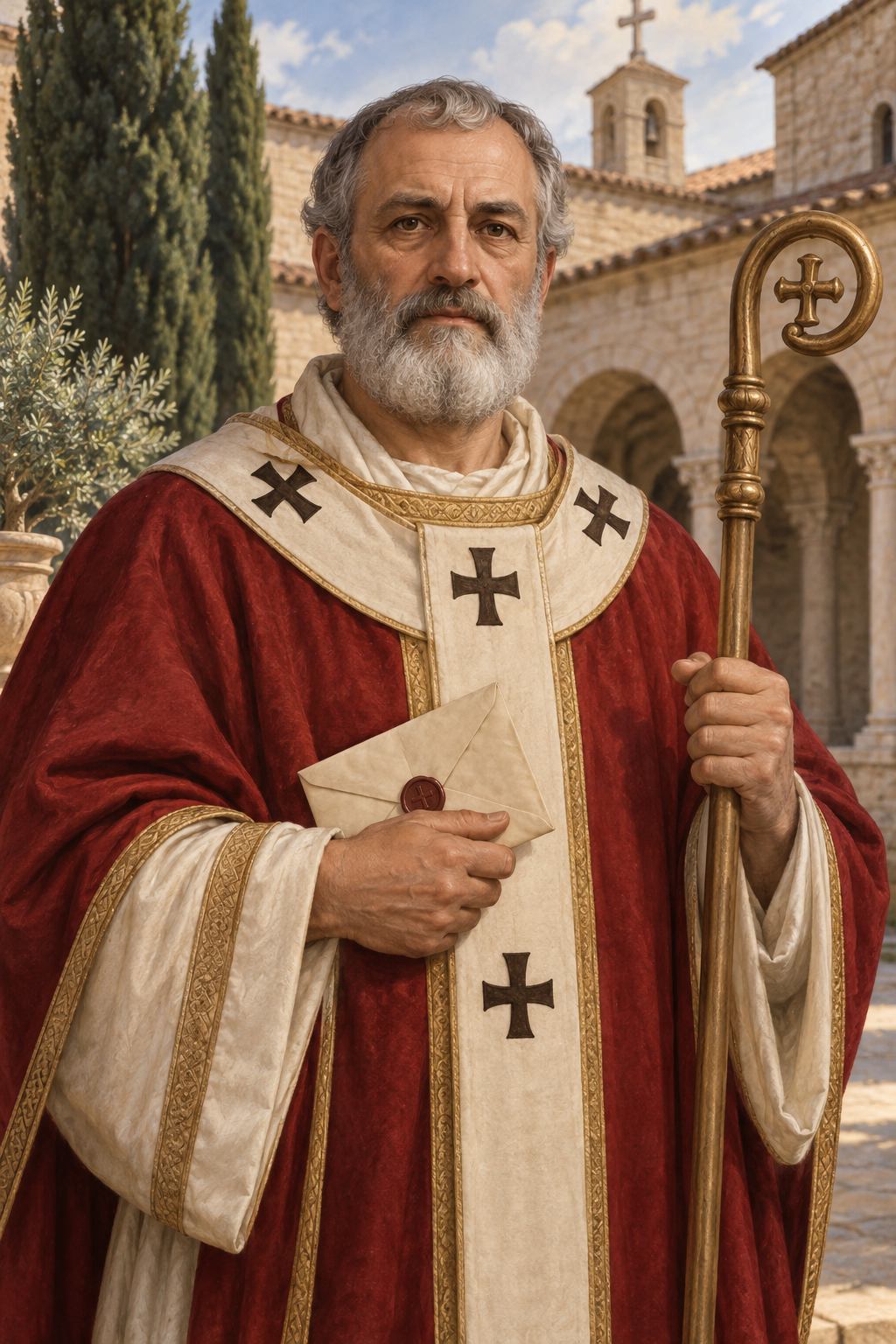
Gregory II was born in Rome, according to the Holy See's papal list. The historical references describe his service in the Roman church before his election and his experience with administration and diplomacy. The Holy See dates his pontificate from May 19, 715, to February 11, 731. These years brought pressure on central Italy from Lombard rulers, continuing ties to the Byzantine empire, and wide questions about Christian teaching and worship. A biography need not invent a detailed childhood or a private account of how Gregory made every decision. The surviving records are most helpful where they identify his office, correspondence, and the concrete relationships through which he acted. His public work was not confined to Rome, though Rome remained the place from which he wrote and governed.One of his clearest lasting contributions was support for Boniface, the English missionary also called Wynfrith. A 719 letter from Gregory commissions him to preach and organize Christian life among peoples beyond the Rhine. The letter gives the pope's direction in his own words, while the work on the ground belonged to Boniface and those with him. A later Holy See commemoration recounts that Gregory continued to support Boniface and consecrated him a bishop. The relationship involved repeated correspondence and requests for advice rather than a single ceremonial send-off. This makes Gregory part of the story of missions in central Europe without erasing the agency of local people, Boniface, or subsequent popes who continued that work.In Italy, Gregory had to deal with the advance and negotiations of Lombard powers as well as imperial officials. Treccani describes shifting alliances, contested authority, and local efforts to keep Rome and neighboring communities safe. Gregory's choices cannot be reduced to an uncomplicated campaign of independence from Constantinople or to one personal war against the Lombards. Politics and pastoral care met in decisions about property, protection, and communication. Older accounts sometimes portray every move as a direct path to later papal temporal power. The critical study gives a more gradual picture, in which local circumstances and other leaders mattered. This part of his pontificate is significant, but its motives and outcomes should not be stated with more certainty than the evidence allows.The dispute over sacred images intensified toward the end of his pontificate. Emperor Leo III's iconoclast policy was opposed in Rome, and Treccani describes Gregory's response within the wider political troubles of the period. The Catholic Encyclopedia warns that two famous condemnatory letters attributed to Gregory may not be genuine. The profile can therefore say he resisted the policy without quoting those letters as his certain words or making him the author of every uprising. Gregory III, his successor, held a Roman synod in 731 that took further action on images; that event should not be moved backward into Gregory II's own record. The issue involved many Christian communities and political authorities, not a private dispute between two men alone.Gregory died on February 11, 731, the date given by the Holy See and the current Vatican News saint calendar. The older Roman martyrology instead lists his commemoration on February 13, a historical calendar difference that should remain visible rather than be confused with a second death. The catalog therefore uses February 11 for the primary Catholic feast and records February 13 separately as an older observance. His portrait is an imaginative bishop holding a symbolic letter, not a likeness or a reconstruction of the 719 document. His influence is best seen in sustained support for Boniface, pastoral governance in Italy, and an early response to the image controversy, with clear limits on what he alone can be credited for.
Wondering how to weigh the stories and sources? Learn how to read a saint biography.