Biography
Pope Gregory VII
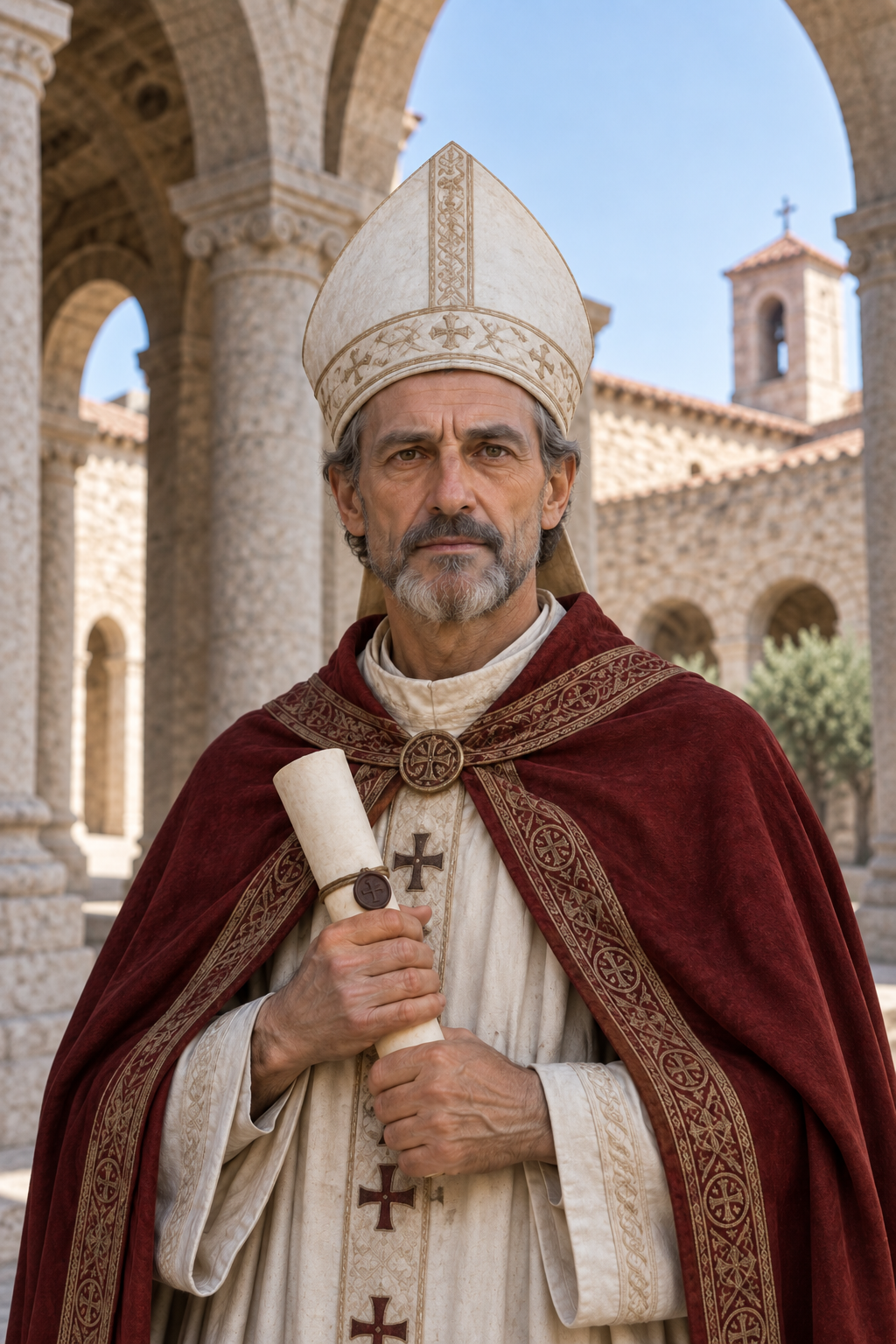
About Pope Gregory VII
Gregory VII, known before his election as Hildebrand, spent years helping earlier popes govern before becoming pope himself. His early life is uncertain: the historian Ovidio Capitani places his birth approximately between 1025 and 1030, probably in Tuscany. The familiar account of a childhood at Soana is less secure. By the 1050s, however, he was already undertaking difficult assignments beyond Rome, including a mission to Germany and an investigation of conflict within the church of Milan.
Under Leo IX, Hildebrand served as a subdeacon and worked on papal finances. He also helped restore discipline at the monastery of Saint Paul Outside the Walls. A mission to Tours brought him into the controversy surrounding Berengar's teaching on the Eucharist. These responsibilities joined administration, religious discipline and disputed doctrine well before Hildebrand occupied the papal office.
After his election in 1073, Gregory confronted Henry IV over the king's dealings with the Church. In a warning letter, he challenged appointments to Milan, Fermo and Spoleto and Henry's association with excommunicated advisers. Yet the warning also offered further discussion: Gregory proposed sending envoys to consider how discipline might be applied.
Henry answered with an attack on Gregory's fitness to govern. His letter accused the pope of mistreating bishops and demanded that he relinquish his office. The bishops assembled at Worms likewise withdrew their obedience. Their letter protested that Gregory had concentrated authority in his own hands and had undermined their position among their congregations. These were the accusations of his opponents, not an impartial account of his conduct. Their refusal to recognize him nevertheless made the quarrel more than a disagreement about one appointment: Gregory faced a concerted challenge from a king and a body of bishops who denied his right to command them.
Gregory excommunicated Henry in 1076. The following winter brought the king to Canossa. Gregory's own report describes Henry waiting outside in penitential clothing for three days. Those around the pope urged mercy, and Gregory absolved him on January 28, 1077. He did not describe this reconciliation as a final settlement of the political dispute; the king's standing among the German princes remained to be resolved.
Negotiation mattered alongside the visible penance. In Lampert of Hersfeld's account, Hugh of Cluny, Matilda of Tuscany, Adelaide of Turin and other intermediaries worked to obtain Gregory's agreement. The pope initially wanted the dispute heard at the planned assembly in Germany. The intermediaries pressed the urgency of Henry's situation and sought less severe terms. This narrative presents a pope being persuaded through sustained discussion, rather than an encounter decided simply by the spectacle at the castle gate.
Matilda and Adelaide were not merely observers supplying emotional appeals. Their landed power, connections and ability to arrange contact made them consequential participants in the encounter. Gregory's relations with these women were part of the practical diplomacy through which he attempted to exercise authority.
Canossa did not end Gregory's difficulties in Germany. Absolution restored Henry to communion without reconciling him to all his political enemies. The projected meeting at Augsburg never took place, and the princes subsequently elected a rival king. Gregory's act of reconciliation therefore left him dealing with a struggle that a penitential ceremony could not itself resolve.
His claims also met a firm limit in England. William the Conqueror's reply to Gregory reports a demand, carried by the legate Hubert, for fealty and for money customarily sent to Rome. William agreed to the payment but refused fealty, saying that neither he nor his predecessors had undertaken it. The letter closes with a request for Gregory's prayers, maintaining a relationship despite rejecting that claim.
As conflict reached Rome, sustaining resistance raised difficult questions about church resources. A report from an assembly of Roman clergy in 1082 records a refusal to pledge ecclesiastical property to finance fighting against Wibert, Gregory's rival. The participants distinguished military expenditure from provision for worship, poor people and captives. The report does not establish Gregory's presence, but it shows the constraints argued within the Roman Church during his struggle.
Henry eventually occupied Rome, while Gregory held out in Castel Sant'Angelo. Robert Guiscard's forces rescued him in 1084, but their intervention brought devastating violence to the city. Gregory left Rome and spent the end of his pontificate at Salerno. He continued to govern there and held a final council rather than surrendering his claim to the papacy.
His last months were not spent entirely alone. Cowdrey's account of his death places bishops, cardinals and chaplains around him and identifies Desiderius of Monte Cassino among the witnesses to his final illness. Gregory died on May 25, 1085.
Gregory's conviction that the Church needed freedom from domination remained central to his later remembrance. Visiting Salerno in 1985, John Paul II placed his struggle within a medieval society where religious and political responsibilities were deeply intertwined. That setting matters: Gregory was not proposing modern separation of church and state. He sought freedom for the Church's mission within the institutions of his own time, and his pursuit brought both influential reforms and bitter, unresolved conflicts.
Wondering how to weigh the stories and sources? Learn how to read a saint biography.
Explore similar vocations
Prayers for Pope Gregory VII
Pope Gregory VII: petition
Make us courageous in condemning evil.