Biography
Pope Hilarius
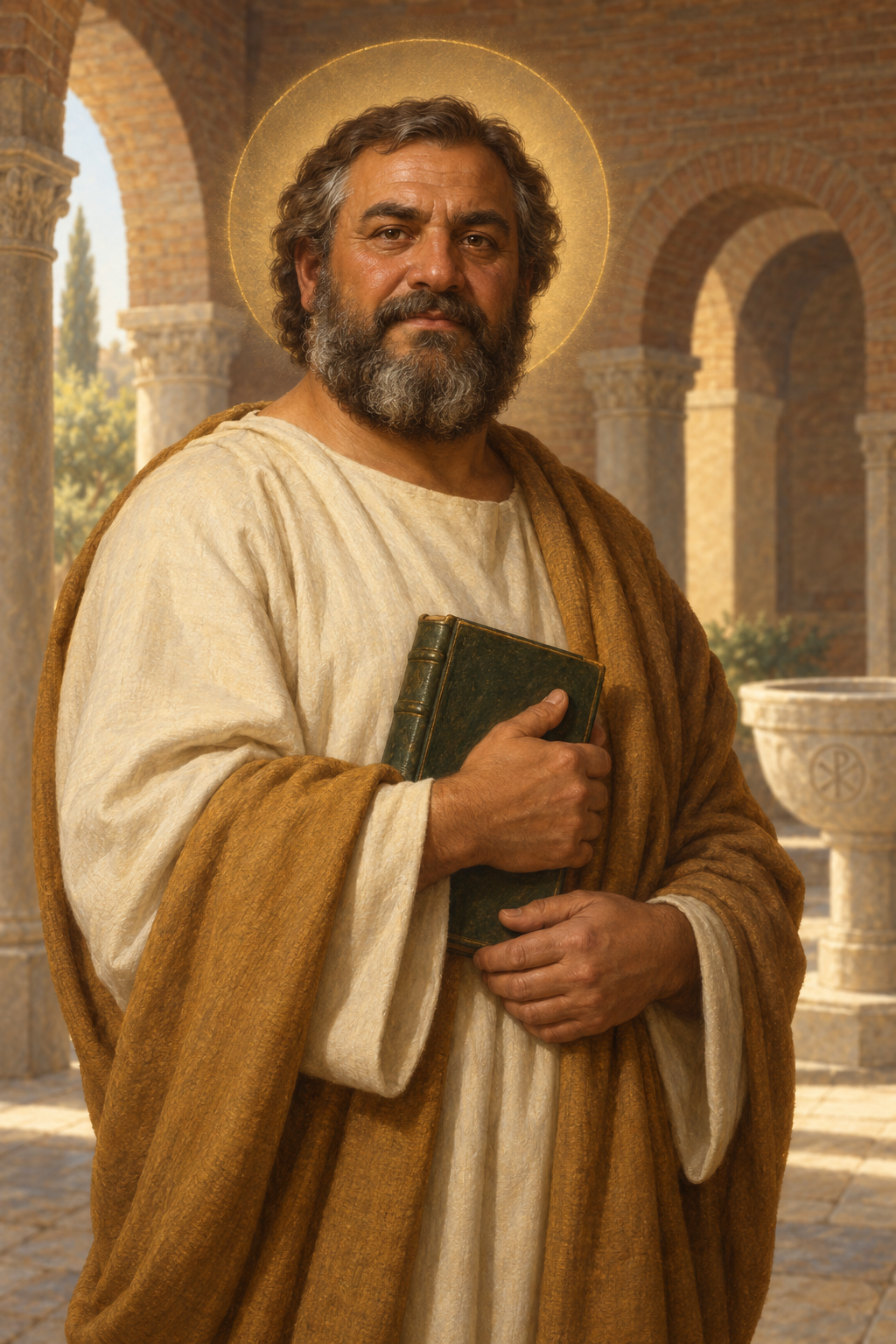
About Pope Hilarius
Hilarius, also called Hilarus, was born in Sardinia, the son of Crispinus. His birth date and move to Rome remain obscure. By 449 he was a deacon trusted by Pope Leo, who sent him with other representatives to a council at Ephesus. The mission shaped his earlier ministry.
The council reconsidered the condemnation of Eutyches, a monk accused of an erroneous understanding of Christ’s humanity and divinity. Hilarius opposed the deposition of Flavian, bishop of Constantinople. Pennacchio notes that the surviving proceedings preserve his protest in Latin. The gathering became known to its opponents as the Robber Council of Ephesus, and its decisions intensified a conflict that the Council of Chalcedon would address two years later.
Hilarius’s own letter to Empress Pulcheria describes the danger from his perspective. He explains that he had intended to reach Constantinople after the council and deliver Leo’s letter. He accuses Dioscorus of Alexandria of trying to force his agreement to Flavian’s condemnation or prevent his departure. He presents his refusal as fidelity to a man he believed innocent.
In the second part of the letter, he says that he left everything behind and escaped through unfamiliar and difficult country to Rome. There he reported what had happened. He tells Pulcheria that Leo and the Western council rejected the proceedings as contrary to the canons, and urges her to continue her support. The letter is a personal witness to his mission and escape, as well as a defense of the Roman response.
Back in Rome, he became archdeacon. Leo later entrusted him with work on the disputed calculation of Easter. Hilarius turned to Victorius of Aquitaine, whose resulting Easter cycle attempted to reconcile differing practices. After Leo’s death, Hilarius was elected bishop of Rome in 461. His papacy brought the same concern for order into disputes among Western bishops.
In Gaul, one dispute concerned Hermes of Narbonne. Rusticus had nominated him as successor, and the clergy and people accepted him after Rusticus died. The matter reached Rome through a complaint. A Roman synod allowed Hermes to retain the see but removed its metropolitan rank. Barmby’s historical account places this decision within Hilarius’s efforts to uphold the authority of Arles and the Roman see.
Mamertus of Vienne created another difficulty by ordaining a bishop for Die, a church claimed within Arles’s jurisdiction. Hilarius directed Leontius of Arles to investigate through a synod. The resulting correspondence demanded respect for diocesan boundaries and the rights of the metropolitan. These cases show how much of his papal work concerned the practical relationships between neighboring bishops.
The Spanish churches also sought his judgment. Silvanus of Calahorra had performed disputed ordinations, while the bishops around Tarragona supported Irenaeus as successor to Nundinarius at Barcelona. Irenaeus, however, already held another see. Hilarius’s response required him to return there and directed that Barcelona receive a bishop from its own clergy. He allowed certain ordinations associated with Silvanus to stand, subject to the candidates meeting the required conditions.
His surviving Latin address to the synod attacks the idea that a bishop could treat succession as an inheritance. The office was a gift from God, he argued, rather than something to leave by will. His letter to Ascanius likewise couples correction with restraint, accepting qualified bishops already ordained irregularly while forbidding repetition of the abuse. Firm discipline could therefore include recognition of a difficult situation already created.
His building work gave his ministry a lasting setting in Rome. The Lateran’s official guide identifies him as the patron who built chapels honoring John the Baptist and John the Evangelist beside the baptistery. It connects them with his thanksgiving after the danger at Ephesus. These were his fifth-century chapels, distinct from the later chapel of Saint Venantius.
A surviving dedication at the entrance to the Evangelist’s oratory names Hilarius as bishop and servant of Christ, honoring John as his deliverer. The Epigraphic Database Bari places it within his papacy. Its record also distinguishes the lower exhortation to mutual love as a later inscription, rather than assuming that every visible word belongs to his original dedication.
Gillian Mackie’s study examines the chapel’s mosaic, with the Lamb at the center of a wreath of fruit and flowers. Birds and vessels of plenty fill its golden setting. She interprets the imagery as a vision of paradise, appropriate to the hope of new life expressed in baptism. Her discussion also cautions against easy identifications of the chapels as changing rooms or libraries: their precise functions remain debated.
Hilarius died in 468 and was buried at Saint Lawrence Outside the Walls. The sources disagree over the precise day of his death, while his Catholic commemoration is commonly kept on 28 February. His letters and the churches he enriched preserve the memory of a bishop who defended his convictions under pressure and later worked to strengthen the ordering of Christian communities.
Wondering how to weigh the stories and sources? Learn how to read a saint biography.