Biography
Pope Innocent I
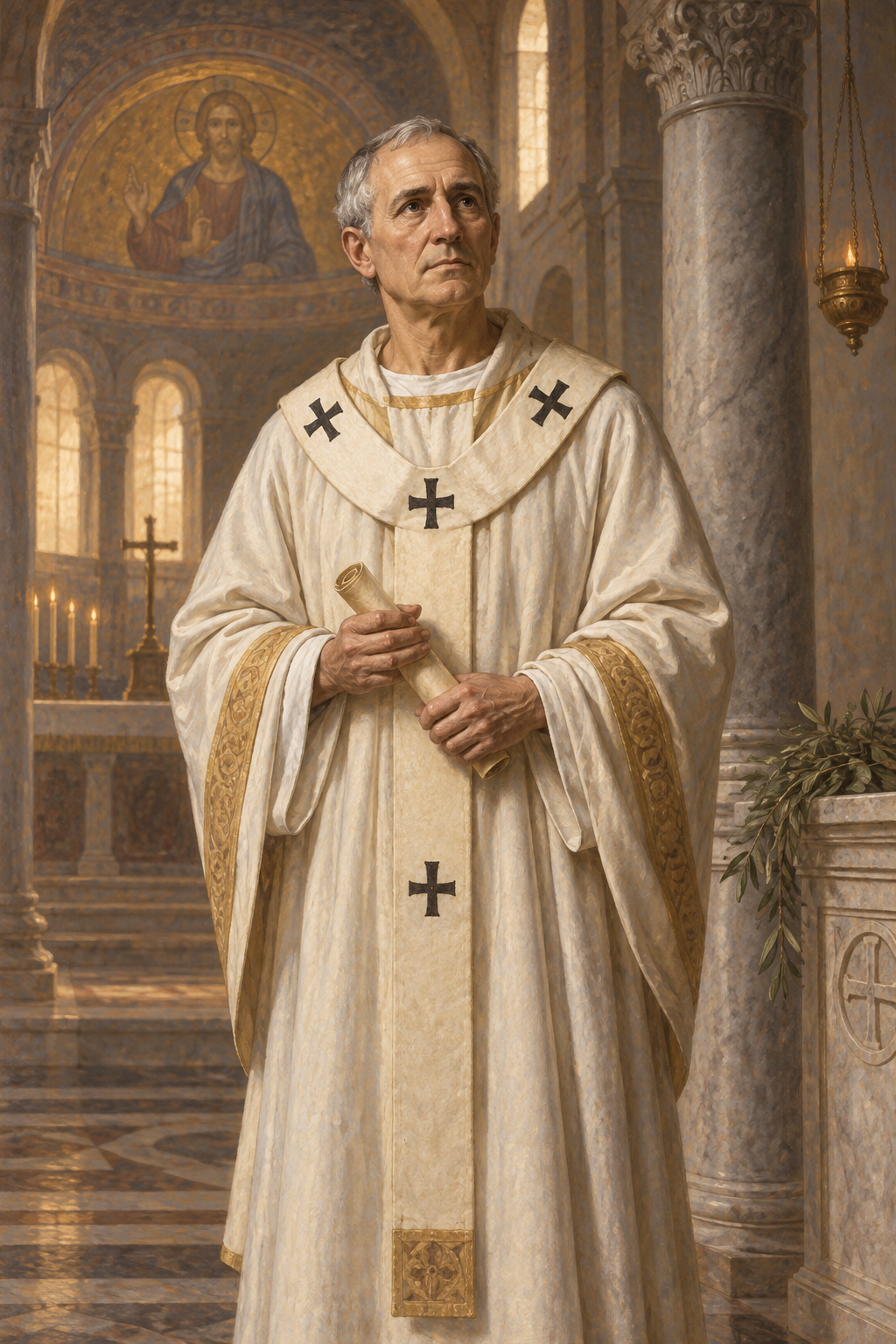
About Pope Innocent I
Innocent I succeeded Anastasius as bishop of Rome near the end of 401. The Holy See's papal list names Albano as his birthplace, following later tradition, but no contemporary account securely fixes his birth year or family. A critical papal study explains that Jerome called him a son of Anastasius, a phrase whose literal meaning is debated. Innocent's pontificate took place amid political upheaval as Alaric's forces threatened Italy. Letters and later historical accounts reveal a bishop working across regional churches while the imperial capital and Rome faced military pressure. His life is therefore better described through documented public acts than through conjecture about his parentage or private childhood.When the city faced Alaric, Innocent accompanied Roman representatives to Ravenna to seek an agreement with Emperor Honorius. The attempt failed, and Alaric's army sacked Rome in 410 while Innocent was away. Treccani describes the episode with care, including conflicting ancient testimony about the pope's response to proposed pagan rites during the siege. Neither a heroic rescue of Rome nor a simple moral failure can be read securely into that disputed report. The peace mission shows his participation in a wider civic effort, with senators, imperial officers and Gothic leaders each making decisions beyond his control.Innocent also answered questions from bishops about church discipline and worship. African councils and Augustine wrote to him during the dispute concerning Pelagius and grace; the correspondence shows that the African bishops were active participants rather than passive recipients of Roman orders. Treccani traces both his replies and the broader controversy. The record supports a picture of ongoing exchange among bishops, without making Innocent the sole author of later doctrinal outcomes. His episcopal office and correspondence are historically firmer than the uncertain family stories transmitted centuries later.The Holy See ends Innocent's pontificate on March 12, 417, while Treccani notes two old death-day traditions: March 12 in the Martyrologium Hieronymianum and July 28 in the Liber Pontificalis. Because the dates conflict, the structured death field records 417 without a month or day. Vatican News directly commemorates him March 12. An older Roman martyrology directly lists him July 28, kept as a separate historical observance. The inherited February 28 OCA index page mentions Innocent in another life and does not establish his feast. His painted portrait holds a symbolic scroll; neither it nor its badge claims to be a historical likeness.
Wondering how to weigh the stories and sources? Learn how to read a saint biography.