Biography
Pope Leo III
About Pope Leo III
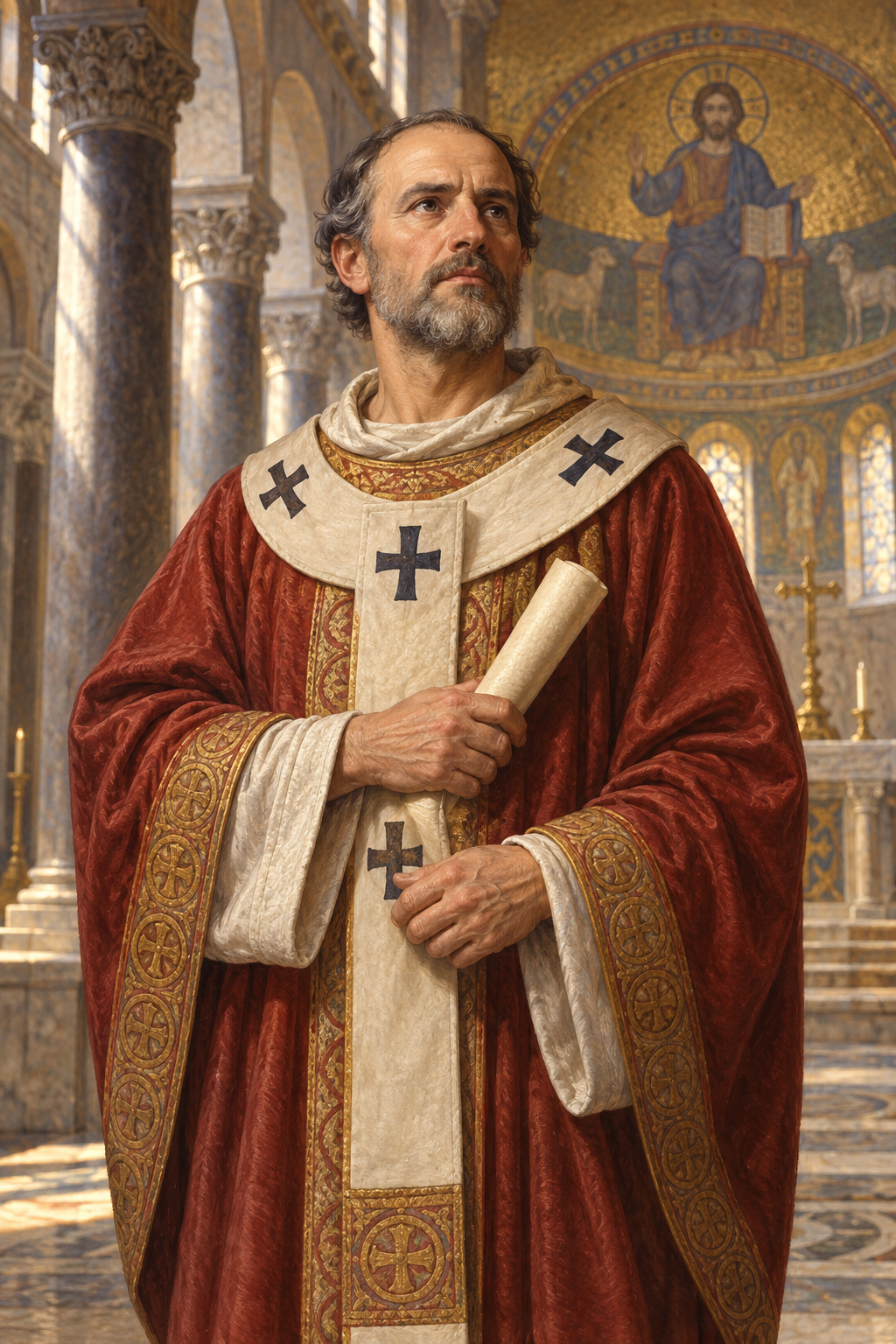
Leo III was born in Rome and served the Roman church before becoming pope. The critical papal study describes his work in the office that managed papal resources and his later position as priest of Saint Susanna. After Adrian I's death, Leo was elected on December 26, 795, and consecrated the next day. His experience made him a capable administrator, though the source does not reveal a complete private portrait. Relations with the Roman nobility and the Frankish court were already important to his office. He sent symbols of Roman authority to Charlemagne, seeking continued protection while also asserting a role for the pope in the city's government.In 799, opponents in Rome attacked Leo during a procession, and he eventually reached Charlemagne's protection. He returned to Rome with Frankish support. The ensuing accusations and efforts to resolve them were political as well as ecclesiastical; their records should not be reduced to a tale of a pope single-handedly defeating enemies. On Christmas Day in 800, Leo placed an imperial crown on Charlemagne at Saint Peter's. Treccani reads the ceremony in the context of Roman and Frankish ambitions, with later accounts differing over how much surprise the coronation caused. The act was momentous, but Leo did not create the entire political order by himself.Leo's work continued well beyond the coronation. He invested resources in Roman churches and maintained correspondence with the Frankish court. A later dispute concerned the phrase filioque, which Frankish churches wished to add to the text of the Nicene Creed. Treccani reports that Leo accepted the Western teaching but argued that the inherited creed text should remain unchanged. He had the creed displayed in Greek and Latin without the added phrase. That distinction matters: resistance to changing a received text is not the same as rejecting the teaching the Franks meant to express. Such debates involved other bishops and rulers as active participants.The Holy See ends Leo's pontificate on June 12, 816. Treccani describes this death day as probable, and both Vatican News and the older Roman martyrology directly commemorate him June 12. The record therefore uses that date without inventing a birth year or a precise location for his death beyond what the consulted evidence states. Leo's governance, negotiations, church building, and response to doctrinal questions took place amid continued disagreements in Rome. His portrait uses a scroll to symbolize correspondence, not to depict an identifiable surviving letter, and is explicitly an imaginative devotional image rather than a likeness.
Wondering how to weigh the stories and sources? Learn how to read a saint biography.