Biography
Pope Leo IV
About Pope Leo IV
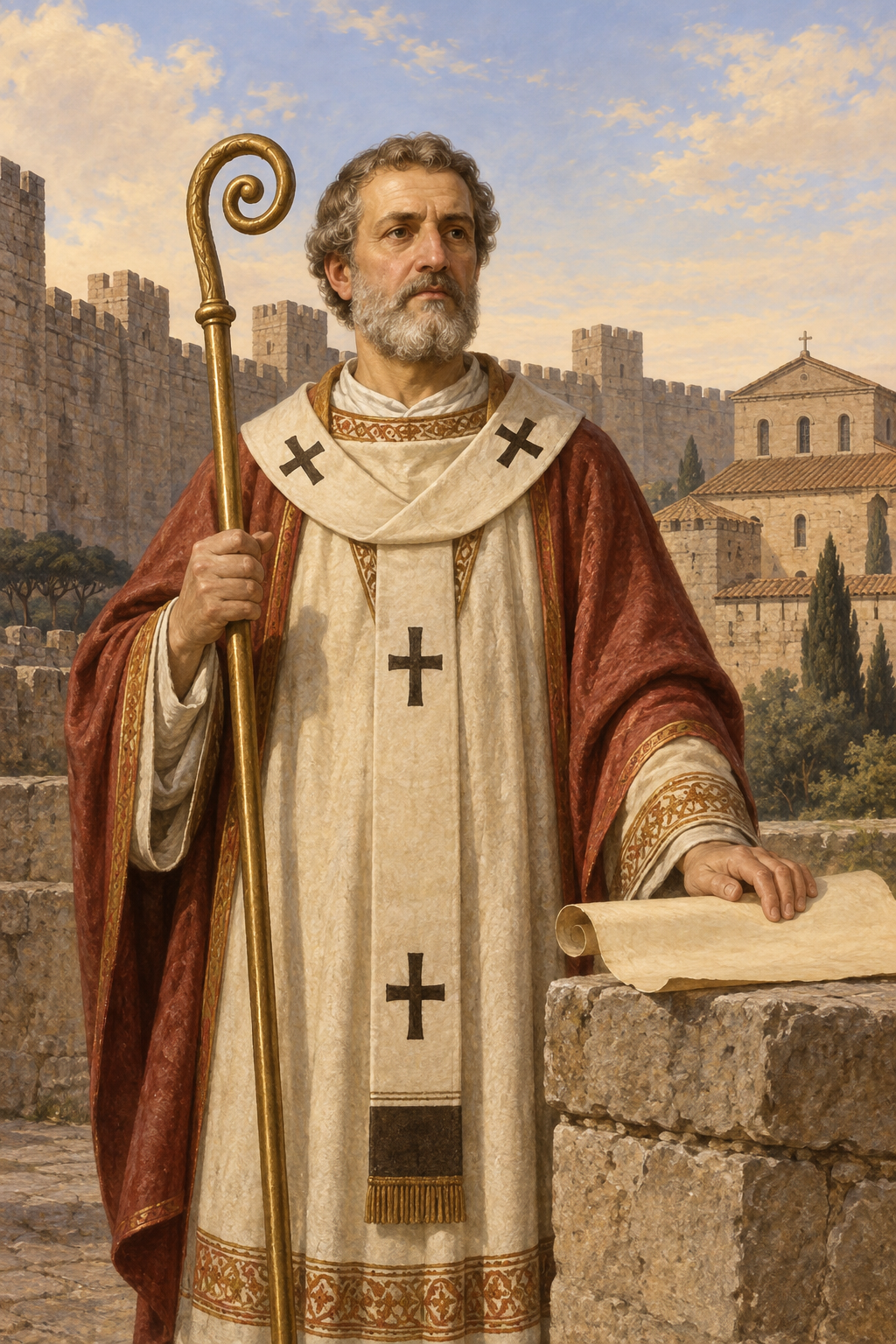
Leo IV was born in Rome. A critical study reports that he was educated near Saint Peter's and became a priest of the church of the Four Crowned Martyrs. His father's name has led some writers to suggest Lombard ancestry, but the study warns that a name alone does not prove an ethnic origin. After Sergius II died in 847, Leo was chosen amid concern for the security of Rome. He was consecrated on April 10 without waiting for an imperial authorization normally expected at that time. The source links the speed of the decision to the emergency after the 846 raid, while also noting the continuing political relationship with the Frankish empire.Raids had exposed the vulnerability of Saint Peter's and Saint Paul's basilicas outside Rome's old defensive circuit. Leo organized walls around Saint Peter's precinct; the resulting district was called the Leonine City. Treccani places this project within a longer regional effort to protect settlements and coasts, and records support from other powers. The fortifications were important, but they were built by workers and financed within a political network, not raised by the pope alone. The city wall shown in the portrait is therefore an emblem of the project, not a reconstruction of its exact shape or of a documented moment when Leo inspected it.The naval battle near Ostia in 849 is often presented as a personal military victory for Leo. A closer historical account describes ships from Naples and other southern cities, with Cesario of Naples in command. Leo helped coordinate the alliance and offered a religious blessing before the fighting. Treccani's study of Cesario also distinguishes the battle from later stories that cast the victory as a miracle brought about by the pope. Naming the naval leaders and crews matters because it shows the actual shared effort. Leo's role was consequential, yet it was diplomatic and pastoral rather than command of the fleet.Leo also governed Roman church affairs, supported churches, and corresponded beyond the city. The critical study notes a surviving selection of his letters, while warning that some are fragmentary and difficult to date. His relations with Frankish rulers and Ravenna involved negotiation and conflict, not a simple story of independence. He died in Rome on July 17, 855, according to both the Holy See and Treccani. Vatican News still has a direct July 17 saint page and the older Roman martyrology lists the date, although Treccani says a former formal feast was later suppressed. The catalog preserves the supported observance without claiming it is a universal current liturgical rank.
Wondering how to weigh the stories and sources? Learn how to read a saint biography.