Biography
Pope Leo IX
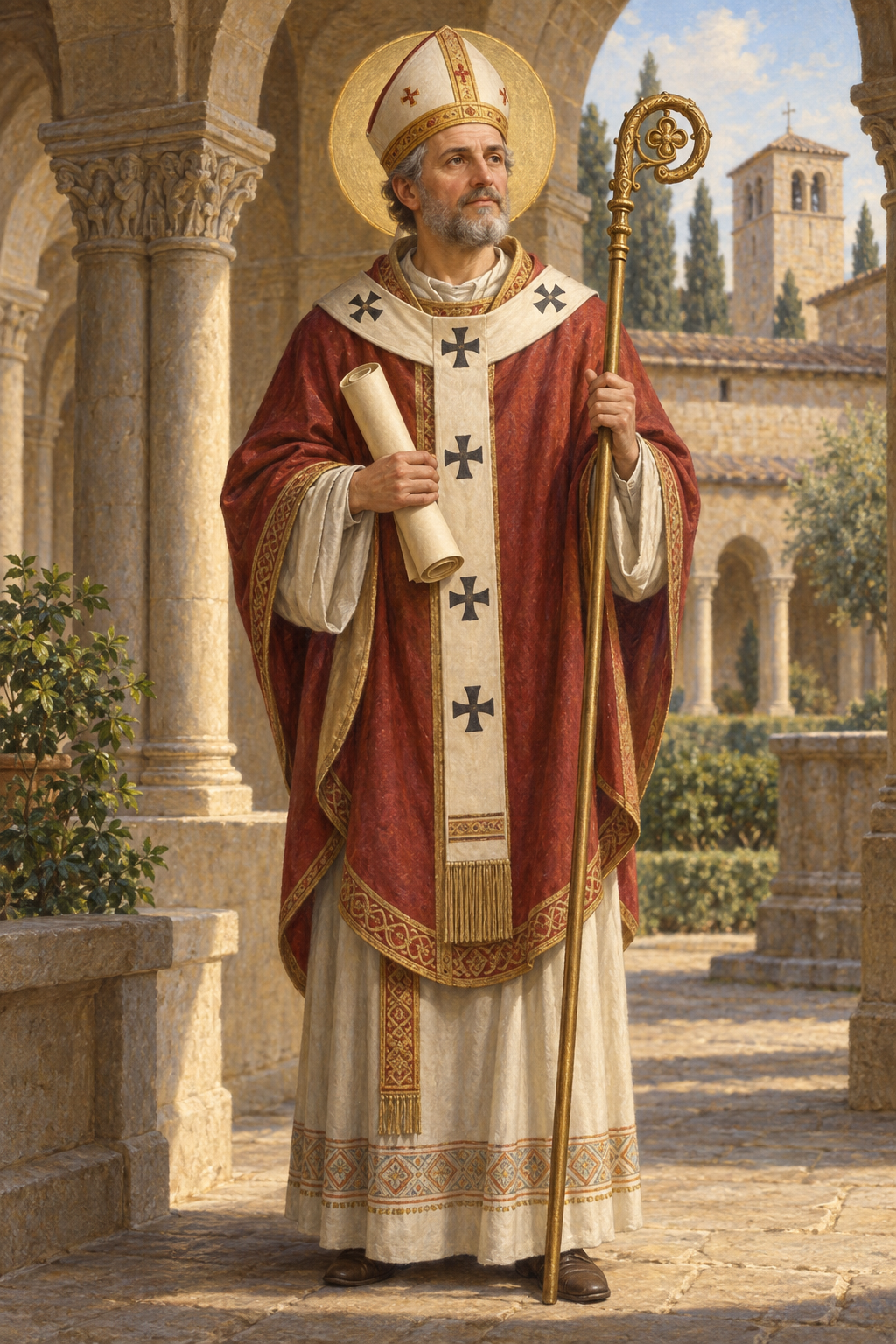
About Pope Leo IX
Leo IX was born Bruno on June 21, 1002, into the comital family of Eguisheim in Alsace. The critical papal study explains that a near-contemporary life preserves his birth date, but individual childhood episodes in that account still require judgment. Bruno was educated at Toul and entered the service of its church. He became bishop there in the 1020s and worked within the political world of the German kingdom. In 1048 Emperor Henry III designated him for the Roman see. The clergy and people of Rome confirmed him, and he was consecrated in February 1049. This sequence shows both imperial involvement and an effort to establish local ecclesiastical consent.As pope, Leo moved repeatedly through Italy, France, and German lands. He convened synods at which bishops and clergy faced questions about the purchase of church office, known as simony, and other discipline. Treccani describes his 1049 gathering at Reims and further meetings, while noting that local circumstances and colleagues shaped outcomes. Leo drew collaborators from the region around Toul, including Humbert of Moyenmoutier. His reform agenda mattered to later generations, but it should not be treated as a finished program invented by one person. His travels and letters show a bishop trying to carry Roman authority into disputes far beyond Rome.In southern Italy Leo tried to counter growing Norman power with allies. His forces lost at Civitate in June 1053, and the Normans held him at Benevento. He was freed in March 1054 and returned to Rome, where he died on April 19. This was a military and political failure with real losses; it should not be made into a devotional victory. At the same time, relations with the patriarch of Constantinople had worsened. Leo sent a delegation led by Humbert, but its public excommunication at Hagia Sophia came on July 16, after Leo's death. Treccani says the envoys exceeded his will; the act must not be attributed to him personally or described as a single act that wholly explains centuries of division.Leo died in Rome on April 19, 1054, according to the Holy See and the critical study. Vatican News and the older Roman martyrology directly commemorate him on that date. His surviving record supports an account of energetic travel, ecclesiastical reform, and difficult diplomacy, while also showing the limits and costs of his political decisions. No personal miracle is entered as a documented event merely because later calendars celebrate his sanctity. His portrait is an imaginative Romanesque bishop with blank scroll and staff, not a reconstruction of a particular letter, synod, or historical likeness.
Wondering how to weigh the stories and sources? Learn how to read a saint biography.