Biography
Pope Lucius I
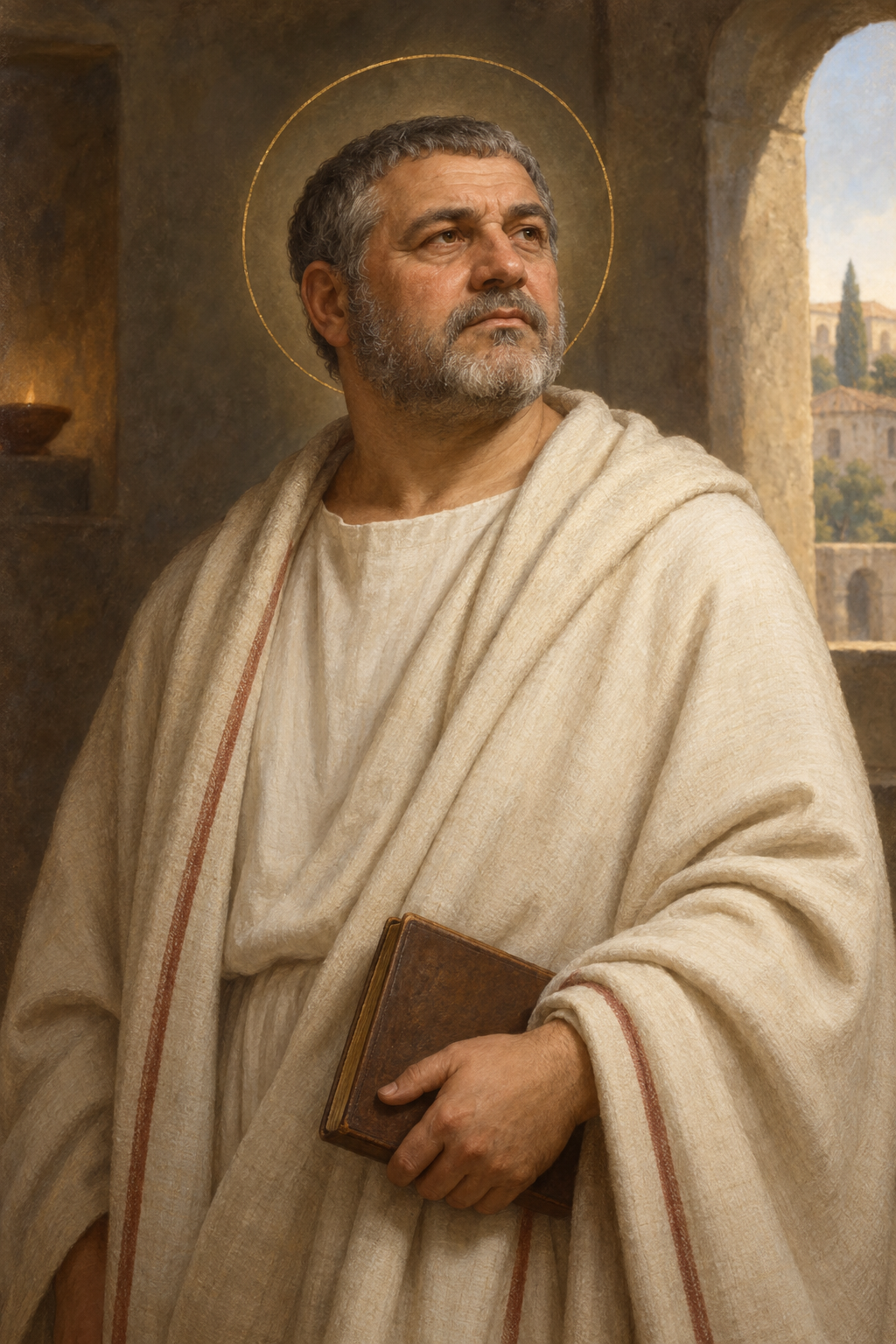
About Pope Lucius I
Lucius I was bishop of Rome during a brief pontificate in 253–254. The Vatican catalog places its beginning in June or July 253 and its end on 5 March 254. His leadership belonged to a community living through persecution and division.
Little is known about his life before his election. The later Liber pontificalis calls him Roman and names his father, but the source of those details is uncertain. He succeeded Cornelius, who had died in exile. Lucius was himself banished soon after becoming bishop, while persecution under the emperor Gallus continued.
His return to Rome is recorded in a surviving letter from Cyprian of Carthage and his fellow bishops. They welcomed Lucius, his companions and the community that had received him back. Cyprian treated survival and return as a reason for thanksgiving, rather than as a lesser witness to faith. He wished he could join the Romans in their welcome and sent the letter in place of a personal visit.
A second letter, addressed to Lucius’s successor Stephen, preserves a central part of his pastoral policy. Cyprian states that Cornelius and Lucius supported reconciliation for Christians who had fallen away during persecution and then undergone penance. Their written decisions were part of the argument against refusing such people a return to communion.
The division associated with Novatian continued during Lucius’s pontificate. The question of receiving repentant Christians was therefore a matter of immediate consequence for the community. Lucius died in March 254. Although Cyprian honored him with the language of martyrdom, Kirsch’s historical account finds no basis for the later story of execution under Valerian: that emperor’s persecution began after Lucius’s death.
Francesco Scorza Barcellona’s study likewise distinguishes the early record from later additions. It notes that Lucius appears among the bishops commemorated in the fourth-century Roman calendar, separately from the list of martyrs. The Liber pontificalis later presented a martyrdom narrative and attributed regulations and ordinations to him. The study treats these details as unverified; even its claim of a pontificate lasting more than three years conflicts with the much shorter episcopate. Among the attributed rules was a requirement that two priests and three deacons remain with the bishop. Scorza Barcellona interprets its wording as concern for the bishop’s reputation, supported by reliable witnesses, while retaining the uncertainty about whether the regulation belonged to Lucius himself.
His own letter to Cyprian has not survived. A medieval Passion, written by Guaiferius of Montecassino in the eleventh century, supplies almost no further biographical information. It chiefly celebrates the figure of the pope. The difference between the early correspondence and this later writing marks the limits of the surviving record.
Lucius was buried in the papal crypt at the catacombs of Callistus. The site’s official guide identifies him among the third-century popes whose original Greek inscriptions survive there. The slabs are broken and incomplete. Their setting was a communal burial place, later transformed into a place of veneration. These material remains connect his memory with the Roman community in which he had served during the third century.
His cult later took root far from Rome. The museum study by Jette Arneborg and colleagues traces Lucius’s patronage of Roskilde Cathedral and its diocese. A skull venerated as his became one of the cathedral’s important objects. The authors place this devotion around 1100 or earlier, supported by an early account naming the cathedral’s dedication to the Trinity and Saint Lucius.
A Roskilde Cathedral Museum booklet retells the legend of how two canons traveled to Rome to obtain a relic. In the story, Lucius appeared to one of them in a dream and asked that his skull be carried to Roskilde. A shining skull then identified the relic they should choose. The account belongs to the cathedral’s later tradition about its patron.
The skull eventually entered the royal collection and was lent to Saint Ansgar’s Catholic Cathedral in Copenhagen in 1908. Scientific investigation later challenged its identification. Arneborg and colleagues report a corrected radiocarbon range of 332–430, too late for Lucius, who died in 254. They nevertheless considered it likely to be the same skull that medieval Roskilde had venerated. The object’s long devotional history survives alongside the evidence that it was not his remains.
The Copenhagen cathedral’s parish magazine placed the gilded reliquary bust on its 2022 cover. Its caption identified Lucius and listed 5 March as his saint’s day. This modern remembrance continues the Danish connection with an early Roman bishop, while the museum investigation remains necessary to understand the object held under his name.
The Norwegian Catholic biography records an older Roman commemoration on 4 March, retained in the calendar until 1969. It also remembers the relic’s importance for Roskilde Cathedral and the surrounding diocese. Across these different settings, Lucius’s memory joins the short record of an exiled bishop to a much longer history of local devotion.
Wondering how to weigh the stories and sources? Learn how to read a saint biography.