Biography
Pope Miltiades
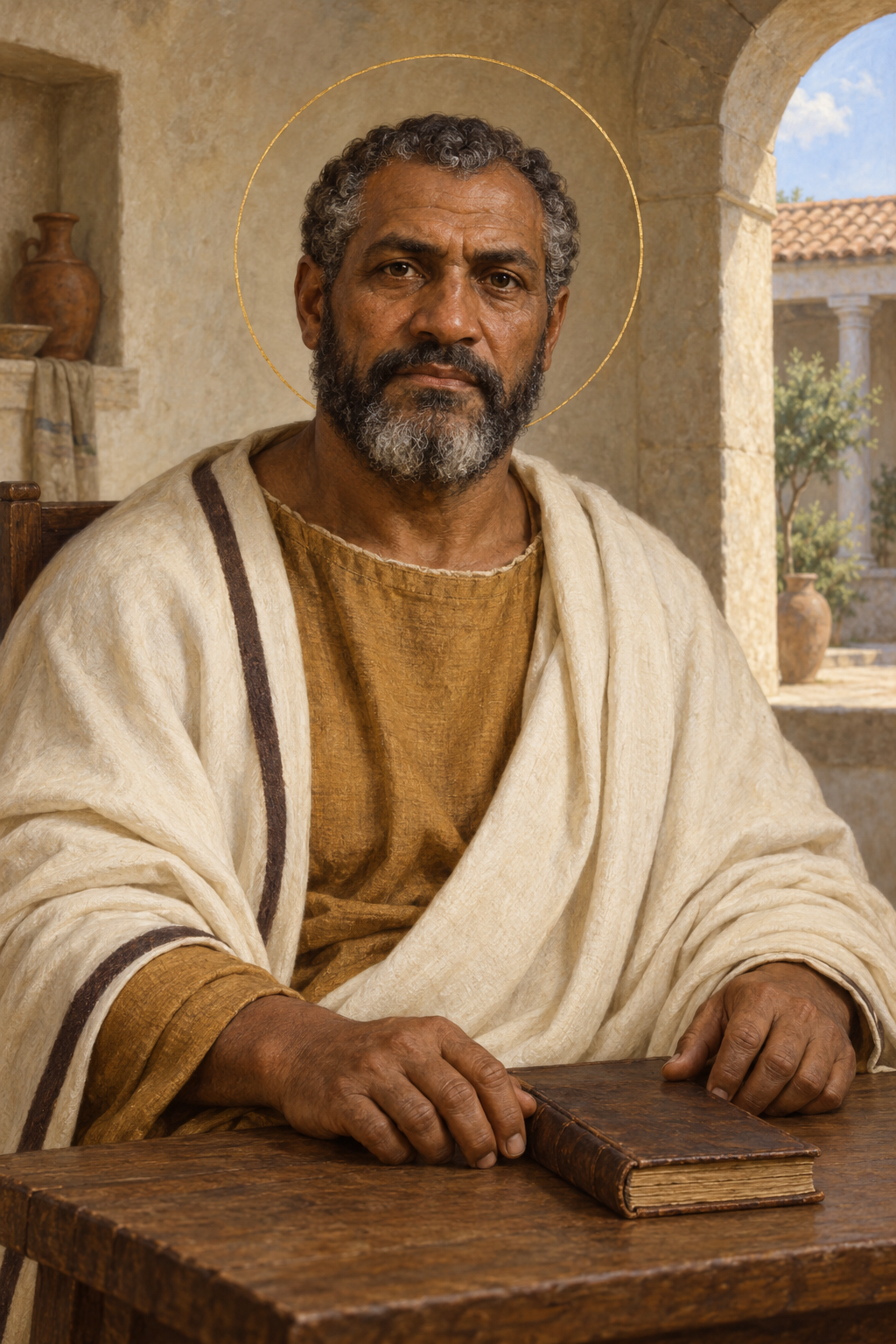
About Pope Miltiades
Miltiades, also remembered as Melchiades, became bishop of Rome in 311. His earlier life is largely unknown. The later Liber Pontificalis describes him as African, but that notice does not identify a particular birthplace or recover a childhood. His brief episcopate fell between the last years of persecution and the developing relationship between Constantine and the Christian churches.
One immediate responsibility was the recovery of church property confiscated during persecution. Miltiades appointed the deacons Strato and Cassianus to deal with the city’s prefect and take possession of the buildings and goods being restored. Recovering these resources enabled the Roman community to rebuild its administration and religious life. The task involved the practical return of property, rather than religious freedom existing only as a declaration.
He also arranged for the body of his predecessor Eusebius to be brought from Sicily and buried in the cemetery of Callistus. In 312 Constantine defeated Maxentius and entered Rome. Miltiades’s ministry consequently extended across a change of ruler as well as a change in the Church’s public circumstances.
The most clearly recorded business of his episcopate concerned a divided church in North Africa. Caecilian’s position as bishop of Carthage was contested, and his consecrator Felix was accused of surrendering sacred books during persecution. Optatus of Milevis, writing against the Donatist party, describes opponents approaching Constantine and asking for judges from Gaul. His account places the Roman hearing within a dispute over episcopal legitimacy and the conduct of Christians under persecution.
An imperial letter addressed to Miltiades and Marcus preserves Constantine’s instructions. Caecilian was to come to Rome with ten bishops who accused him and ten others of his own choosing. The emperor had ordered Reticius, Maternus and Marinus to join the inquiry. He also sent copies of the material received from the African proconsul Anulinus. The assembled bishops were to examine the controversy carefully and reach a just decision; the letter makes Constantine’s concern about the continuing division explicit. Constantine linked this inquiry to his responsibility for populous African provinces, where divisions among the bishops were affecting the wider Christian community.
According to Optatus, nineteen bishops met at the House of Fausta on the Lateran in the autumn of 313. The account names the participating bishops and presents the decision as their common judgment, followed by Miltiades’s concluding sentence. Caecilian was maintained in his position and in church communion. Donatus failed to establish the charges against him and was condemned. The surviving narrative preserves the outcome, although it is not the complete original record of the proceedings. Optatus distinguishes this judgment concerning Caecilian from the later civil investigation of Felix, his consecrator, which the emperor ordered after the Roman hearing.
The council’s acts were read at Carthage in 411, but the complete record is now lost.
Augustine later praised the way Miltiades combined judgment with an offer of reconciliation. He describes Miltiades as willing to restore the other dissident bishops and to send letters of communion even to those ordained by Majorinus. Where competing bishops occupied the same see, the bishop ordained first would remain, and another congregation would be found for the other. Donatus was treated separately as the principal source of the disturbance.
This portrait comes from Augustine’s argument for Catholic unity. In the same letter he says that he had read ecclesiastical records and imperial correspondence to his hearers, and urges them to examine those documents. His defense of Miltiades is therefore a witness to the later controversy and its use of records, as well as a favorable assessment of the pope.
Modern historians continue to debate how the imperial intervention began. Klaus Martin Girardet argues that Optatus’s version cannot securely recover the original petition forwarded by Anulinus. In his reconstruction, the opponents sought an imperial judicial remedy, while Constantine’s choice of episcopal advisers produced a new meeting of imperial supervision and church judgment. Girardet identifies important parts of that reconstruction as hypothetical. Miltiades’s participation is clear, while the precise legal meaning of the process remains a subject of historical interpretation.
The Roman decision did not end the division. Augustine recounts the renewed appeal to Constantine and the subsequent hearing at Arles.
Later tradition credited him with rules about fasting and with sending portions of the consecrated bread from the papal Eucharist to other Roman churches. Di Berardino cautions that the origin of this latter practice cannot be fixed to Miltiades. The letters circulated under his name are also spurious, rather than surviving personal correspondence. These later attributions give an incomplete and unreliable picture of his own administrative decisions.
He died in January 314 and was buried in the cemetery of Callistus. The received date is 10 January, though early chronological notices also preserve an 11 January variant. His exact tomb has not been identified.
The Catholic Encyclopedia records the older 10 December commemoration.
Vatican News now lists Saint Miltiades on 10 January.
Wondering how to weigh the stories and sources? Learn how to read a saint biography.