Biography
Pope Nicholas I
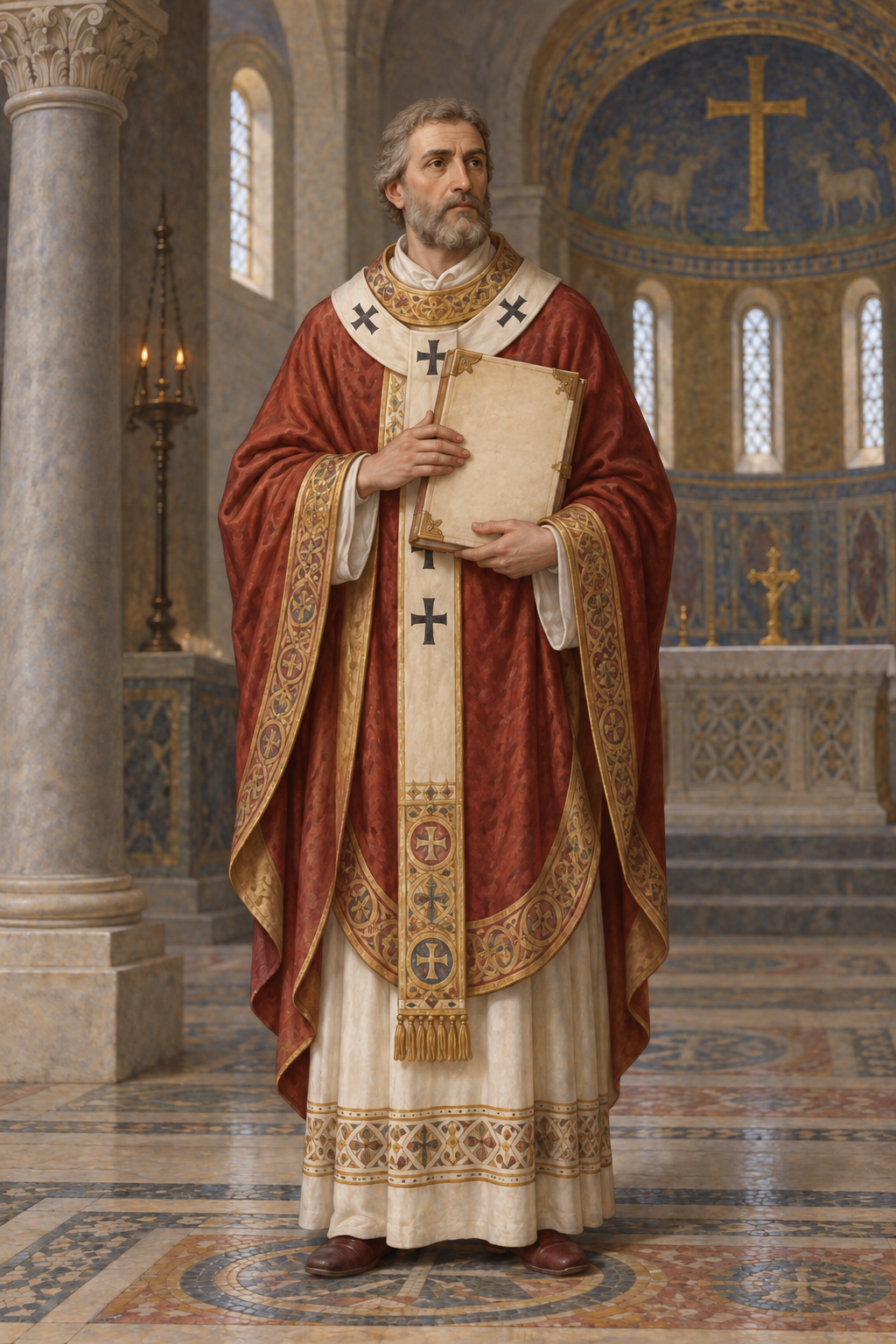
About Pope Nicholas I
Nicholas was born in Rome, according to the Holy See's papal register. His birth year is not established there. The Prosopography of the Byzantine Empire traces his early career to the Liber Pontificalis: he entered service at the Lateran, became a subdeacon under Sergius II and a deacon under Leo IV, and assisted Benedict III. This account preserves a career within the Roman church before he became its bishop; its character descriptions of the young Nicholas remain the praise of an interested biographer, not independently observed facts.After Benedict III died, Nicholas was elected bishop of Rome in 858. The Holy See dates his pontificate from April 24 of that year. The election unfolded in the presence of Emperor Louis II, a reminder that Roman church leadership was entangled with imperial politics. Yet Nicholas did not simply follow imperial wishes. He confronted Archbishop John of Ravenna over the latter's conduct and claims of autonomy, and he reviewed the deposition of Rothad, bishop of Soissons. These interventions made the authority of the Roman see a practical question in local church disputes, not merely an abstract title.One of Nicholas's most consequential Western disputes concerned King Lothar II, who sought to set aside his marriage to Theutberga and marry Waldrada. Nicholas refused to sanction the change and challenged bishops who had supported it. Across the eastern Mediterranean, he also became involved in the contested deposition of Patriarch Ignatius and accession of Photius in Constantinople. His first envoys accepted a settlement he later rejected. The surviving accounts show disagreement over procedure and jurisdiction rather than a simple contest between one clearly united side and another. Nicholas's own stance was forceful, while the political setting and other participants shaped the outcome.The dispute involving Lothar II was not isolated from Nicholas's other work in the Frankish kingdoms. The source account describes his inquiry into the deposition of Rothad of Soissons, including a summons to Rome for both the bishop and his accusers. Nicholas restored Rothad and sent a representative to Gaul with instructions concerning both Rothad's see and Lothar's marriage. That connection matters: a decision made in Rome still depended on envoys, local bishops, and rulers for its effect. It also helps explain why the surviving narrative treats appeals to Rome as a contested practice with immediate consequences for named people, rather than as a settled administrative routine. Nicholas's refusal to approve Lothar's new union was a judgment about a particular marriage within this wider struggle over episcopal authority.The Constantinople conflict likewise involved more than a single decree. Nicholas first sent bishops Zacharias and Radoald to learn about the dispute over Ignatius and Photius and to address questions about the veneration of icons. According to the Liber Pontificalis as summarized by the prosopography, the envoys accepted Ignatius's deposition and Photius's appointment beyond the instructions Nicholas had given them. Nicholas later rejected that settlement, wrote to the emperor and to Photius, and convened a Roman council. Another surviving source, a life of Ignatius, describes his response in sharper terms. These accounts make it possible to trace the disagreement, but their different institutional viewpoints should not be collapsed into a single neutral transcript of events. The conflict was still developing when Nicholas died; later outcomes cannot simply be credited to him.His responsibilities also remained local. The Liber Pontificalis records donations to Roman churches and monasteries, repairs to an aqueduct serving Saint Peter's, work at Saint Mary in Cosmedin, and repairs to the fortifications at Ostia. It describes a system that supplied food to poor and disabled people in Rome with tokens. These details do not show how recipients experienced the distribution or how much reached them. They do show that the same bishop who corresponded with rulers and patriarchs also had charge of buildings, water, and relief in and around his city. The account praises his personal virtues, but such descriptions belong to a papal biography written with an interest in commending its subject. The more concrete entries on work and distribution are therefore the safer basis for describing his daily administration.Nicholas also answered the Bulgarian ruler Boris's request for guidance about Christianity in 866 and sent representatives to the region. The source account names bishops Paul and Formosus among those he sent, and says plans for further envoys were overtaken by his death. Treccani places this mission amid competition between Rome and Constantinople for influence over the emerging Bulgarian church. The historical record therefore supports an account of energetic leadership, but not a story in which Nicholas alone settled these wider conflicts. The Holy See dates the end of his pontificate to November 13, 867; the prosopography records his death that day and burial near Saint Peter's. Vatican News remembers him on November 13. His letters, decisions, and disputes remain evidence of how the ninth-century Roman church defined its authority across political boundaries.
Wondering how to weigh the stories and sources? Learn how to read a saint biography.