Biography
Pope Paul I
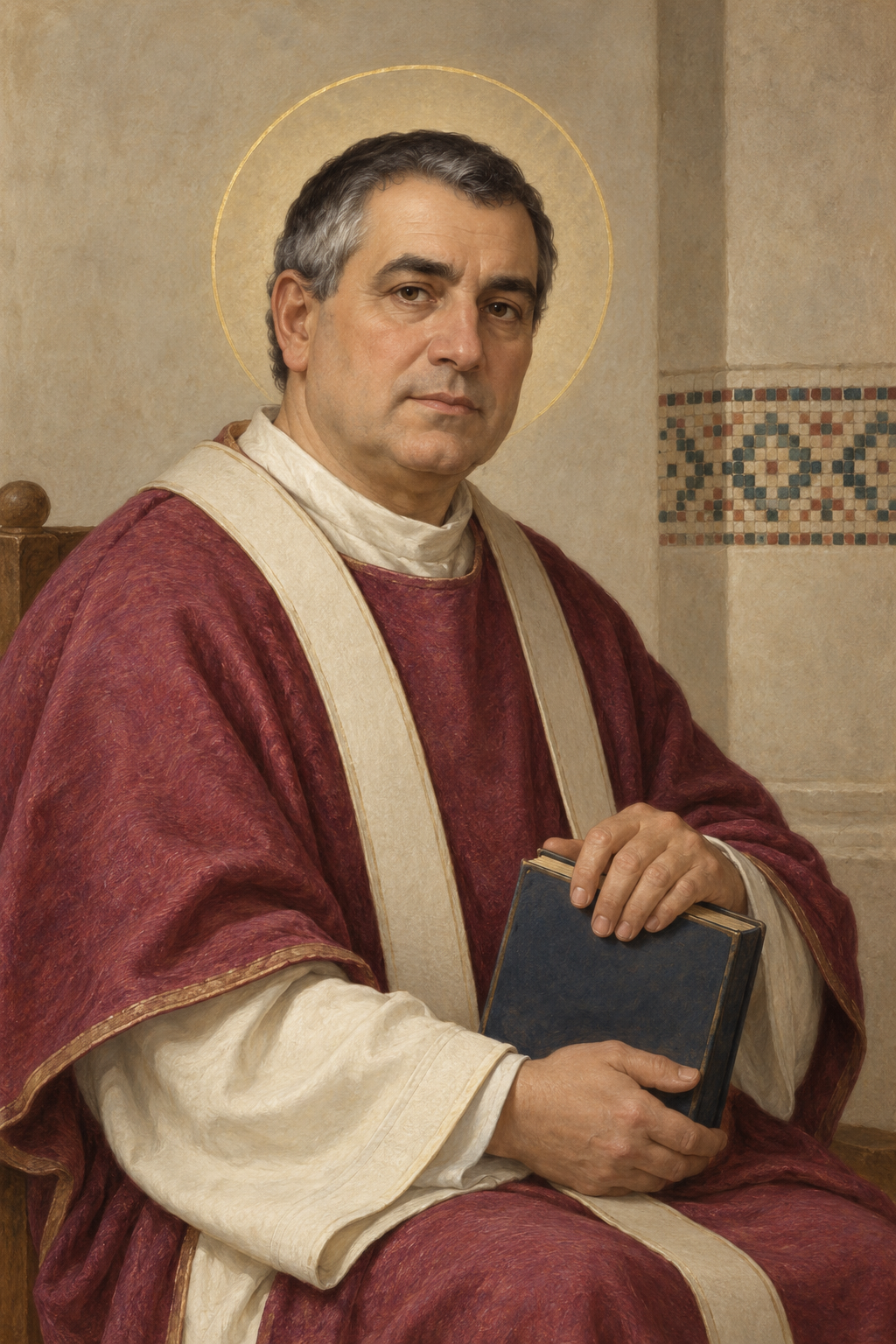
About Pope Paul I
Paul I was a Roman who succeeded his brother Stephen II as bishop of Rome. He was consecrated on 29 May 757 and died on 28 June 767. His pontificate continued the developing relationship between the papacy and the Frankish rulers.
He came from a family with property in Rome’s Via Lata district and was educated with Stephen at the Lateran. Pope Zachary ordained him deacon. Before becoming pope, Paul served his brother in difficult negotiations with the Lombard kings. Delogu records his part in negotiating a forty-year peace with Aistulf in 752 and a later mission to Ravenna when that agreement failed. His experience of diplomacy therefore preceded his election.
His first preserved letter to Pippin speaks with grief about Stephen’s death and announces his own election. Paul calls himself a deacon and bishop-elect, indicating that the message preceded his consecration. He explains that the Frankish messenger Immo was remaining in Rome until that ceremony, after which he would return with papal representatives. Paul promises to preserve the friendship and peace established by his brother. He also prays for the king, his queen and their children, presenting the alliance in religious as well as political terms.
A second letter thanks Pippin for a baptismal cloth sent by the messenger Wulfard. Paul received it during Mass at the shrine of Petronilla, treating the child as his spiritual daughter through this symbolic gift. He then links that spiritual relationship with an appeal to complete the assistance owed to the Roman church. The letter moves directly from shared religious celebration to requests for help. He also promised to pursue Archbishop Sergius’s restoration and asked Pippin to continue protecting the bishop Wilchar, whom Stephen had commended. Its affectionate language did not remove the practical problems facing the pope.
Desiderius, the new Lombard king, had promised territorial concessions that he delayed carrying out. Paul’s envoys sometimes had to communicate under close political pressure. Kirsch describes two messages carried to Pippin together: one asked for a peace agreement and the return of Lombard hostages, while the other privately explained Paul’s fears and requested Frankish intervention. The difference between them reflected the need to get the messengers safely through Lombard territory. Paul’s correspondence thus depended on the movement and protection of people as well as on written assurances.
Relations gradually became less confrontational. Later negotiations dealt with boundaries, landholding and local rights, while Pippin’s representatives continued to monitor the agreements. Paul also supported religious education beyond Rome. He supplied books for Frankish clergy and arranged training in Roman chant, first through a teacher sent to Rouen and later by receiving Frankish monks in Rome. The relationship involved learning and worship alongside the protection of territory.
The letters survive through the Codex Carolinus, a collection made under Charlemagne near the end of the eighth century. Thomas Noble notes that the surviving manuscript is itself a later copy. He characterizes Paul’s correspondence as frequently anxious about whether Pippin could or would ensure that the Lombards honored their undertakings. The collection preserves the pope’s persistent appeals, rather than an exchange in which every Frankish reply survives beside its request. Its transmission helps explain both the richness and the limits of the diplomatic record.
Paul also opposed Byzantine restrictions on sacred images, dispatching letters and representatives to argue for their veneration.
Within Rome, he helped change where people encountered the saints’ remains. Kozeni distinguishes several projects: the transfer of Petronilla to Saint Peter’s, the movement of relics into urban churches, and the reception of numerous saints’ remains at San Silvestro in 761. Petronilla’s supposed relationship to Peter was a devotional tradition, not a demonstrated family history. Petronilla’s new shrine stood outside Rome’s walls, so security alone does not explain that transfer. The projects joined the care of revered remains with changes in the city’s churches and public religious life.
The church’s own chronology identifies San Silvestro as a foundation on the brothers’ paternal property. It records a Greek monastic community following the Rule of Basil. The foundation gave communal prayer a lasting place within the family’s former home.
The monks were required to maintain the chanting of psalms in Greek.
Kozeni argues that the translations did more than protect relics or strengthen the Frankish alliance. Bringing revered remains into Rome’s churches could also reinforce the pope’s position among the city’s inhabitants. He presents this as a political interpretation of religious projects, comparing Paul’s work with other bishops’ use of saints’ cults. It adds a local dimension to a life often described chiefly through foreign diplomacy, without making every reported intention certain.
In June 767 Paul became ill at Saint Paul’s outside the walls. Conflict over the succession prevented immediate burial at Saint Peter’s. His body was initially buried at Saint Paul’s and transferred three months later.
The Catholic Encyclopedia records his commemoration on 28 June.
Wondering how to weigh the stories and sources? Learn how to read a saint biography.