Biography
Pope Siricius
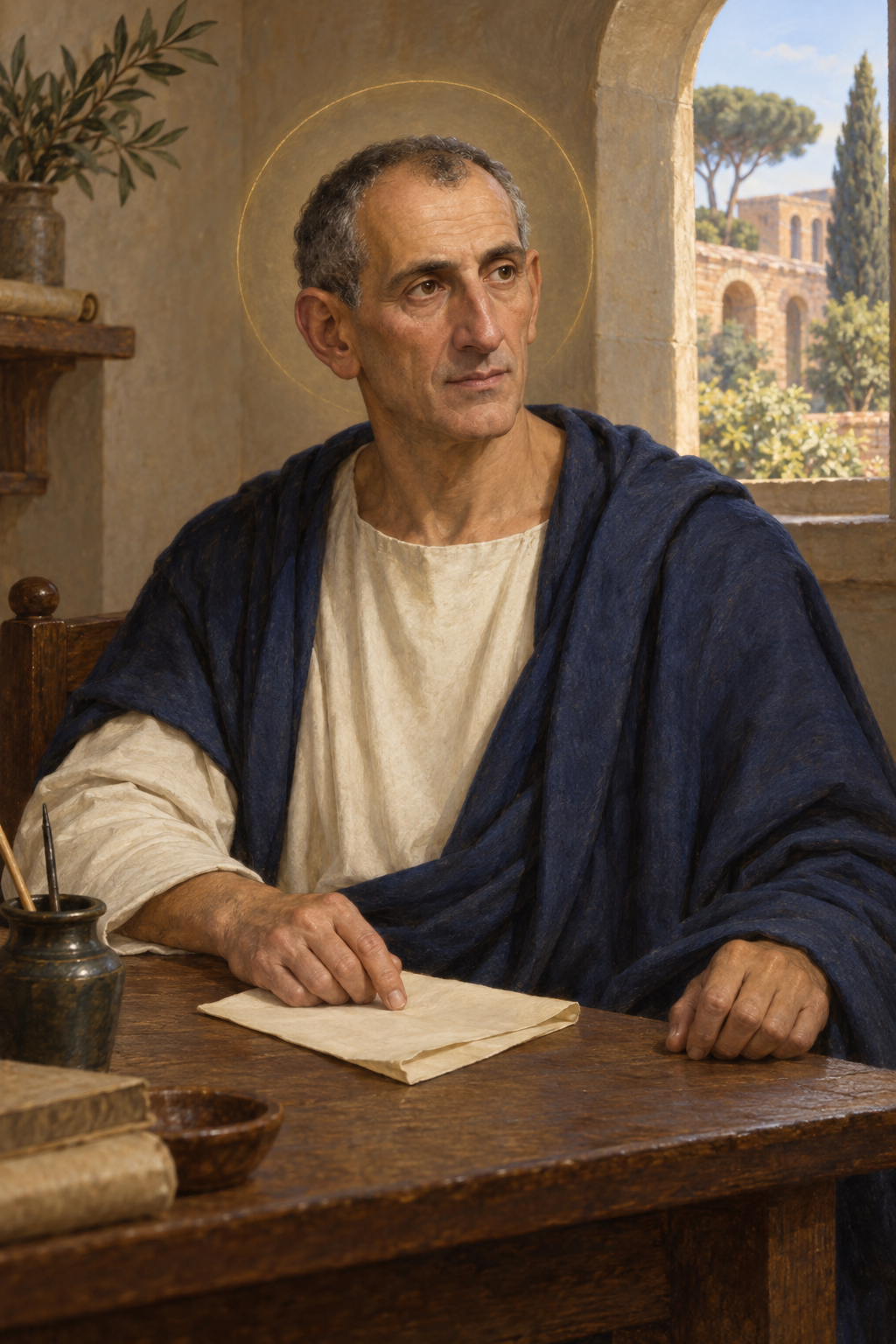
About Pope Siricius
Siricius was a Roman churchman who succeeded Damasus as bishop of Rome in December 384. His father was named Tiburtius. An epitaph preserved in the historical record remembers his earlier service as a reader and then a deacon under Pope Liberius. It praises his generosity and care for the people, providing a glimpse of the qualities his community wished to remember.
His election followed the long conflict between Damasus and Ursinus. Elena Cavalcanti’s account finds some remaining support for Ursinus but no disturbance requiring the city prefect’s intervention. The exact beginning of the pontificate is uncertain: the Vatican catalog lists three possible Sundays in December 384.
One of his earliest surviving acts was to answer Himerius, bishop of Tarragona. Himerius had sent questions to Damasus without knowing that he had died. Siricius replied in February 385. The letter became an important witness to the use of papal correspondence for decisions on church discipline.
At its opening, Siricius describes the responsibility he bears for people burdened by difficulties. He connects his own ministry with Peter’s care for the Church. This language gives the disciplinary answers a pastoral frame: he presents authority as a duty to respond rather than a reason to remain silent.
The response considers concrete difficulties rather than offering a general account of the faith. Siricius rejects the repetition of baptism for people baptized among Arians who now seek Catholic communion. He refers to earlier church decisions and to the practice of Liberius. He also directs that the customary celebrations of baptism should be at Easter and Pentecost, allowing exceptions in cases of necessity.
Clerical discipline occupies another substantial part of the letter. Siricius requires continence from married men in major orders and connects it with their service at the altar. At the end, he tells Himerius to circulate the decisions beyond his own diocese, including neighboring Spanish provinces. A local consultation thus becomes a means of encouraging wider agreement in practice.
Daniel Callam’s historical study cautions against explaining this policy through ritual purity alone. He finds both ritual and ascetic arguments in the decretals associated with Siricius. The letter to Himerius connects the discipline of ministers with an ideal of chastity throughout the Church. Callam also notes the importance of reading such decisions as answers to particular people and problems, rather than as abstract treatises.
This distinction matters for the people addressed. The issue was not simply whether unmarried men should become priests: the early Church also ordained married men, and the regulations concerned how they would live after ordination. Callam argues that the movement from temporary abstinence before worship to permanent continence cannot be understood only as a consequence of a daily liturgical duty. His analysis places Siricius within the ascetic debates of the late fourth century.
Those debates also brought him into contact with Ambrose of Milan. A Roman synod condemned Jovinian and eight associates around 390–392. Jovinian had challenged the higher spiritual merit assigned to celibate life and had attracted followers in Rome. Siricius sent the decision to Ambrose, whose own synod of northern Italian bishops agreed with it. The correspondence shows the two bishops working together across their different churches.
Elsewhere, Siricius sought orderly episcopal appointments. His letter to Anysius of Thessalonica entrusted that bishop with a decisive role in examining candidates in the region. Cavalcanti distinguishes this intervention from the more developed apostolic vicariate of later centuries. It established a precedent without yet possessing every feature of the later office.
His relationships could also be strained. Paulinus of Nola felt treated with reserve during a visit to Rome in 395, while Jerome criticized Siricius for receiving Rufinus of Aquileia into communion. Kirsch reports both judgments. These disagreements belong beside the evidence of his cooperation with Ambrose; contemporaries did not all view his decisions in the same way.
In Rome, his pontificate coincided with the great enlargement of Saint Paul’s basilica outside the walls. The basilica’s historical guide explains that the earlier building had become too small for its pilgrims. The new arrangement reversed its orientation and created five aisles supported by rows of columns. The guide associates its consecration with Siricius. Although accounts differ over the precise dedication year, his connection with this major place of worship is well established.
The basilica guide describes eighty monolithic granite columns supporting the five-aisled interior and a large entrance courtyard. This imperial rebuilding gave the growing pilgrimage to Paul’s tomb a much more spacious architectural setting.
Siricius died on 26 November 399. His burial was associated with the cemetery of Priscilla. The Pontifical Commission for Sacred Archaeology’s account of the basilica of Saint Sylvester there cites ancient sources placing his tomb beneath the principal altar, alongside other important papal burials. Excavations begun by Giovanni Battista de Rossi in 1890 and continued by Orazio Marucchi until 1906 recovered the foundations of the basilical buildings. His Catholic commemoration is on 26 November.
Wondering how to weigh the stories and sources? Learn how to read a saint biography.