Biography
Pope Sixtus III
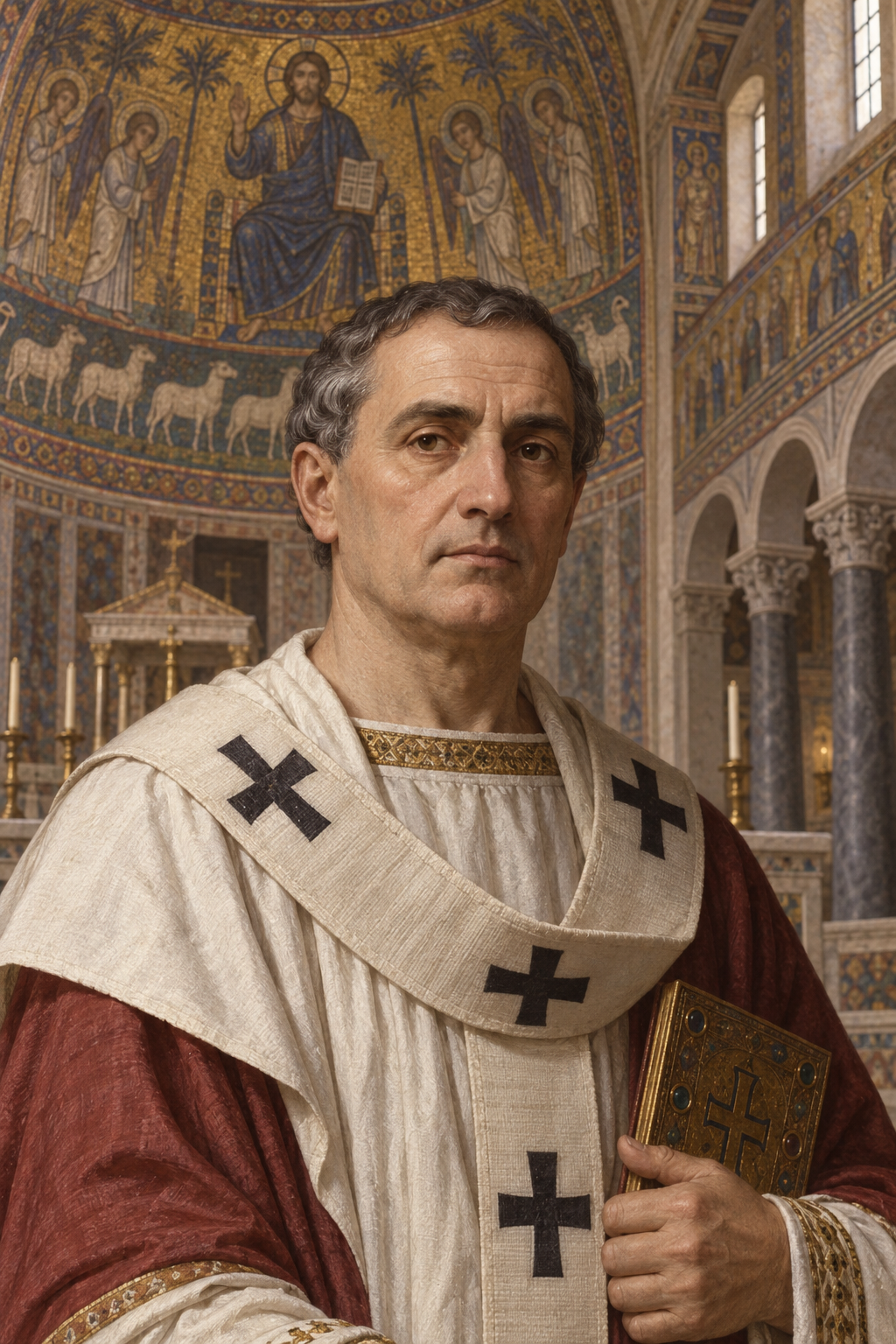
About Pope Sixtus III
The surviving sources meet Sixtus chiefly as a Roman priest rather than as a child or young man. The Holy See lists Rome as his place of birth, but gives no year or family history. Before his election, he was already known in the wider church through correspondence about a dispute over grace and human freedom. This was a question with consequences for preaching and pastoral care, not simply an argument among specialists: Christians disagreed about how divine help and human choice belonged together. The evidence does not tell us how Sixtus first entered the clergy or what work occupied most of his early years. It does show that a Roman presbyter named Sixtus had become important enough for Augustine of Hippo to write to him directly.Augustine's letter of 418 responds to a letter Sixtus had sent to him and to Alypius. Augustine welcomed Sixtus's rejection of the claim that God's grace was earned by prior human merit. He says that Sixtus's position mattered because supporters of Pelagius had previously claimed the Roman priest as an ally. This is Augustine's testimony, written within a controversy, and it should not be inflated into a complete account of Sixtus's earlier views. Treccani likewise notes a period when Sixtus had a reputation for sympathy with Pelagius. Taken together, the sources show a public change or clarification in how he was understood, but they do not reveal a private conversion scene or a simple story in which one letter ended the dispute.Sixtus succeeded Celestine I as bishop of Rome in 432. The Holy See dates the beginning of his pontificate to July 31 and its end to August 19, 440. He inherited the aftermath of the Council of Ephesus, held in 431, before he became pope. The council had condemned Nestorius, but its decisions had not by themselves brought peace among eastern bishops. Disagreement involved both teaching about Christ and rivalry among major sees. Sixtus's task was therefore partly diplomatic: he had to uphold the Roman position while communicating with church leaders who had opposed one another at the council. Treccani describes his action in this conflict as conciliatory, a useful description of method rather than a claim that every division was healed.An older historical church reference says Sixtus approved the council's acts and tried to restore peace between Cyril of Alexandria and John of Antioch. These two bishops had become leading figures on different sides of the controversy. Their reconciliation in 433 did not erase every doctrinal disagreement, but it gave the churches a way to resume relations. Sixtus's surviving correspondence belongs to this effort. The account should not make him the sole maker of that settlement: Cyril, John, other bishops, and imperial officials also shaped it. Nor should later theological formulas be read back as if Sixtus had written them. What can be said is narrower and well attested: the Roman bishop publicly backed the council's acts and worked toward communion after a bitter conflict.Disputes about Pelagian teaching also continued during his papacy. The Catholic Encyclopedia reports that Sixtus blocked Julian of Eclanum, a bishop associated with that movement, from returning to communion. Treccani's account is less focused on an individual episode and describes Sixtus as remaining neutral in Pelagian and semi-Pelagian disputes. These different emphases caution against reducing his policy to a single label. His earlier correspondence with Augustine shows the place of grace in his public theological commitments, but the surviving record does not support a full reconstruction of his own writings on every later question. The evidence is stronger for specific letters, decisions, and contemporary reactions than for an invented, seamless program of doctrinal leadership.His responsibilities reached beyond those theological debates. The Catholic Encyclopedia records a dispute over the church jurisdiction of Illyricum, a region between Rome and Constantinople, in which Sixtus defended the claims of the Roman see. This was a question of which bishops could supervise other bishops and hear appeals. The brief source does not show every local response, so the dispute should not be presented as a settled victory. It does illustrate the practical side of papal work in the fifth century: long-distance correspondence, competing authorities, and the need to govern through other church leaders. These relationships formed part of the setting in which Sixtus also supported construction and worship in Rome.The most visible work associated with Sixtus is the basilica now called Santa Maria Maggiore. Its official historical guide says he most likely completed a church project begun under Liberius, an earlier pope. This qualification matters because the church's origins are more complicated than a single founder's story. A later pope, Benedict XVI, linked Sixtus's rebuilding to the dedication of the basilica to Mary after Ephesus, but that devotional explanation should be read alongside the building evidence, not substituted for it. The mosaics and architecture keep this fifth-century Roman worship space unusually present to later generations. Sources also associate Sixtus with work at Saint Lawrence Outside the Walls. In both cases, the record supports patronage and construction activity while leaving precise shares of design and labor to others.Sixtus died in 440, and the Catholic tradition commemorates him on March 28. A historical reference warns that an accusation against him found in a later text is a forgery, a reminder that not every story attached to a pope belongs in a biography. His surviving letters and the churches associated with his patronage give a firmer way to understand his life. They show a Roman bishop engaged in disputes over teaching and jurisdiction, yet also concerned with reconciliation and a durable place of worship. They do not supply a birth year, family narrative, or reliable private sayings. Sixtus remains significant because his public work connected the decisions of Ephesus with the continuing life of churches in both East and West, while Santa Maria Maggiore preserves a visible trace of that era in Rome.
Wondering how to weigh the stories and sources? Learn how to read a saint biography.