Biography
Pope Vitalian
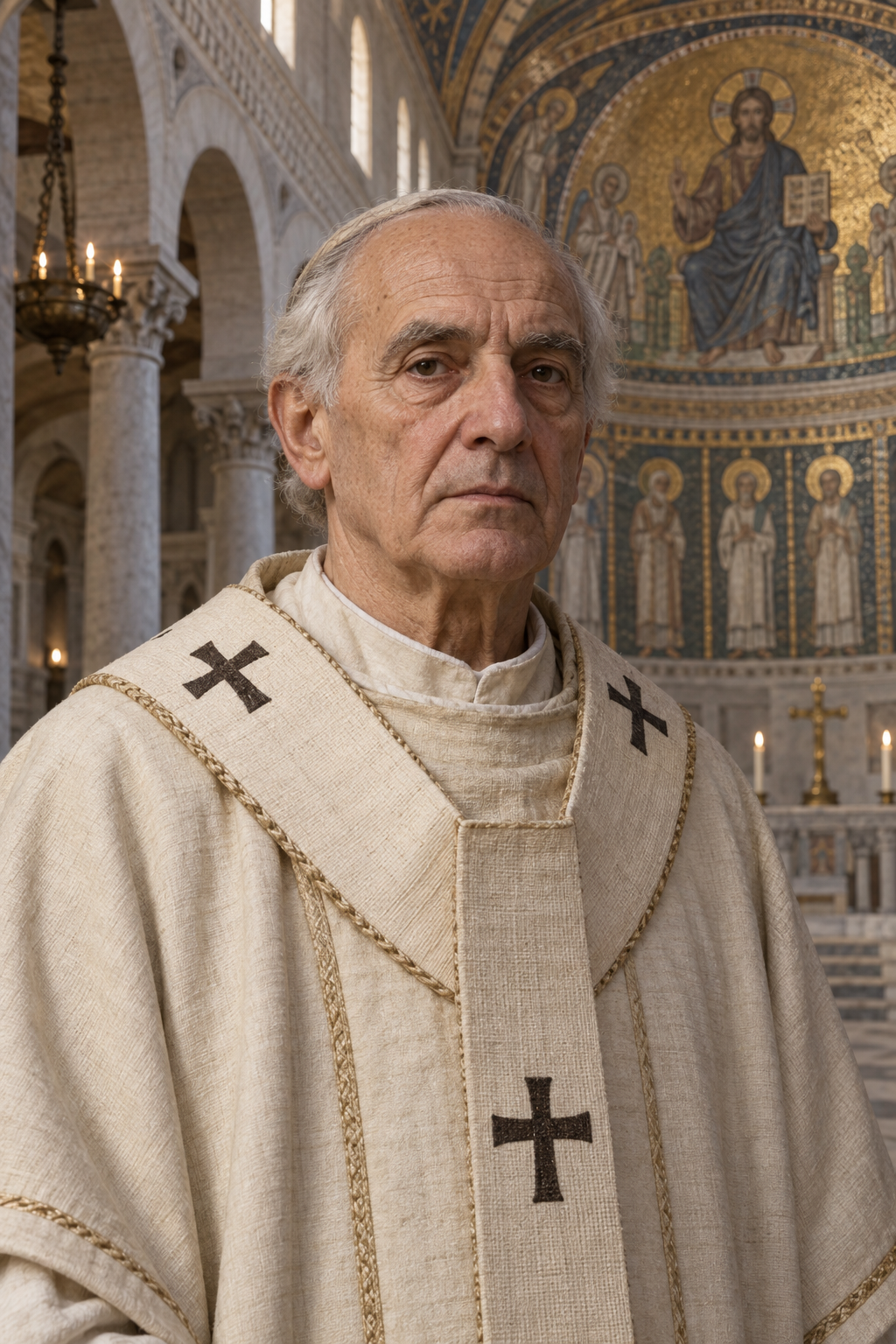
About Pope Vitalian
The Holy See identifies Vitalian as the 76th bishop of Rome and gives Segni as his birthplace, with a pontificate beginning July 30, 657, and ending January 27, 672. It supplies no birth year or account of his early life, so those details remain unknown. He succeeded Eugene I after a vacancy of several months. The first years of his pontificate were marked by the challenge of renewing communication with Constantinople. The imperial court had been at odds with Rome over Monothelitism, the teaching that Christ had one will. The Catholic Encyclopedia’s later synthesis reports that Vitalian wrote to Emperor Constans II and Patriarch Peter seeking renewed communion. Their exchange was an attempt at reconciliation, not a resolution of the theological issue.Vitalian’s name was included in the Byzantine diptychs, liturgical lists of bishops commemorated in communion. The Catholic Encyclopedia interprets this as evidence that communication had improved, while noting that it did not settle the controversy. In 663 Constans II traveled to Rome and met Vitalian. The same reference says the emperor remained for twelve days and removed bronze fittings from the city, including items from ancient monuments. Because that narrative comes through later historical synthesis, it is reported with attribution rather than treated as a papal policy statement. The visit illustrates the unstable political setting in which the pope tried to preserve relations with the eastern emperor while church leaders remained divided over doctrine.The dispute with Constantinople continued under Constans’s successor Constantine IV. According to the Catholic Encyclopedia, Vitalian supported the new emperor’s effort to restore unity, but the Monothelite conflict outlasted Vitalian’s pontificate. The later settlement came at the Third Council of Constantinople in 680–681, after his death. This distinction matters: Vitalian participated in a long process of correspondence and attempted rapprochement, but the available sources do not credit him with achieving the final doctrinal resolution. Nor do they provide detailed records of his personal theological writings. The profile therefore emphasizes his documented role in ecclesial diplomacy while leaving his private views and motives unstated.Bede provides a more direct window into Vitalian’s dealings with the English kingdoms. After the death of Archbishop Deusdedit, a delegation from Northumbria went to Rome with Wighard, who was to be consecrated archbishop of Canterbury. Wighard and his companions died before the consecration. Bede says Vitalian wrote to King Oswiu, explaining the loss and promising to send a suitable bishop. The pope then chose Theodore, a monk from Tarsus, and arranged for Hadrian, an African abbot, to accompany him. Bede includes the wording of Vitalian’s letter, which asks Oswiu to receive Theodore and reports the pope’s care for the English church. This text supports a specific claim about the appointment and correspondence; it does not show that Vitalian personally directed every later English church development.Bede says Theodore reached Britain with Hadrian and later served as archbishop of Canterbury. The source supports a precise account of Vitalian selecting and dispatching the candidate after Wighard’s death, but does not support crediting the pope alone with later English church organization. Oswiu, Hadrian, Theodore, and other local leaders also appear in Bede’s narrative.Vitalian also faced a conflict with the archbishop of Ravenna. The Catholic Encyclopedia says Archbishop Maurus sought independence from Roman authority and obtained an imperial privilege from Constans II. Vitalian objected and the dispute continued beyond both men. This account describes an institutional struggle over jurisdiction and imperial backing, not simply a personal quarrel. The later reference reports that the conflict contributed to a prolonged dispute between Rome and Ravenna. The surviving source material used here does not justify treating every stage or legal claim in that controversy as uncontested, so the profile presents it as a reported episode in the complex relationship between regional bishops, the pope, and the emperor.Another case in the Catholic Encyclopedia’s account concerned John, bishop of Lappa in Crete, who appealed after his deposition by a local synod. Vitalian convened a hearing in Rome in 667, where his legates and other church representatives examined the appeal. The reference reports that the pope judged John’s removal unjust and wrote to restore him. As with the Ravenna dispute, the episode shows that appeals could bring local disciplinary decisions before Rome, while also exposing disagreement about the extent of papal jurisdiction. The source is a later synthesis, so the procedural details are presented as reported rather than as an independently surviving transcript.The Holy See records January 27, 672, as the end of Vitalian’s pontificate. The French bishops’ conference commemorates him locally on January 27 and summarizes his attention to the English mission. No reliable birth date is supplied by these sources. They also do not establish a martyrdom or dramatic death narrative, and none is needed to explain his place in the church calendar. This profile uses the pontificate’s end as the recorded death date, keeps early chronology unset, and distinguishes Bede’s near-contemporary account of the English mission from later encyclopedia summaries of imperial and Ravenna affairs.
Wondering how to weigh the stories and sources? Learn how to read a saint biography.