Biography
Pope Zephyrinus
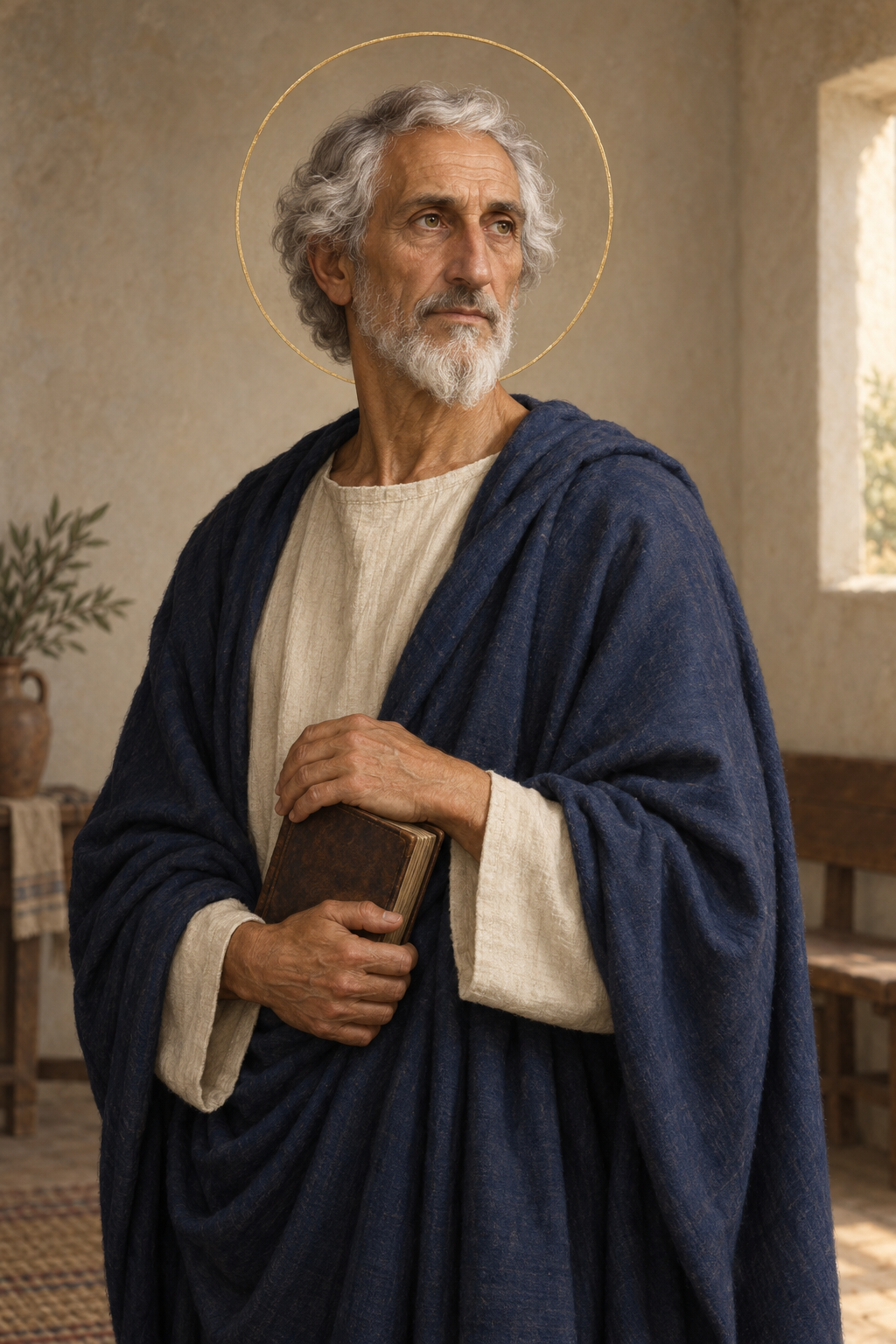
About Pope Zephyrinus
Zephyrinus was bishop of Rome at the turn of the third century. The Holy See’s register places his accession in 198 and the end of his pontificate in 217 or 218. It describes him as Roman.
One of his important administrative decisions concerned Callistus, who had been living at Antium under his predecessor Victor. The Refutation of All Heresies reports that Zephyrinus brought him back to Rome, employed him in the management of the clergy and placed him over the cemetery. The account also describes Callistus as his close adviser. Its author strongly disliked both men, but the appointment itself forms part of his detailed narrative.
The Roman church was divided over how to explain the relationship between the Father and Jesus Christ. One theological school emphasized the divine Word, or Logos, as distinct from the Father. Another, associated with Cleomenes and Sabellius, stressed God’s unity so strongly that Father and Son could seem to be different manifestations of the same person. These were arguments about how Christian belief should be expressed, and about which distinctions protected it from misunderstanding.
Zephyrinus did not issue the decisive condemnation demanded by the opposing theologian. His brief statements affirmed Christ’s divinity and distinguished the Son’s death from the Father. The continuing dispute made his position vulnerable to criticism from those who wanted a more explicit doctrinal formula.
The Refutation portrays him as lacking learning and judgment, and accuses Callistus of manipulating him. Its author presents himself as an active defender of the truth against the Roman leadership. He says that Zephyrinus and his supporters accused his own side of worshipping two gods. Such language shows the bitterness of the dispute. It also means that the work cannot be read as a disinterested assessment of the bishop’s character.
The author says he repeatedly challenged the teaching around Zephyrinus and Callistus. He describes moments when his arguments appeared to win agreement, followed by renewed disagreement. His partisan account portrays a community engaged in repeated conversation and competing explanations, with doctrinal claims being challenged in public and private.
Prinzivalli cautions that even the precise formulas attributed to Zephyrinus may have been adapted by his opponent. She considers his brief affirmations an attempt to remain close to basic expressions of faith, without adopting elaborate individual explanations. The uncertainty concerns the wording and interpretation of his position, rather than whether serious disagreement existed in the Roman community.
The author’s own identity is also disputed. Enrico Dal Covolo explains that the traditional biography of Hippolytus combined evidence about writings, a statue and a Roman martyr. The Refutation was only published in the nineteenth century and was then connected with that reconstructed figure. Later scholarship questioned whether works of very different character belonged to one person. Consequently, referring to the author as the Roman polemicist avoids assuming that every detail attached to Hippolytus describes the same man. The hostile account remains valuable testimony, while its traditional author’s full biography is less secure.
A different remembered episode concerns Natalius, a Christian confessor who became bishop of a separated group associated with Theodotus. Barmby recounts the early narrative in which Natalius eventually appeared before Zephyrinus in penitential clothing, with tears and ashes, asking to return to communion. He was received back. The episode belongs to the history of reconciliation as well as doctrinal disagreement: the boundary between communities could be defended without making a person’s return impossible. The narrative’s claim about his interior motives and supernatural warnings need not be treated as independently established events.
Other arguments concerned the followers of Montanus and their claims to continuing prophecy. Barmby places opposition to that movement within the Roman church during Zephyrinus’s episcopate, while acknowledging that no particular action by Zephyrinus is recorded in that dispute. This distinction leaves room for the church’s wider activity without assigning every surviving debate or literary response to its bishop personally.
Later sources credited Zephyrinus with decrees about ordination and the celebration of the Eucharist. Kirsch judges those particular attributions to lack a historical basis. They do not provide a secure record of laws personally enacted by him.
Two letters circulated under his name are also spurious.
After his death, Zephyrinus was buried above ground near the cemetery administered by Callistus. Early pilgrimage notices connect his grave with that of Tarcisius. Archaeological investigation found a double burial structure beneath a later three-apsed building, subsequently arranged for devotion at the tomb. Prinzivalli regards its identification with the two saints’ grave as possible, rather than certain. The surviving three-apsed setting probably belongs to the fourth century. The distinction between the earlier tomb and its later architectural setting matters when reconstructing the burial site.
The surviving chronology does not securely fix whether he died in 217 or 218. The tradition that he was a martyr also lacks dependable early support.
Vatican News commemorates Saint Zephyrinus on 26 August.
Wondering how to weigh the stories and sources? Learn how to read a saint biography.