Biography
Poppo of Stavelot
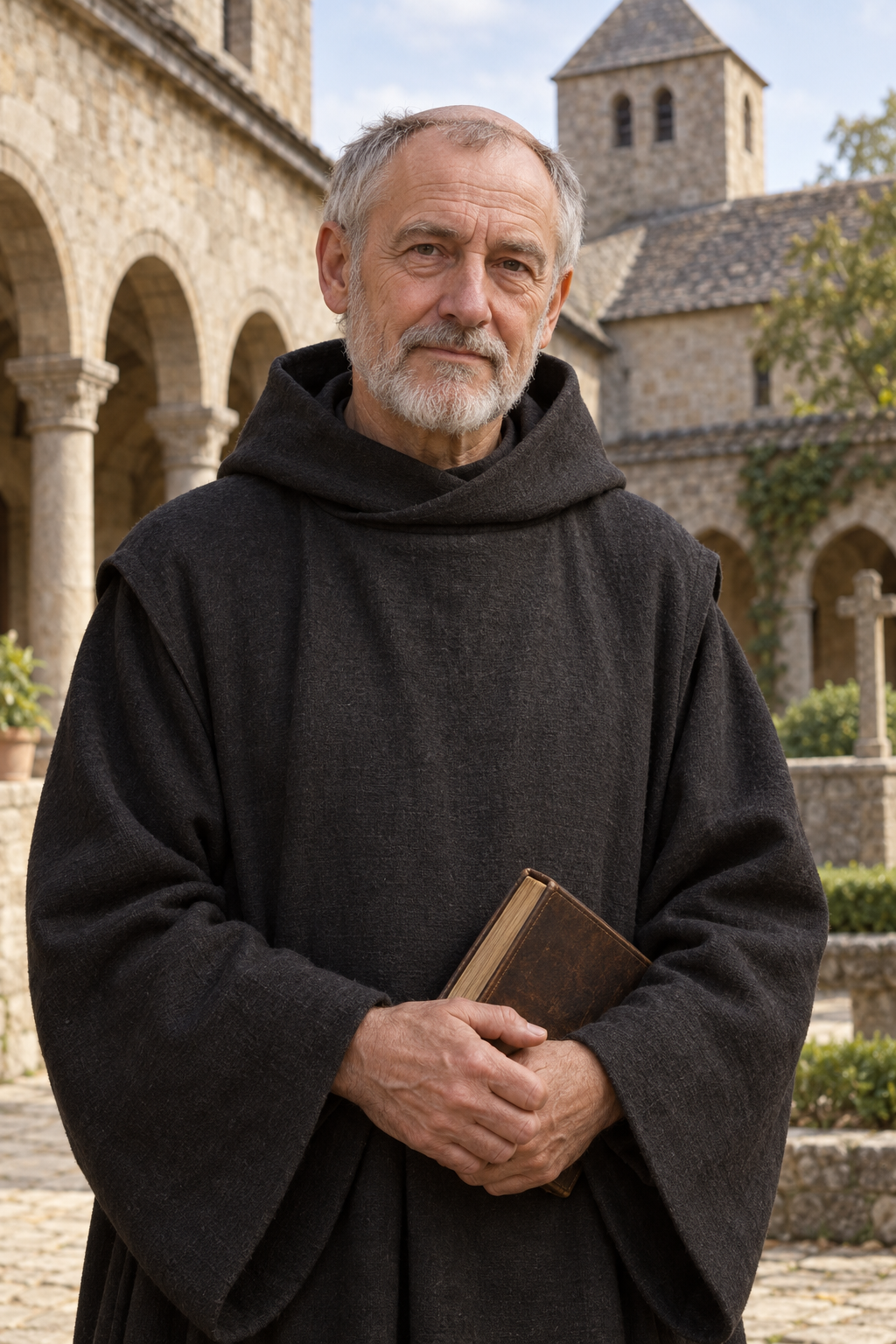
About Poppo of Stavelot
Poppo of Stavelot was a Benedictine abbot whose work joined the reform of monastic life to the practical demands of governing religious communities. His responsibilities extended beyond prayer and discipline to estates, administration and building. He served rulers as well as monasteries, including a diplomatic role in the peace made between Conrad II and Henry I of France in 1033. His career belongs to a period when religious leadership and royal government were closely connected.
Before entering a monastery, Poppo lived as a nobleman in Flanders. The Catholic Encyclopedia recounts pilgrimages to the Holy Land and Rome, followed by the abandonment of a proposed marriage and his entry into Saint-Thierry near Reims. It also preserves a story of mysterious light surrounding him on a night journey. That episode belongs to the devotional account of his conversion, rather than an independently established explanation of his decision. His later work brought him into the circle of Richard of Saint-Vanne at Verdun, who entrusted him with responsibilities in other houses.
At Saint-Vaast in Arras, Poppo's duties included recovering monastic property and securing possession through written deeds. He subsequently held responsibility at Beaulieu. These early appointments placed him in situations where reform required attention to the material resources of a community as well as its observance.
Historian Koen Vanheule places Poppo's entry into Saint-Thierry between 1005 and 1008. His study also challenges the habit of explaining an abbot's rise solely through personal holiness or exceptional talent. In Poppo's case, relationships formed before and after conversion helped make him a suitable candidate for powerful patrons. Vanheule treats political connections as part of the explanation for his career, while distinguishing reconstructed motives from directly recorded events.
That distinction matters at Stavelot-Malmedy. Henry II installed Poppo there in 1020 despite the communities' right to elect their abbot. Vanheule argues that the interests of the Luxembourg family probably influenced the choice, but explicitly acknowledges the lack of direct evidence for such an arrangement. The resulting picture is more complicated than a reformer simply arriving to correct negligent monks. The appointment also affected local power, loyalties and control of the abbey's resources.
Stavelot and Malmedy were two communities under one abbot. Their rivalry was a continuing problem, and Poppo strengthened Stavelot's position within the shared institution. Philippe George's study places that policy alongside his building work and the management of the abbey's property. Religious renewal involved the relationship between the two houses, rather than an isolated change in an individual monk's routine.
A surviving dedication account brings the new church into unusually clear view. It records its consecration on 5 June 1040, with King Henry III present alongside bishops and the royal court. The text credits Poppo with rebuilding the church from its foundations and describes a celebration that joined the monastery, its patrons and a wider public.
The account also describes Poppo providing two estates for the altar and the maintenance of the building. Relics were carried in procession around the enclosure, and Henry took part in carrying the shrine. A public reading of an earlier papal privilege affirmed the monastery's protection. These details show how the ceremony combined worship with arrangements for the institution's future support. They are the claims of a medieval account written after Poppo's death, rather than a modern eyewitness report.
The end of Poppo's life still found him travelling on monastic business. At the request of Baldwin V of Flanders, he went to Saint-Vaast and then Marchiennes. He died at Marchiennes on 25 January 1048. George checks that date against the medieval Life and obituary evidence, while noting conflicting commemorative and inscriptional records. The account of his funeral places his burial in the crypt at Stavelot, in the church he had helped to build.
Much of the personal narrative survives through the Life written by Onulfus at the request of Everhelm of Hautmont. The modern catalogue of medieval German historical sources dates its composition before 1059 and notes a proposed narrower dating between 1049 and 1054. Everhelm subsequently revised and supplemented the text. The catalogue identifies surviving manuscript witnesses and classifies the work as hagiography as well as biography. This transmission helps explain why a source close to Poppo's lifetime still needs careful reading: it was also composed to preserve and promote the memory of a saint.
Poppo was venerated at Stavelot after his death. Later remembrance included a reliquary with a half-length figure made in 1625–1626. That devotional image belongs to the history of his cult, not to evidence for his appearance during life.
The abbey's heritage history remembers his church as a monumental building designed to accommodate monks and pilgrims together. The church was dismantled after the French Revolutionary period; archaeological work later recovered remains of the pilgrimage church and earlier religious buildings. Those remains preserve a tangible part of the setting transformed during Poppo's abbacy, alongside the texts that record his work.
Wondering how to weigh the stories and sources? Learn how to read a saint biography.