Biography
Potentian
About Potentian
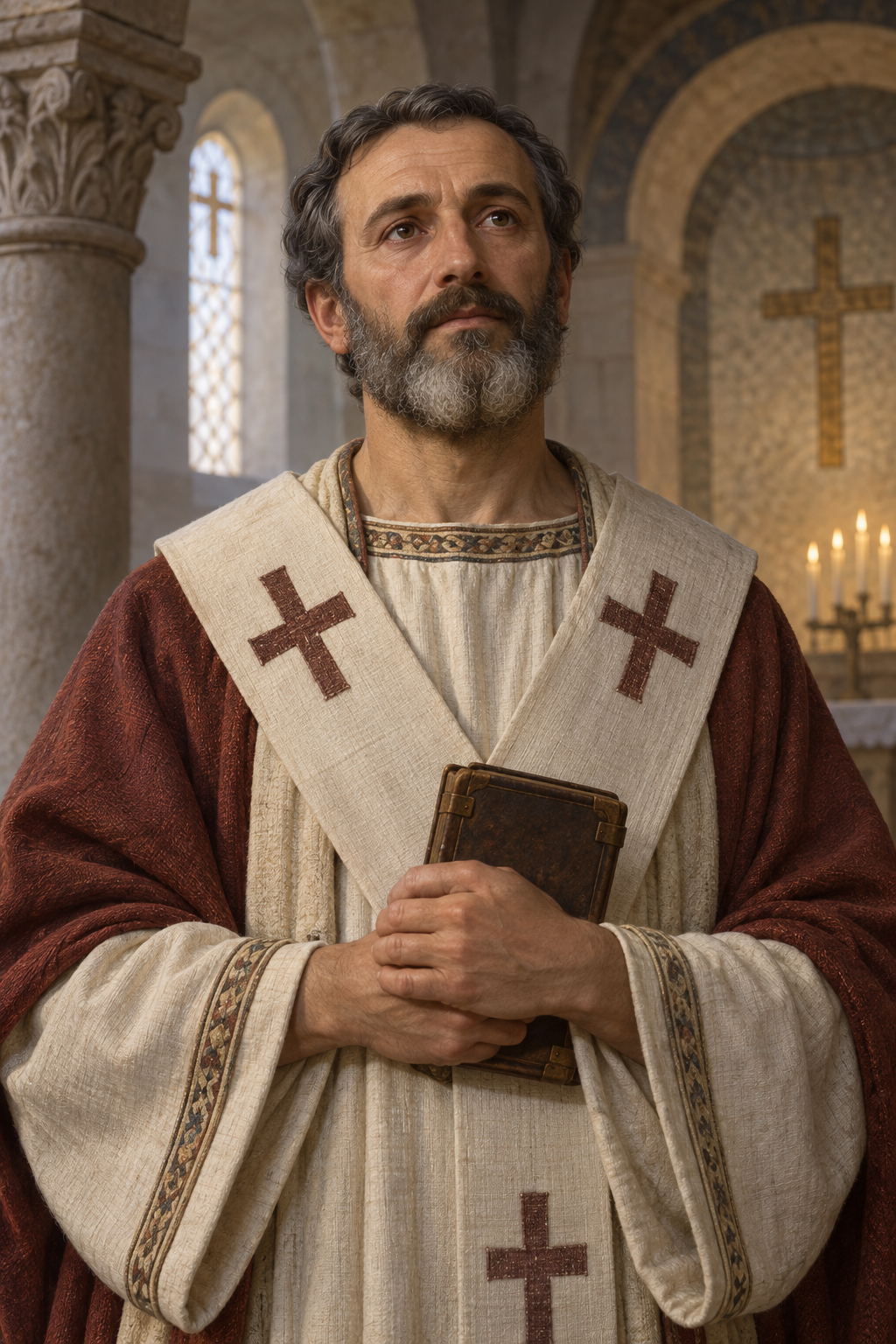
The name Potentian belongs to the early Christian memory of Sens, but the evidence does not give us a securely dated biography. In local tradition he appears together with Savinian, who is described as the first bishop of Sens, and is remembered as a successor and martyr. The story of the pair’s arrival from Rome in apostolic times was part of a later effort to give the church of Sens an ancient foundation. The French bishops’ conference explicitly warns that this first-century mission is more legendary than historical. No reliable source establishes Potentian’s birth, family, travels, or precise date of death.The historical record is notably quiet about the pair at first. Gregory of Tours does not mention them as founders of Sens, and the early form of the Hieronymian Martyrology discussed in the Sens reference also omits them. That silence does not prove that no Christian memory existed, but it limits what can responsibly be claimed about a first-century mission. The evidence becomes clearer in the ninth century, when relics associated with Savinian and Potentian were ceremonially translated to the church of Saint-Pierre-le-Vif at Sens in 847. That event is an important marker of the development of their public cult.Later martyrologies gave the pair a more definite place in the history of the local church. Wandelbert of Prüm named them patrons of Sens in 848, and Ado soon afterward described them as envoys of the apostles and martyrs. Usuard, writing later in the ninth century, likewise presented them as missionaries sent by a Roman pontiff. These notices are valuable evidence for how medieval Christians understood and promoted the origins of Sens. They are not contemporary records from the first century and cannot independently establish that Potentian lived then or was personally sent by an apostle.Potentian’s commemoration has also varied by place. Biblissima records December 31 in the Sens tradition and connects his name to the medieval manuscript dossier for Savinian and Potentian. The French Catholic calendar distinguishes a local feast on October 19 from the December 31 entry in the Roman martyrology. This difference reflects separate liturgical uses, not two separate biographies. Since the historic evidence is largely about cult and commemoration, this profile does not repeat the detailed martyrdom scenes found in later narratives as established events.The continuing importance of Potentian lies in the way the church of Sens remembered its earliest Christian community. The relic translation, manuscript lives, and liturgical notices show how a local cult could preserve communal identity even when the earliest narrative details were uncertain. His name should remain distinct from Potentiana, the Roman martyr associated in later tradition with Praxedes; the two figures belong to different cult histories. The portrait here is an imaginative devotional rendering of a generic early bishop, not a depiction derived from a surviving image or source description.
Wondering how to weigh the stories and sources? Learn how to read a saint biography.