Biography
Rafael Guízar y Valencia
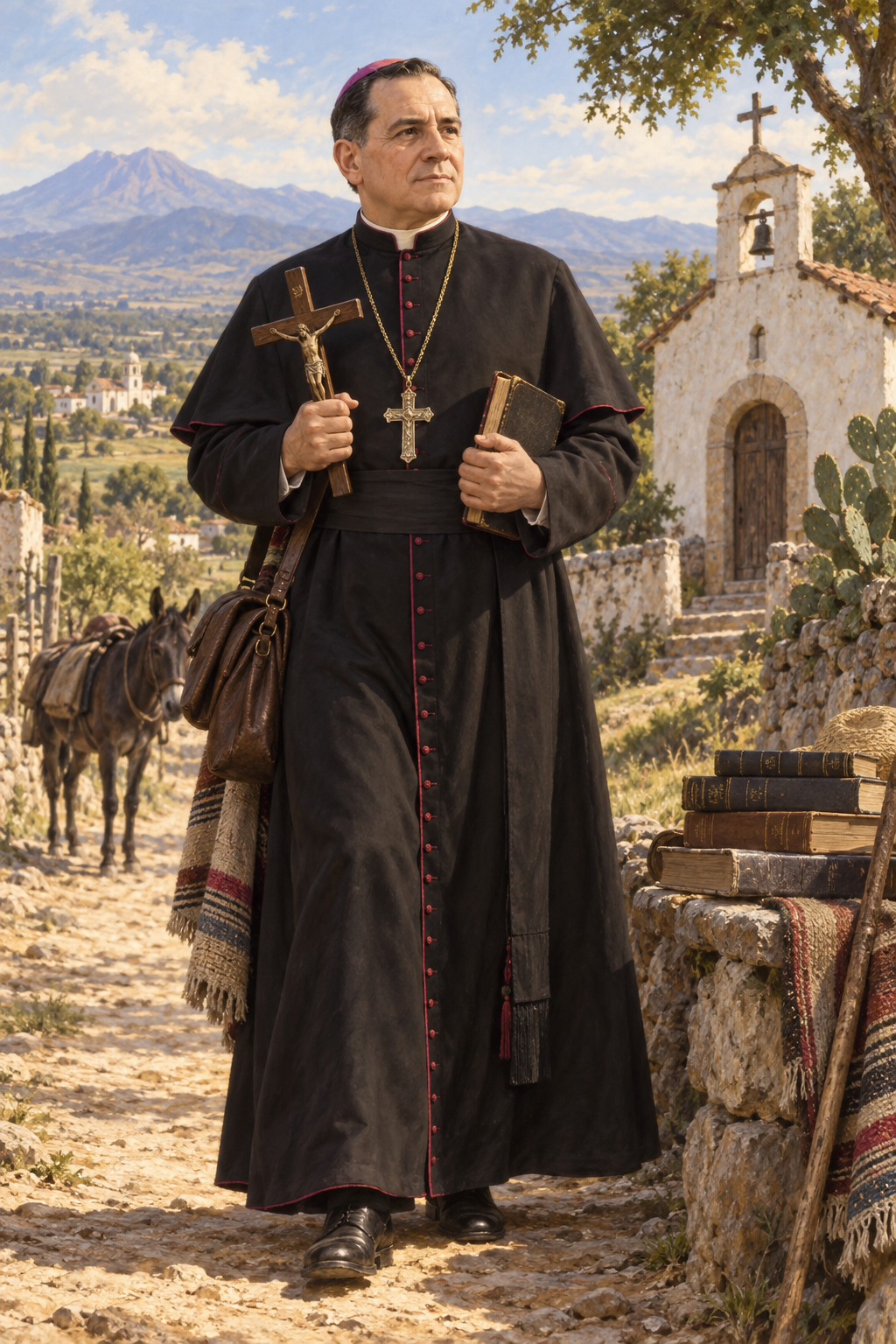
About Rafael Guízar y Valencia
Rafael Guizar y Valencia was born on April 26, 1878, at Cotija in Michoacan, Mexico. The Dicastery for the Causes of Saints places his birth within the Diocese of Zamora and presents his later life as a missionary bishop shaped by preaching, seminary formation, and pastoral courage.
He lost his mother when he was still a child. Rafael entered the minor seminary at Cotija in 1891 and the major seminary at Zamora in 1896. Those details should be used plainly, without turning childhood loss into the whole explanation for his vocation.
Guizar was ordained priest in 1901. He became known for mission preaching in Zamora and other Mexican regions, carrying catechesis and sacramental ministry to people whose ordinary parish access could be fragile. The Vatican biography emphasizes this missionary pattern.
Mission preaching should be described as more than public speaking. For Guizar it meant traveling, teaching basic doctrine, hearing confessions, encouraging families, and strengthening parish life. Those actions explain why the later image of him as a bishop on the road is more faithful than a static official portrait.
In 1905 he became spiritual director of the Zamora seminary. That work is a thread through the rest of his life: he cared not only for immediate preaching, but also for the formation of priests who could serve after him.
The seminary role also helps the profile avoid reducing him to crisis ministry. Even under pressure, Guizar's attention to future priests shows a long horizon. He wanted the Church in Mexico to have shepherds trained for ordinary parish service as well as for extraordinary danger.
In 1911 he founded a religious newspaper. The public page can mention this as part of his pastoral response to public pressure and religious conflict. It should avoid turning the conflict into partisan shorthand; the sources support ministry under persecution, not a simplified political cartoon.
The years that followed brought danger, displacement, and exile. Guizar continued ministry in hidden or risky circumstances and, according to the official biographies, helped plague victims in 1919. This should be written with restraint, preserving the seriousness of the danger without graphic drama.
In 1919, while he was in Cuba, Rafael Guizar was appointed Bishop of Veracruz. He was consecrated in Havana and took possession of the diocese in 1920. The page should explain that Veracruz is the diocesan title while Xalapa appears in the seminary story, so readers are not confused by the place names.
This geographic clarity matters because his pastoral labor moved across several places: Cotija and Zamora in formation, Cuba during appointment, Veracruz as the diocese, Xalapa in seminary care, and Mexico City at death. The At a glance field can stay concise while the biography supplies the sequence.
As bishop, he renovated or sustained the seminary at Xalapa. When authorities seized or restricted ordinary structures, he continued seminary formation in clandestine ways. This detail belongs near the center of the biography because it shows his priorities under pressure.
The word clandestine should be used soberly. It names hidden formation under coercive pressure, not intrigue for its own sake. The page should make clear that the aim was pastoral continuity and priestly preparation, not romance or adventure.
His episcopal ministry joined travel, preaching, and direct attention to the poor and sick. The artwork and prose should avoid presenting him as a generic political opponent. His identity in the sources is first pastoral: bishop, missionary, preacher, and seminary father.
Benedict XVI's canonization context can support this emphasis without long quotation. Guizar's public witness is best summarized as a shepherd who did not abandon his flock when access to ordinary ministry was blocked or dangerous. That frame keeps courage tied to charity.
In that sense, his hidden seminary work and public mission preaching belong together pastorally.
Illness marked his later years, but it did not end his pastoral concern. The official profiles connect his final missionary efforts with heart trouble and declining strength. The page should not exaggerate heroic travel beyond the evidence, but it can show persistence despite bodily weakness.
Rafael Guizar y Valencia died in Mexico City on June 6, 1938. The Dicastery records his beatification by John Paul II in 1995 and canonization by Benedict XVI on October 15, 2006, with June 6 as the liturgical memorial.
His sanctity is best framed through mission preaching, priestly formation, and pastoral courage under persecution. The final page should not flatten the Mexican religious conflict into slogans, and it should not make danger itself the center of the saint. The center is a bishop who kept forming and serving his people.
Artwork should show a Mexican bishop in simple episcopal dress with a missionary crucifix, catechism or seminary book, rural road, chapel, and travel satchel. Avoid weapons, graphic persecution imagery, partisan symbols, rendered text, logos, halos, and exact-likeness claims.
Wondering how to weigh the stories and sources? Learn how to read a saint biography.