Biography
Rafaela Porras y Ayllón
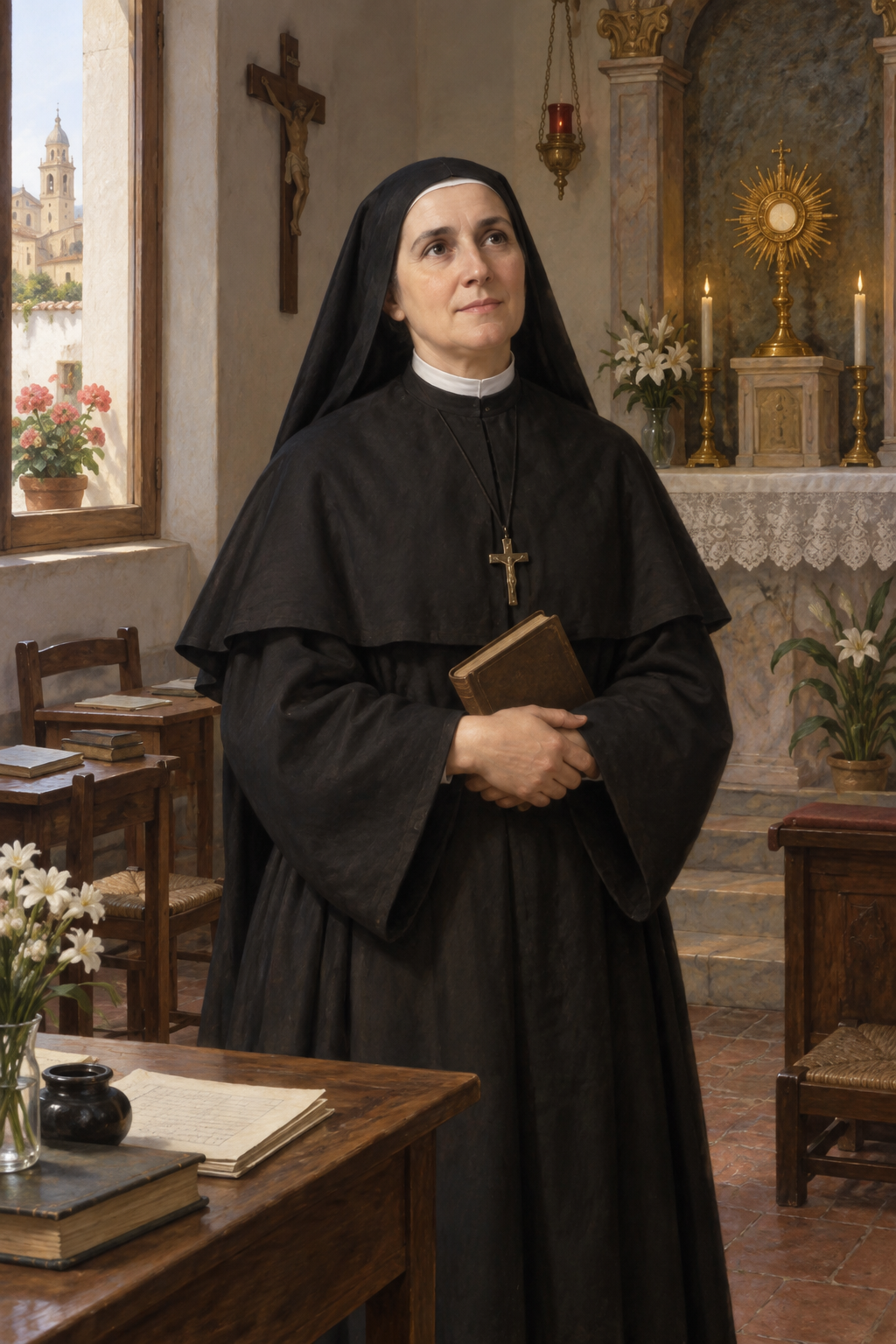
About Rafaela Porras y Ayllón
Rafaela Porras y Ayllon was born on March 1, 1850, at Pedro Abad, Cordoba, Spain. The Dicastery for the Causes of Saints presents her within a well-formed Christian family and later as foundress of the Handmaids of the Sacred Heart.
Family losses helped turn Rafaela and her sister Dolores toward a more explicit religious path. Dolores is also known in religion as Pilar, so the final page should name her carefully and avoid making the two sisters interchangeable.
Their discernment should be described as a shared beginning, not as a vague family mood. The sources support a movement from grief and responsibility toward consecrated life, prayer, and organized service. That movement explains why the founding later held both contemplation and education together.
The sisters began their religious discernment in the 1870s. In 1877 Rafaela and Dolores/Pilar founded the Handmaids of the Sacred Heart. The congregation's life joined Eucharistic adoration, reparation, education, and service to students, especially those who were poor.
The name Handmaids of the Sacred Heart should be allowed to carry its devotional weight. The sisters were not simply teachers who happened to pray; their educational work flowed from adoration and reparation. At the same time, their adoration did not withdraw them from the needs of young women.
Paul VI's canonization homily is useful because it keeps the charism balanced. He presented Rafaela's institute as a union of worship and apostolic service, not as a school project with prayer added afterward.
This balance should guide the tone of the public page. If the biography stresses only humility after removal, it loses the energetic foundress. If it stresses only foundation and approval, it loses the long obedience that Paul VI treated as a central witness.
The Decretum Laudis came on January 24, 1886, and definitive approval followed soon after. These details can appear in the biography because they show that the new community did not remain an informal effort; it entered a stable ecclesial form.
The approval chronology also keeps the public page precise. It can say the institute received praise and definitive approval without suggesting that every later structure, school, or spirituality center was already fully developed at that moment.
Rafaela led the institute during its early expansion. The public profile should not make institutional growth the whole story, but it can show that her leadership combined spiritual direction, education, and practical governance.
The most delicate part of the biography is her removal from leadership. Paul VI treated this episode as a central witness to humility, but the page should not speculate about motives or dramatize internal conflict. It should say that she accepted removal and entered a long hidden service.
The final text should not imply that hiddenness made her irrelevant. A saint can serve the same mission without title, visibility, or control. Rafaela's later life shows a different form of authority: fidelity to the institute's spirit when she could no longer direct the institute's decisions.
That hidden life took place in Rome for more than three decades. The significance is not passivity. Rafaela continued living the institute's spirit when she no longer held public authority, and that fidelity is part of her sanctity.
Rome also gives the page a concrete end point. She did not return to the Spanish beginnings as a triumphant founder. She died in the city where she had accepted ordinary, quiet service, and that setting belongs to the meaning of her final years.
The page should also avoid implying that humility meant self-erasure in a psychological sense. The sources present her surrender as Christian obedience and charity, not as weakness or failure. That nuance protects both the saint and the reader.
Education remains important in the profile. Rafaela's charism reached young women and poor students, so the public page should keep school papers or books as secondary attributes, while keeping Eucharistic worship as the spiritual center.
Rafaela died in Rome on January 6, 1925. The Dicastery profile records her beatification by Pius XII in 1952 and canonization by Paul VI on January 23, 1977, with January 6 as her liturgical memorial.
Her witness is best framed as adoration made durable in service. She founded and governed, then served without title. The final page should let those two halves interpret each other instead of presenting her only as successful foundress or only as hidden sufferer.
The saint's profile should therefore be gentle but not vague. It should name Pedro Abad, Dolores/Pilar, the Handmaids, Decretum Laudis, Rome, and the hidden years, while keeping the spiritual thread clear: Eucharistic love expressed in education, reparation, humility, and service.
Artwork should show a Spanish foundress in a simple black habit and veil in a chapel-school interior, with a restrained Eucharistic adoration cue, book, and papers. Avoid melodramatic conflict imagery, rendered text, logos, halos, modern props, and exact-likeness claims.
Wondering how to weigh the stories and sources? Learn how to read a saint biography.