Biography
Regina Maria Vattalil
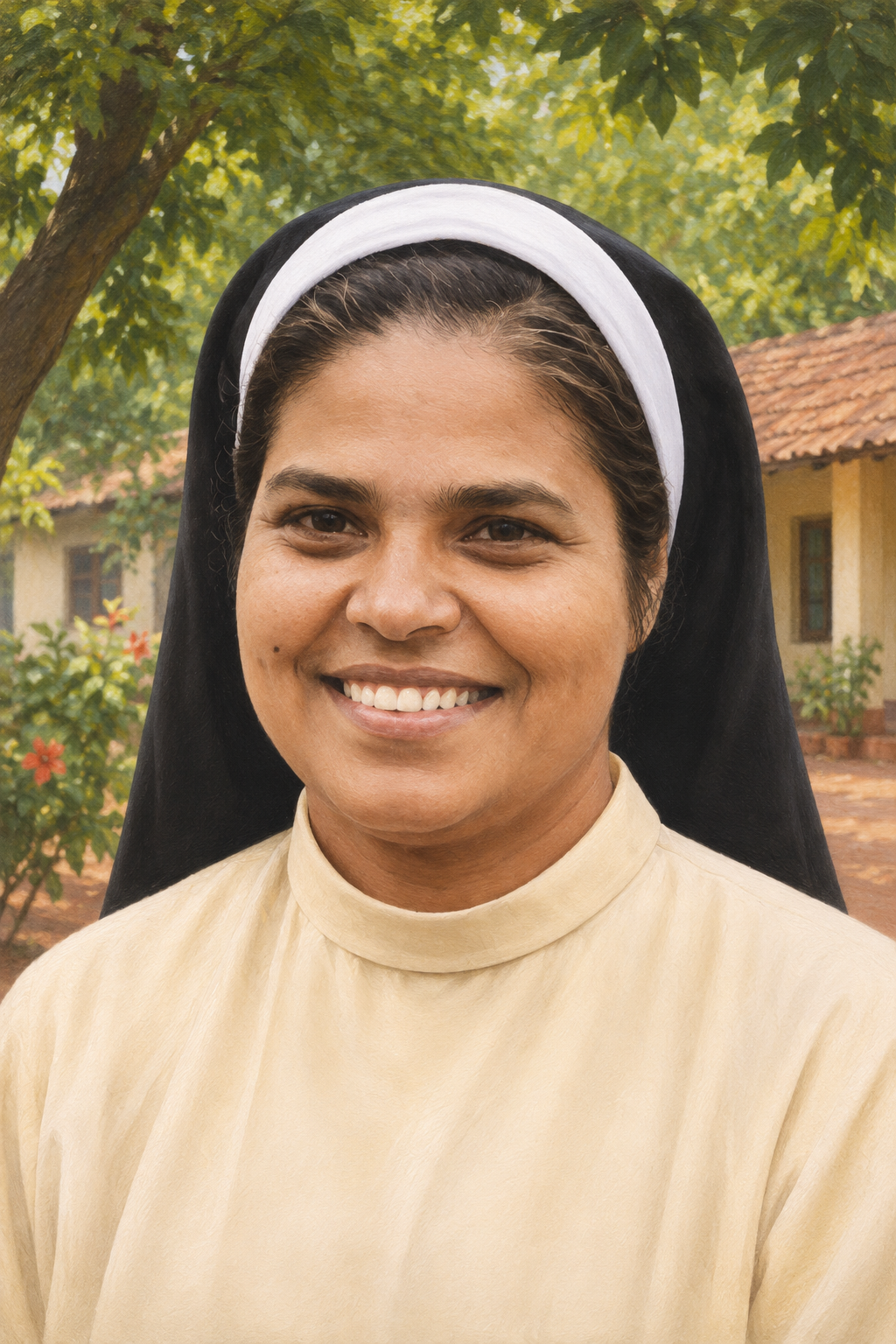
About Regina Maria Vattalil
Regina Maria Vattalil, later known in religious life as Sister Rani Maria, was born in Pulluvazhy, Kerala, on 29 January 1954. The Vatican decree records the names of her parents, Paily and Eliswa Vattalil, and her baptism at the local parish on 5 February. Her family belonged to the Syro-Malabar Catholic Church. The French bishops’ Nominis profile says her family called her Kunjumary and identifies her as the second child. These family details place her early life in a close village and church community.
On 3 July 1972, Kunjumary entered the Franciscan Clarist Congregation at Kidangoor. She made first profession in May 1974 and perpetual profession in May 1980, taking the name Rani Maria as she began religious life. The dates are recorded in the Vatican decree and congregational histories. Her decision to become a sister led to missionary assignments far from Kerala and a ministry centered on people in rural poverty.
In 1975 she was sent to the Diocese of Bijnor in northern India. Church accounts describe catechesis and social service among village communities, including assistance with food, employment, relief, and education. Her work developed through sustained presence in villages and attention to needs identified by the people she served.
In 1983 she was assigned to Satna. The Vatican decree describes her efforts for the material and spiritual welfare of local people, particularly women and children. A later diocesan timeline reports that she encouraged formal and non-formal education for children and helped farmers learn about government schemes and apply for loans, seeds, fertilizer, and irrigation. Such practical work linked pastoral care with the conditions that shaped village livelihoods.
In May 1992 the congregation sent her to Udainagar in the Diocese of Indore. The Franciscan Order describes her ministry among poor rural families and her efforts to support women’s dignity. It records her work to organize a savings cooperative that offered interest-free loans. The cooperative gave women and families an alternative source of credit, and local moneylenders reportedly opposed it. Her mission therefore included both religious service and efforts to strengthen people’s ability to make decisions about their economic lives.
Rani Maria’s Franciscan spirituality is often summarized by the motto “Jesus for all, and all for Jesus,” quoted in the Dicastery biography. Her sisters and church sources describe prayer as central to the rhythm of her work. They also recount her advocacy for Catholics imprisoned in a false case and the threats that followed. These accounts establish the setting of her final mission, though they do not make her a solitary actor: she served within a congregation and in relationship with village communities.
On 25 February 1995, while travelling by bus from Udainagar toward Indore, Rani Maria was attacked and killed. The Vatican decree recognizes her death as martyrdom for the Christian faith and gives her age as forty-one. The Dicastery for the Causes of Saints and the Franciscan Order say she was stabbed fifty-four times and repeated the name of Jesus. Her body was taken to Indore, where thousands, including people who were not Catholic, came to mourn; after her funeral on 27 February, a large procession accompanied her remains roughly one hundred kilometers back to Udainagar. These public acts of mourning show how widely her death was felt in the region.
After the killing, Rani Maria’s family and fellow sisters forgave the man convicted of the murder. The Vatican’s account presented forgiveness as an act of mercy; a later diocesan timeline dates visits by her sister and mother to the imprisoned man to 2002 and 2003. Their response did not erase the crime or the loss. It became a distinct part of the public memory of the case because the family chose reconciliation while still naming what had happened.
The Church recognized her martyrdom by decree on 23 March 2017, and she was proclaimed Blessed at Indore on 4 November. Pope Francis referred to the beatification at the Angelus the following day. The recognition followed decades of remembrance by her congregation and the communities where she had served.
Vatican News describes the people she served in Udainagar as landless agricultural laborers and reports that local landowners resented her advocacy for just wages and other rights. This account supplies context for the opposition she faced; the responsibility of particular individuals remains a matter for the legal record. Her work in Udainagar also included organizing a women’s savings cooperative.
During the beatification process, the tomb was opened in November 2016 and her remains were transferred to a church. The Vatican Radio report describes this as a formal step before the 2017 beatification. Her posthumous recognition thus involved both Roman procedures and the local church at Indore, where she had served. The details of the transfer belong to the history of her cult, distinct from the original burial at Udainagar after her murder.
A profile published by the Catholic Church in Norway gives a closer view of the final weeks. It says Rani Maria rose around four each morning for personal prayer and took an active part in the community’s common prayer. Eight days before her death, during a visit to the provincial house, she told her former novice mistress, Sister Infant Mary, about continuing death threats. The same profile recalls her saying that she wished to die as a martyr for Jesus and for poor and oppressed people. This testimony is retrospective and is best treated as a report of what Rani Maria confided, rather than as a contemporaneous diary entry.
Wondering how to weigh the stories and sources? Learn how to read a saint biography.