Biography
Raphael of Brooklyn
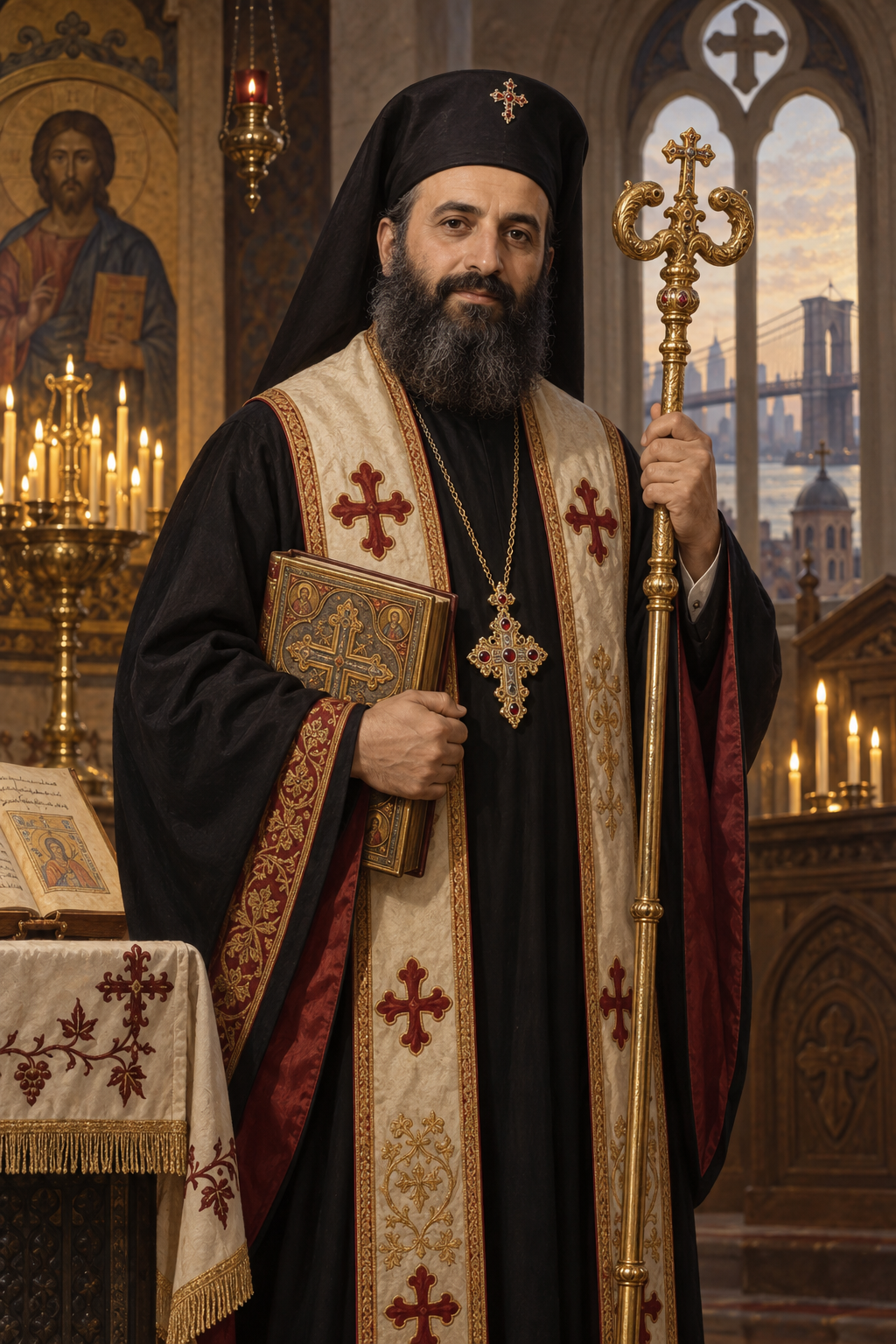
About Raphael of Brooklyn
Raphael of Brooklyn was born Rafla Hawaweeny in Beirut in 1860, according to the and OCA life. The OCA life says his parents, Michael and Mariam Hawaweeny, were from Damascus and had gone to Beirut after violence in Damascus. The existing catalog row says Syria; the reviewed packet should preserve the more precise wording that he was born in Beirut to Damascene parents while keeping the broader Syrian/Ottoman context clear.
Raphael's education crossed several Orthodox centers. OCA sources place his early study in Damascus, then at the Theological School at Halki, and later at the Kiev Theological Academy. He was ordained deacon in 1885 and priest in 1889. These details matter because his later North American ministry was not only ethnic chaplaincy. It drew on Arabic pastoral identity, Greek and Russian Orthodox schooling, and a wide ecclesial network.
In 1895 Raphael came to New York to serve Arabic-speaking Orthodox Christians. The OCA life presents these communities as scattered, pastoral care-starved, and in need of worship, teaching, sacraments, and organization. A careful profile should say this without turning immigrants into an anonymous mass. Raphael's work was among particular families, parishes, and languages, and his pastoral attention was rooted in their needs rather than in a generic immigrant story.
Raphael's New York ministry quickly expanded. OCA sources describe him traveling to visit communities, preaching in Arabic, hearing confessions, teaching children, reconciling conflicts, and helping organize parish life. He also founded The Word in 1905 as an Arabic-language church publication. This belongs in the public profile because it shows that his mission included communication and education, not only sacramental visits. The publication work also shows how he tried to bind scattered communities together through a shared ecclesial voice.
In 1904 Raphael was consecrated Bishop of Brooklyn. The OCA life says this made him the first Orthodox bishop consecrated in North America. The profile can use that claim with OCA attribution and should connect it to his pastoral charge: he served as auxiliary to Bishop Tikhon for Syrian Orthodox communities in North America. The title "of Brooklyn" therefore names both an episcopal seat and a North American mission field.
As bishop, Raphael traveled widely across the continent. OCA sources say he made many journeys by train and other means, organized or blessed parishes, served liturgies, preached, baptized, married, confessed, and buried the faithful. The catalog should summarize this without inflating every trip into a separate episode. The important point is that his episcopacy was itinerant and pastoral: he went to the communities rather than waiting for them to come to Brooklyn.
The OCA life gives enough detail to present this travel as more than motion. It was how Raphael found families without regular clergy, gathered Orthodox Christians across language and distance, and gave parish communities a visible connection to the Church. The final profile should emphasize that pastoral pattern rather than treating his long journeys as a list of towns.
Raphael's work also belonged to the larger Orthodox mission in North America. He cooperated with Tikhon of Moscow and ministered in a context that included Russians, Syrians, Greeks, and others. The final profile should avoid making jurisdictional history overly tidy, but it can say that Raphael helped give Arabic-speaking Orthodox Christians stable pastoral care within the developing Orthodox presence on the continent.
The OCA life remembers Raphael as physically worn down by the demands of travel, administration, and pastoral care. He died in Brooklyn on February 14, 1915. The OCA profile gives February 27 as his commemoration, which reflects the calendar used by the catalog's Eastern Orthodox feast field. His repose date and feast date should therefore be kept distinct in the review notes.
The review note should also preserve the immigrant context without reducing Raphael to an ethnic category. His ministry was especially for Arabic-speaking Orthodox Christians, but the OCA life shows him working inside the larger North American Orthodox mission. That wider setting explains why Tikhon appears in the story and why Raphael's episcopal consecration mattered beyond one city.
Raphael was glorified in 2000. The OCA source family presents him as "the Good Shepherd of the Lost Sheep in America," a title that expresses pastoral veneration. The catalog should not turn that phrase into a formal patronage claim. It can, however, explain why he is remembered: he sought out dispersed communities, preached in their language, built parish life, and cared for people whose Orthodox faith could easily have become isolated.
The final record should present Raphael as a bishop, missionary pastor, teacher, publisher, and organizer for Arabic-speaking Orthodox Christians in North America. It should leave exact coordinates, prayers, quotations, and detailed jurisdictional analysis for separate review. Its main public service is to show how a Syrian Orthodox bishop helped immigrant communities become visible, organized, and pastorally cared for in North America.
That also means the profile should resist a heroic simplification. Raphael's holiness in the OCA source family is shown through ordinary pastoral endurance: letters, newspapers, trains, sermons, confessions, church schools, and repeated visits. Those are concrete enough for a rich profile without adding unsupported miracle claims or broad social history beyond the reviewed sources.
Wondering how to weigh the stories and sources? Learn how to read a saint biography.