Biography
Richard Allen
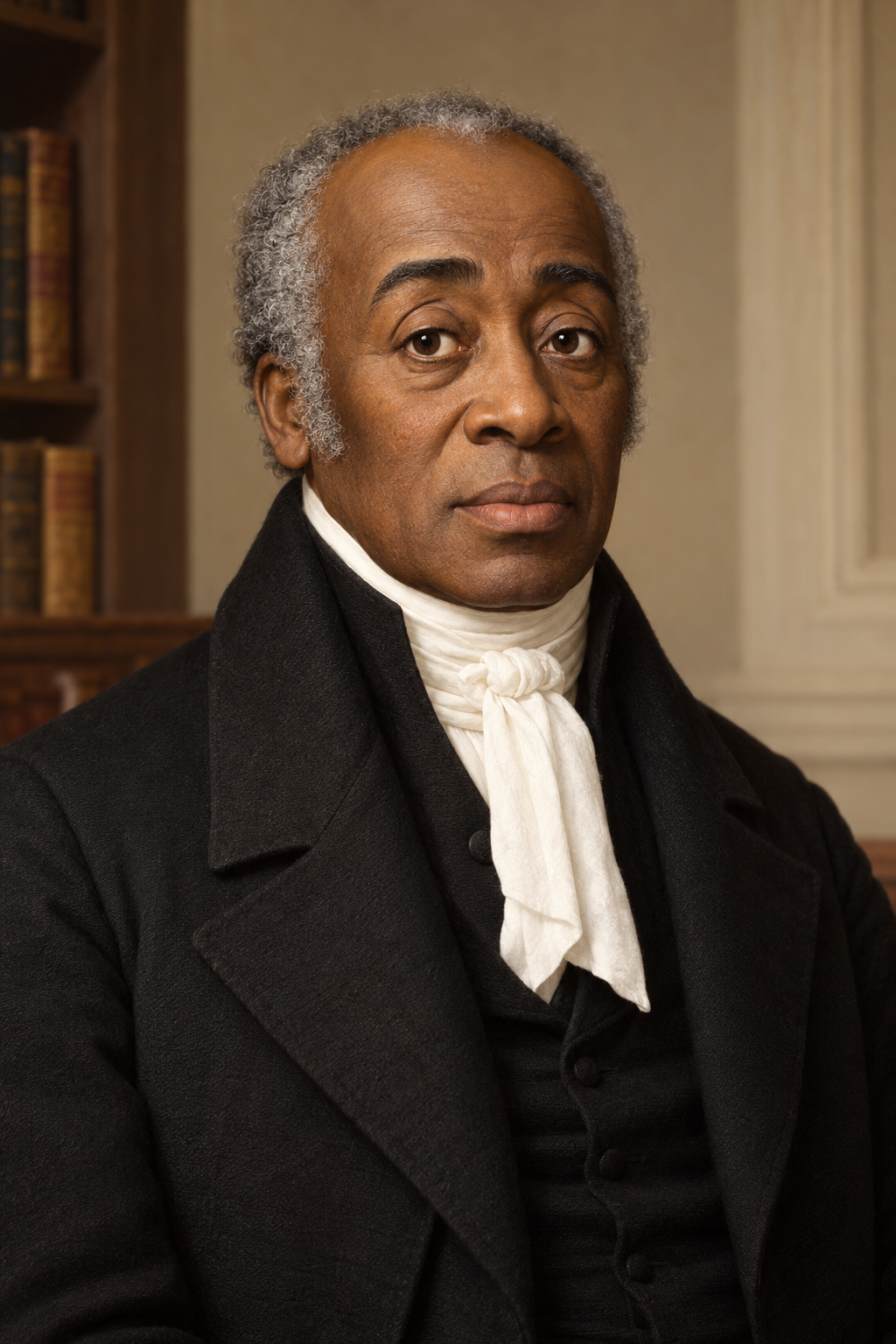
About Richard Allen
Richard Allen helped establish a church in which Black Methodists could govern their own religious life. The African Methodist Episcopal Church traces its origins to the struggle against racial discrimination in Philadelphia’s Methodist community. Allen remained committed to Methodism while seeking independence from white authorities who restricted Black congregations. Bethel Church, dedicated in 1794, became the center of that effort. Its independence required years of conflict, including legal cases in 1807 and 1815. In 1816, delegates from several communities formed the African Methodist Episcopal Church, and Allen became its first bishop.
Allen was born enslaved on February 14, 1760. Archival records distinguish several stages in his emancipation: a January 1780 agreement permitted him to work independently from February 2, and a receipt dated January 17, 1781 acknowledged his completed payment. The often-cited August 1783 document was a certificate of character, not a manumission.
In his autobiography, Allen recalled being enslaved first to Benjamin Chew and then to Stokeley Sturgis near Dover, Delaware. The sale of his mother and three children separated the family. His account describes a religious conversion marked by fear, prayer, and a new confidence in forgiveness through Christ. He joined a Methodist society and began encouraging others to seek the same faith. To earn money, he cut wood, worked at a brickyard, and hauled salt. The memoir presents preaching and physical labor together: religious work developed within the demands of earning a living, rather than replacing them.
In Philadelphia, Allen worked with Absalom Jones in the Free African Society. Their religious paths eventually diverged. The society’s practices increasingly reflected Quaker influence, while Allen wanted to remain Methodist. He withdrew in 1789; Jones later became an Episcopal priest. The difference did not erase their shared concern for the city’s Black community. Their careers produced distinct institutions, and Allen’s AME episcopacy should not be confused with ordination in the Episcopal Church that now commemorates him.
The confrontation at St. George’s Methodist Church became a defining episode in the movement toward independent worship. White church officers tried to remove Black worshippers from their places during prayer. Accounts commonly date this walkout to 1787, but church records place the construction of the gallery involved in 1792. The African Episcopal Church of St. Thomas discusses that evidence and the uncertainty surrounding the precise sequence of events. A responsible chronology distinguishes the disputed date of the confrontation from the Free African Society’s establishment in 1787.
During Philadelphia’s yellow fever epidemic in 1793, Allen and Absalom Jones ministered among the sick. The following year, they published an account of the Black community’s work during the crisis. Their pamphlet also argued against slavery and ended with a hymn. This combination of public testimony, political argument, and religious song shows how Allen’s publishing reached beyond the organization of worship.
Allen’s work for freedom also coexisted with coercive labor arrangements. Historian Aaron Goodwin documents a 1794 agreement under which Newberry was manumitted on condition of five years’ service to Allen. Later that year, Allen advertised a reward for the return of a runaway servant identified as Newberry Rich, giving a different term of service. Goodwin records other runaway advertisements as well. These documents complicate an account that presents Allen only as a liberator; they preserve the claims of authority he exercised over another person’s labor.
Music was another part of his institution-building. In 1801 Allen compiled two collections of spiritual songs and hymns. They drew on English hymn writers as well as American authors. Because the collections did not identify each author, modern hymnological research treats some attributions to Allen as uncertain. In 1818 he worked with Daniel Coker and James Champion on the denomination’s first official hymnal. These collections helped give a growing church a shared body of songs without making every included text his own composition.
His political judgment was also shaped by people who challenged him. Richard Newman describes how Allen and other Black leaders initially considered African colonization as a response to racism in the United States. At a mass meeting at Bethel in 1817, community members rejected the proposal. They feared removal from their homeland and separation from enslaved relatives and neighbors. Allen and his colleagues then supported the opposition to colonization. The episode shows congregants influencing their leaders, rather than simply following them, and places collective deliberation within the history of Black abolitionism.
In September 1830, Allen presided over a national convention at Mother Bethel. The meeting followed violence against Black residents of Cincinnati and considered migration to Canada alongside the broader struggle for security and rights. It helped begin a convention movement through which Black communities debated their future and organized across local boundaries.
In a separate church dispute, Goodwin reports that Allen and thirty-three others were convicted in 1823 on charges arising from a riot at Wesley Church.
Allen died on March 26, 1831.
The Episcopal Church commemorates him on March 26 as the first bishop of the African Methodist Episcopal Church.
Wondering how to weigh the stories and sources? Learn how to read a saint biography.