Biography
Rigobert of Reims
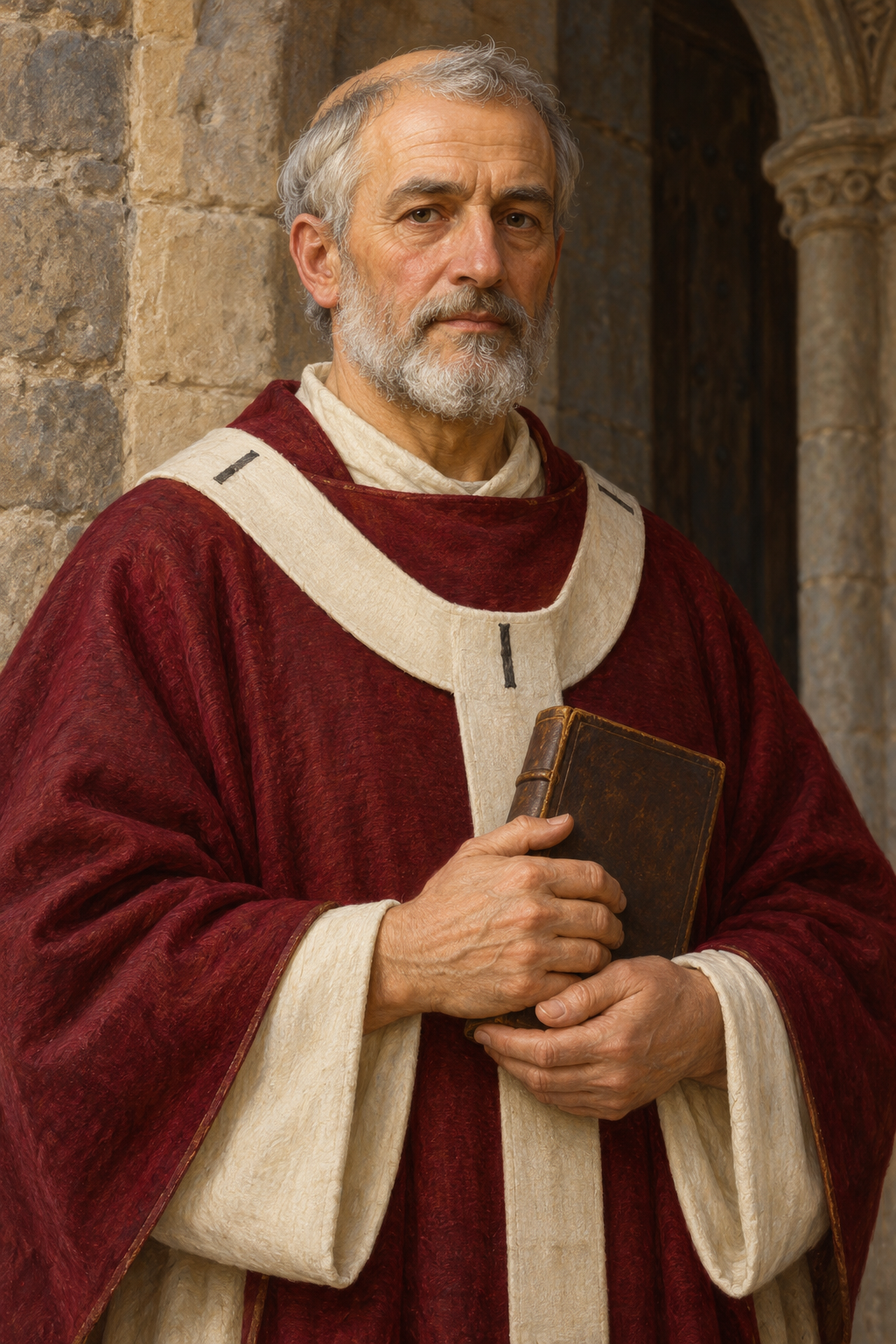
About Rigobert of Reims
Rigobert was bishop of Reims during the political struggles of the early eighth century. The French bishops’ Nominis account remembers him as a former abbot of Orbais who lost his episcopal position and spent his later life in prayer. His story is also preserved in Flodoard’s much later history of the church of Reims.
Flodoard describes Rigobert arranging support for the cathedral clergy. He assigned lands and income for their maintenance and established common resources. The same account records purchases of estates with houses, fields and unfree people attached to them, as well as labor assigned to serve the canons. These details place his church administration within the unequal social and economic arrangements of its time.
The central conflict concerned Charles Martel. Flodoard relates that Rigobert refused to open Reims to him while rival leaders were still fighting for power, fearing the city might be plundered. After victory, Charles expelled him. The historian also tells of exile in Gascony and a later return, when Rigobert refused to surrender church property as the price of recovering his bishopric. He settled at Gernicourt and continued visiting churches to pray. This narrative was written long after the events and should be read as the church’s remembered account.
Historian Edward Roberts places the expulsion in 717 and examines why Flodoard returned to such episodes around 950. His published chapter abstract emphasizes the tension between careful use of sources and a desire to honor the church’s past. Rigobert’s removal was one of several difficult successions that the historian had to explain. Remembering that purpose helps distinguish the event of his deposition from the moral portrait built around it.
The date of Rigobert’s death remains uncertain. Per Einar Odden’s account uses about 745 while recording several competing dates, including 743 and 733. The same account records a traditional invocation against toothache. That is evidence of a devotional practice, not a claim that prayer replaces care or guarantees relief.
His remembrance remains visible at Gernicourt. In September 2025, the local heritage association Cormicy, Ma Ville, Son Histoire reported unveiling an interpretation panel beside the small Saint-Rigobert chapel. Volunteers and municipal representatives took part in the event, following a walk from Cormicy. The report identifies a particular chapel carrying his name; it does not establish him as patron of the entire village. The site connects present-day local remembrance with the place where the older accounts locate his retirement.
Wondering how to weigh the stories and sources? Learn how to read a saint biography.