Biography
Robert Machray
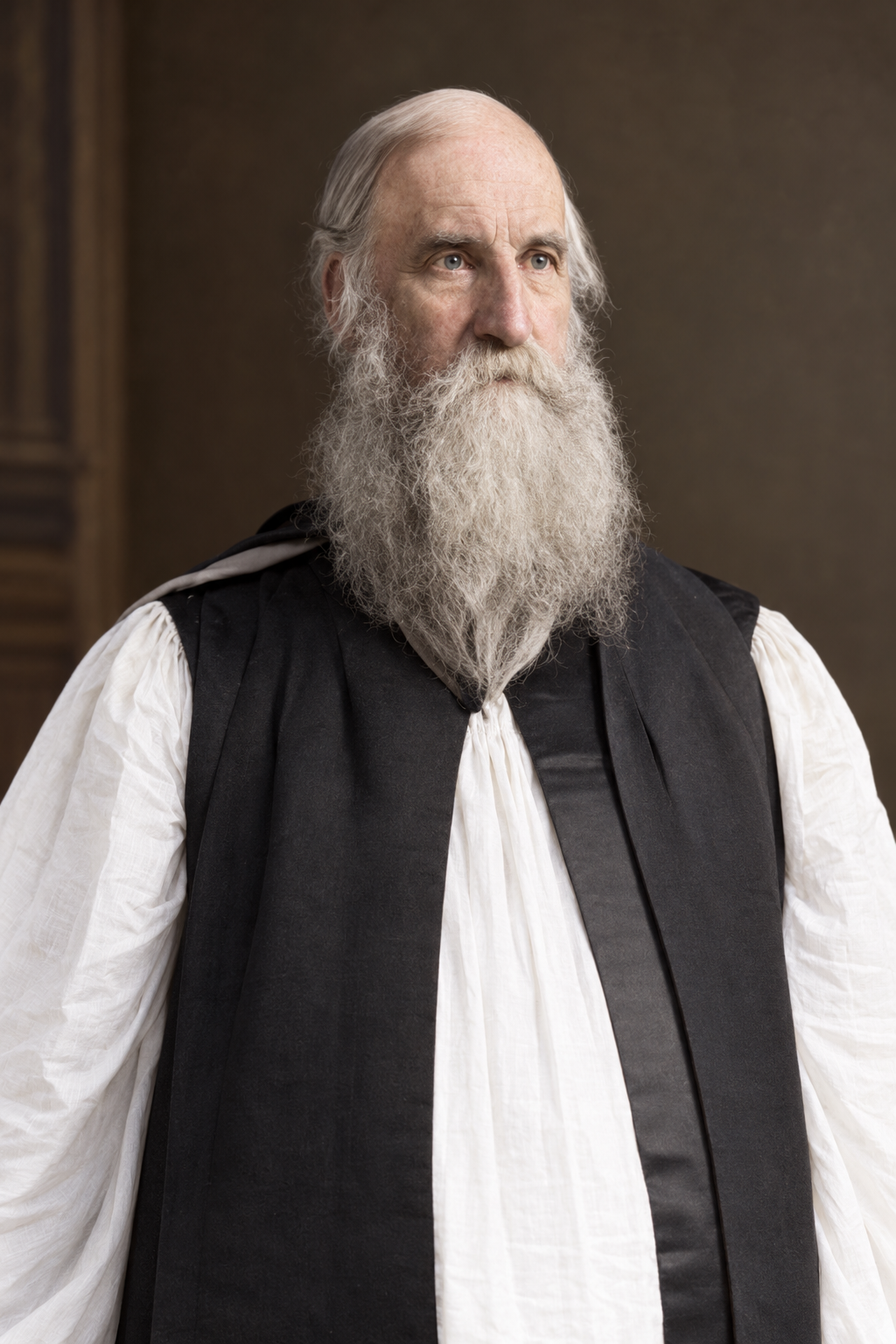
About Robert Machray
Robert Machray came to Rupert’s Land in 1865 as an Anglican bishop. Born in Aberdeen in 1831, he had studied mathematics there and at Cambridge. He left an academic and clerical career in England to lead a diocese extending across much of northern and western British North America. His work joined church organization, education, and preparation for settler expansion.
His childhood had been Presbyterian. After his father died, he lived with an uncle who taught school. Disputes within the Church of Scotland shaped his religious questioning; he eventually chose the Episcopal tradition rather than either Presbyterian party.
His first changes reached ordinary parish life as well as institutions. Laurence Wilmot’s historical account describes regular Communion, elected parish vestries, and offerings intended to support local congregations. Participation in vestry elections was limited to male communicants. Machray also travelled to outlying missions: in early 1866 he undertook a winter journey by dog sled, visiting stations and holding confirmations. That May, clergy and lay delegates met to consider church organization. These measures connected worship, local responsibility, and diocesan administration, although Wilmot’s admiring account should not be mistaken for the views of everyone affected.
One of his early projects was to reopen St. John’s College. The school associated with his predecessor, Bishop David Anderson, supplied buildings that could be renovated, while further accommodation was acquired for students and staff. John McLean became the first warden. When the college reopened on November 1, 1866, it had nineteen schoolboys and three theology students. Its work combined general education with preparation for Anglican ministry. In 1877, St. John’s joined St. Boniface College and Manitoba College as the three founding colleges of the University of Manitoba. The new university initially granted degrees while the colleges provided instruction. This arrangement allowed institutions with different religious affiliations to participate in a shared educational structure.
Machray became the university’s first chancellor in 1877 and remained in office until his death. Joseph Royal was its first vice-chancellor. The university’s earliest years were modest: its first official examinations took place in May 1878, and it conferred its first degree in 1880 on Reginald William Gunn, a Métis student of natural sciences at Manitoba College. The Faculty of Science’s institutional history places Machray’s chancellorship within this early cooperation among denominational colleges and the provincial government.
The university arrangement emerged from negotiations rather than a simple merger. According to the Faculty of Science’s history, Lieutenant-Governor Alexander Morris discussed the proposal with Machray and other religious and civic representatives. The colleges retained their own teaching staffs, students, and courses, while the university examined candidates. This compromise addressed concerns about institutional independence and differences in religious education. It also gave Machray a role in a provincial institution shared with other denominations, while St. John’s continued its own educational work.
His nephew’s biography describes the practical concerns behind his efforts to unite Canadian Anglicans. At the first General Synod in Toronto in 1893, Machray advocated coordinated work while preserving the responsibilities of diocesan and provincial synods. Election as primate did not end those tensions. In later correspondence he questioned whether the national body possessed adequate authority and whether it was providing meaningful help for western missions. Financial difficulties repeatedly shaped his decisions. The same biography records that the church relinquished the industrial school at St. Paul’s to government control in 1894 because it could not meet the expense. This account, written by a close relative, is valuable for its documents but strongly favors Machray’s imperial and ecclesiastical outlook.
Machray’s educational commitments also included support for residential schools and cultural assimilation. Historian Christopher Hackett identifies the harm in those policies and in his rejection of distinctive Métis rights. During the Red River resistance, Machray criticized Canadian officials’ handling of the transfer of the territory, yet also urged military suppression of the resistance. His participation in negotiations should not erase that position.
The Manitoba Museum identifies St. Paul’s Industrial School at West St. Paul as the former Rupert’s Land Indian Industrial School. It was initially run by the Anglican Church and operated from 1886 to 1906, receiving its later name when the government took control. The museum places such institutions within the residential-school system’s effort to assimilate Indigenous children. Children were separated from their families and languages; inadequate conditions, neglect, and abuse caused lasting harm. This wider history is necessary context for the kind of education Machray supported. It does not establish that he personally committed every abuse recorded elsewhere in the system, and specific allegations should not be inferred without evidence.
Machray died in Winnipeg on March 9, 1904. His nephew records that he lay in state in Manitoba’s legislative chamber before his burial at St. John’s Cathedral cemetery on March 12.
The Anglican Church of Canada commemorates Robert Machray on March 10. Its calendar identifies him as the first primate of all Canada.
Wondering how to weigh the stories and sources? Learn how to read a saint biography.