Biography
Robert of Molesme
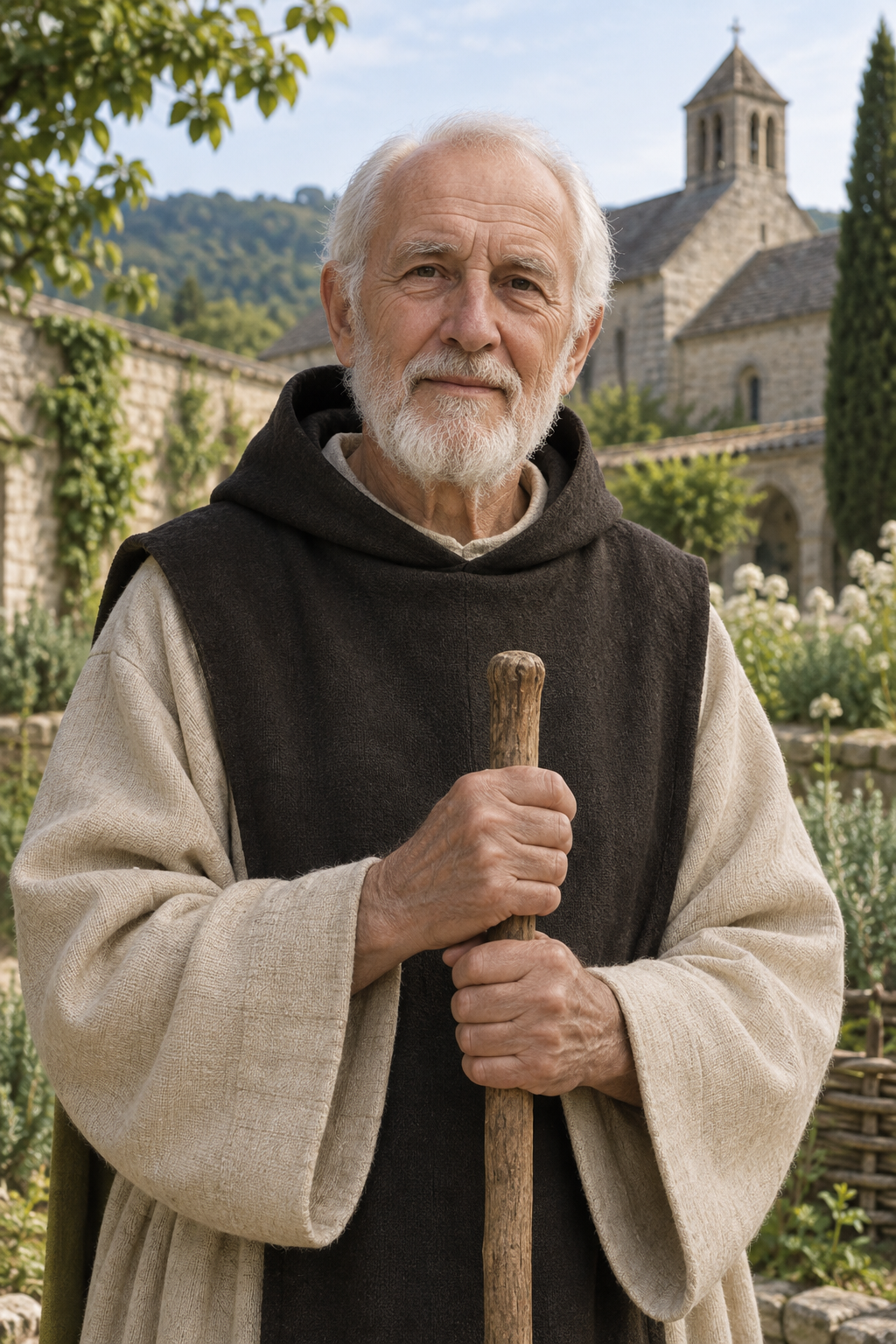
About Robert of Molesme
Robert of Molesme helped begin the Cistercian movement but spent only a short time at Cîteaux itself. His project was a renewed Benedictine life, with prayer and substantial work held together rather than separated. He and his companions wanted a simpler way of living and greater freedom from worldly obligations. They belonged to a wider movement of monastic renewal, not to a group inventing Christian community from nothing. Their departure from Molesme in 1098 began a monastery whose relationship with its parent house soon became disputed. Robert's story therefore includes both the resolve to begin again and the responsibility of returning to people he had left.
His birth is usually placed around 1028–1029. As a young man he entered the monastery of Saint Peter at Celle and became its prior around the middle of the eleventh century. The monks of Saint-Michel at Tonnerre subsequently chose him as abbot. His attempts to change their observance met resistance, and he left. Another community, Saint-Ayoul, also sought him as prior. These changes of place preceded the more famous departure for Cîteaux. They show a religious career already shaped by leadership and disagreement before he founded either of the communities most closely associated with his name.
The Vatican City account places his family in Champagne and describes his entrance into monastic life at fifteen. Robert later took charge of hermits living in the woods at Collan. As their numbers increased, the group needed a more settled home. In 1075 they founded Molesme. The new community's growth brought gifts as well as recruits. Over time, wealth made its original austerity harder to maintain. Robert tried to restore the earlier observance but could not secure the agreement he sought. The conflict was not simply between a founder and outsiders: it developed among people already sharing the same monastery.
Molesme was itself an important center of reform. Robert's leadership there also connected him with a different monastic future: Bruno, later founder of the Carthusians, received responsibility for a hermitage dependent on Molesme. This relationship prevents the story from narrowing to Cîteaux alone. Robert helped provide room for another form of religious life within the network of his earlier foundation. The heritage account locates the origins of Molesme in the group of hermits who came from Collan, near Tonnerre. The movement from that small group to an abbey preceded the new experiment of 1098 by more than twenty years.
Robert and his companions moved to Cîteaux in 1098. The abbey's account preserves a later narrative that dates the foundation to March 21, when Palm Sunday coincided with the feast of Benedict. That narrative presents the wooded site as difficult to reach and suited to the founders' desire for withdrawal. They built with the consent of the landowner and the bishop. Robert did not remain to supervise all the arrangements later associated with Cistercian life. After about a year he returned to Molesme. Alberic, his successor at Cîteaux, developed the community's material foundations and secured papal protection.
The Little Exord records the dispute over his return in unusual detail. Molesme's monks complained to Urban II that their observance and standing with neighboring lords had suffered in Robert's absence. The pope asked for his return if possible, while also protecting those who wished to remain in solitude. The resulting settlement required Robert to surrender the care of Cîteaux to the bishop of Chalon and release the monks from their obedience to him. The bishop likewise released Robert. Furnishings were to stay at Cîteaux, with a temporary arrangement allowing a book to be copied before its return. The document records Robert's compliance and presents the agreement as preserving the peace and independence of both houses.
Robert's efforts were not limited to choosing a single site. A diocesan account of the founders also connects his work at Molesme with the beginnings of Aulps. It places these experiments in an era when new religious communities were appearing in several regions. The founders' different contributions are remembered together: Robert's commitment to Benedict's Rule, Alberic's arrangements for the community's daily life, and Stephen's attention to relationships between monasteries. The later movement therefore cannot be explained as the completed design of one man. Robert began work that others continued and changed after his departure.
Back at Molesme, Robert remained part of the history of his first abbey rather than disappearing from monastic life. He died there in 1111 and was canonized in 1222. Later images often show him carrying one or two churches, recalling the foundations associated with him. Molesme itself developed a network of dependent priories. The growth of Cîteaux under later leaders became another part of its legacy. Remembering both houses keeps Robert's return from looking like the end of his contribution. His life joined repeated attempts at reform with an obligation to communities whose needs did not always agree.
Wondering how to weigh the stories and sources? Learn how to read a saint biography.
Explore similar vocations
Prayers for Robert of Molesme
Robert of Molesme: founders' litany
Saints Robert, Alberic and Stephen, pray for us.