Biography
Robert of Newminster
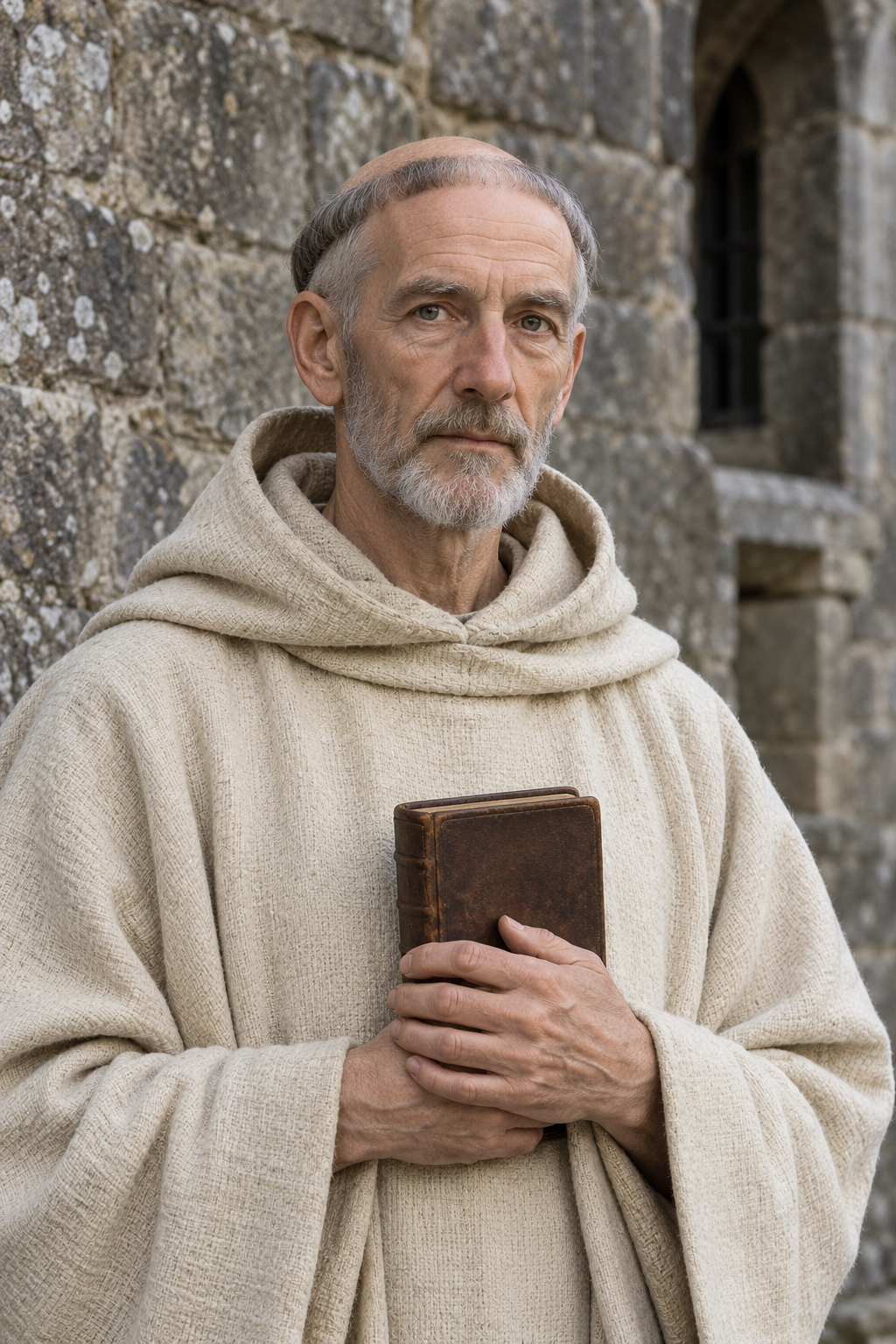
About Robert of Newminster
Robert of Newminster came from the Craven district of Yorkshire. Tradition associates his early life with Gargrave, where he served as a parish priest. He later entered the Benedictine monastery at Whitby before joining the Cistercian community at Fountains. His vocation passed through these different settings before he became the first abbot of Newminster, near Morpeth in Northumberland.
Around 1138 he led monks from Fountains to establish the new community. Gifts of land and the arrival of recruits helped Newminster grow, and it eventually founded daughter houses of its own. Michael Carter’s account places Robert within the demanding religious culture of the Cistercians, whose austere observance shaped the lives of the monks he governed.
One later story tells how accusations from his own monks led Robert to defend himself before Bernard of Clairvaux. Webster’s account cautions that this episode may reflect a wish to associate the English abbot with the better-known Cistercian saint. It should therefore be treated as a tradition, rather than a securely established journey or encounter.
The written accounts require care. The older Dictionary of National Biography describes surviving Lives from the fourteenth and fifteenth centuries and warns that Robert of Newminster has often been confused with Robert of Knaresborough, a different religious figure. It argues for a death date of 1139, rather than the 1159 accepted by Carter and Webster.
A surviving manuscript gives a clearer point of reference for this later memory. The British Library’s Romsey Legendary includes Robert’s Life among accounts of British saints. The manuscript dates from the first half of the fourteenth century, well after his lifetime.
Carter dates Robert’s death to 7 June 1159. His remains were first buried in Newminster’s chapter house and later transferred to a shrine in the church. Local people supported his commemoration with candles and food for the community on his feast. Stories of healing and protection accumulated around the shrine. A book associated with Robert and part of his habit were also venerated.
Historian Michael Holford identifies the Life preserved in that collection as a work written at Newminster. He also notes its reference to two books of hagiographical material kept at the abbey. Written accounts thus formed part of the community’s remembrance of Robert, alongside the shrine and its observances.
His memory also continues far from medieval Northumberland. The Catholic parish of Saint Robert of Newminster in Ada, Michigan, explicitly honors him as its patron. A parish announcement for his 7 June feast invited people to evening prayer and veneration of a relic it identified as a piece of his bone. This is evidence of the parish’s devotion and its stated identification of the relic, rather than an independent authentication of the object.
Wondering how to weigh the stories and sources? Learn how to read a saint biography.