Biography
Romuald of Ravenna
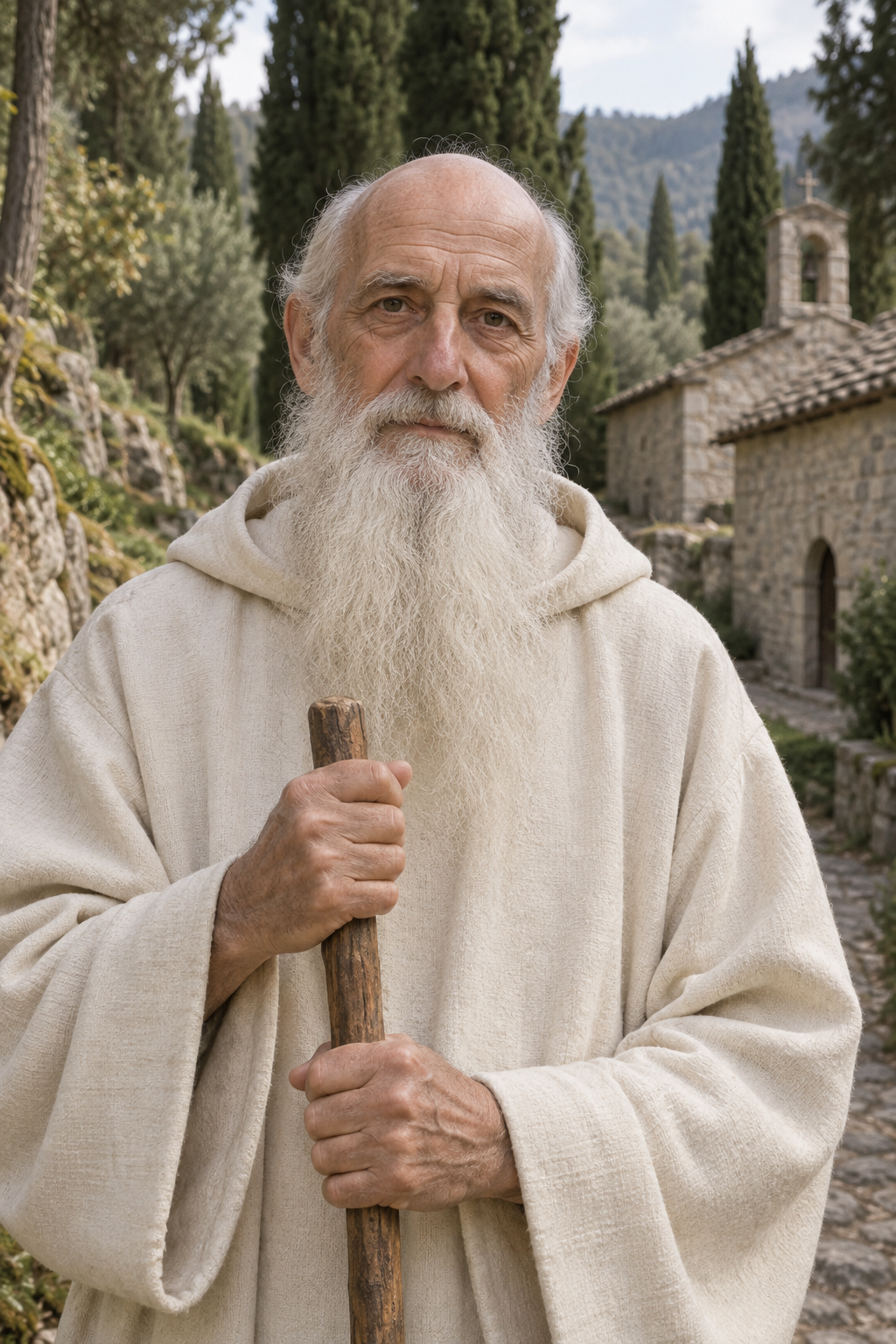
About Romuald of Ravenna
Romuald’s search for solitude repeatedly brought him into other people’s lives. Born at Ravenna around 951, he became a monk and later traveled from one religious community to another. He is remembered for renewing the eremitical life within the Benedictine tradition: prayer in a separate cell did not have to mean abandoning the discipline of a community. His restless career sought dedication to God rather than offices or possessions.
Peter Damian’s Life gives his vocation a disturbing beginning. Romuald’s father, Sergius, killed a relative in a dispute over property. Romuald undertook penance at Sant’Apollinare in Classe for attending the fight without wounding anyone. Damian describes his hesitation before becoming a monk and the support of the archbishop of Ravenna in securing his admission. Sergius had threatened to disinherit his reluctant son. The monks received him under the archbishop’s protection, despite their fear of Sergius.
His first monastery did not become his permanent home. He left to learn from the hermit Marinus near Venice, accepting a particularly severe apprenticeship. In 978 he accompanied the former doge Peter Orseolo to Cuxa in the Pyrenees. The journey placed his pursuit of solitude beside another man’s withdrawal from public power. He later returned to Italy when his father, who had also entered religious life, struggled with his commitment. This family connection remained part of his vocation even after his departure from home. The received account does not portray becoming a hermit as forgetting every obligation to other people.
Romuald also had dealings with the emperor Otto III. Philip Schaff’s account describes the emperor visiting him near Ravenna and records the sending of missionaries to other lands. It also preserves the story of Romuald setting out toward Hungary with disciples, only to turn back because of serious illness. The failed journey matters alongside the foundations: not every intended undertaking became a completed mission. In this tradition, recognizing a bodily limit was part of discerning what he could actually do. Schaff also describes a teacher followed by disciples wherever he went, yet still exposed to accusations and hostility.
The teaching called his Brief Rule gives a more intimate view of this vocation. Bruno of Querfurt transmitted it through John, a disciple who had known Romuald. Its concern is not an elaborate timetable but the attention a hermit brings to prayer. It asks the monk to watch his thoughts, stay with the Psalms, and return to understanding when his mind wanders. The beginner who cannot yet grasp everything is told to persevere rather than abandon the reading. Its closing image is a young bird depending on its mother for food, an expression of receptivity to grace rather than self-sufficiency. This teaching survives through another person’s report; it is not an autograph instruction sheet.
Camaldoli gave an enduring home to the balance between solitude and common observance. The community’s own history describes five cells and a church, with Bishop Teodaldo of Arezzo providing support. Monks lived separately but shared prayer and the authority of a prior. The foundation is conventionally associated with 1012, yet the institutional historical account explains that this date appears only in much later testimony. It instead proposes the years 1023–1026 from the chronology of Teodaldo’s episcopate and a church consecration recorded in 1027. The beginning is therefore better understood as an approximate period than a securely established anniversary day. A hospice subsequently developed farther down the slope, sheltering visitors away from the hermits’ cells. It became the monastery, complementing the hermitage rather than replacing it. The foundation tradition assigns Benedict’s rule to the monastery, where newcomers prepared for the more solitary life above.
Archbishop Ruppi interprets Romuald’s repeated moves as the meeting of two commitments: contemplative silence and the reform of communities. On that reading, he did not reject life with other monks simply because he sought a quieter place to pray. His work joined the hermit’s solitude to a shared religious framework. The distinction prevents a misleading picture of an isolated wanderer with no lasting responsibilities. Ruppi emphasizes inward attention and deliberate prayer rather than judging devotion only by the quantity of words recited. For Ruppi, the journey between monasteries belongs to the reform itself: Romuald repeatedly sought to restore communities to their original observance.
At the end, Damian places Romuald back at Val di Castro, where he had a cell with an oratory prepared. Monks remained nearby, worried about him, even after he asked them to leave him alone. The account remembers his death within the solitude he had sought, but not without a community concerned for him.
His death is commemorated on 19 June, and the Roman Martyrology identifies him as an anchorite and father of the Camaldolese monks. That liturgical remembrance holds together the two sides of his vocation: withdrawal for prayer and the formation of others. His legacy took institutional form in a community that continued to associate the hermit’s cell with the formation of disciples.
Wondering how to weigh the stories and sources? Learn how to read a saint biography.
Explore similar vocations
Prayers for Romuald of Ravenna
Romuald — collect excerpt
we may merit to reach the heavenly realms on high.