Biography
María Rosa Molas
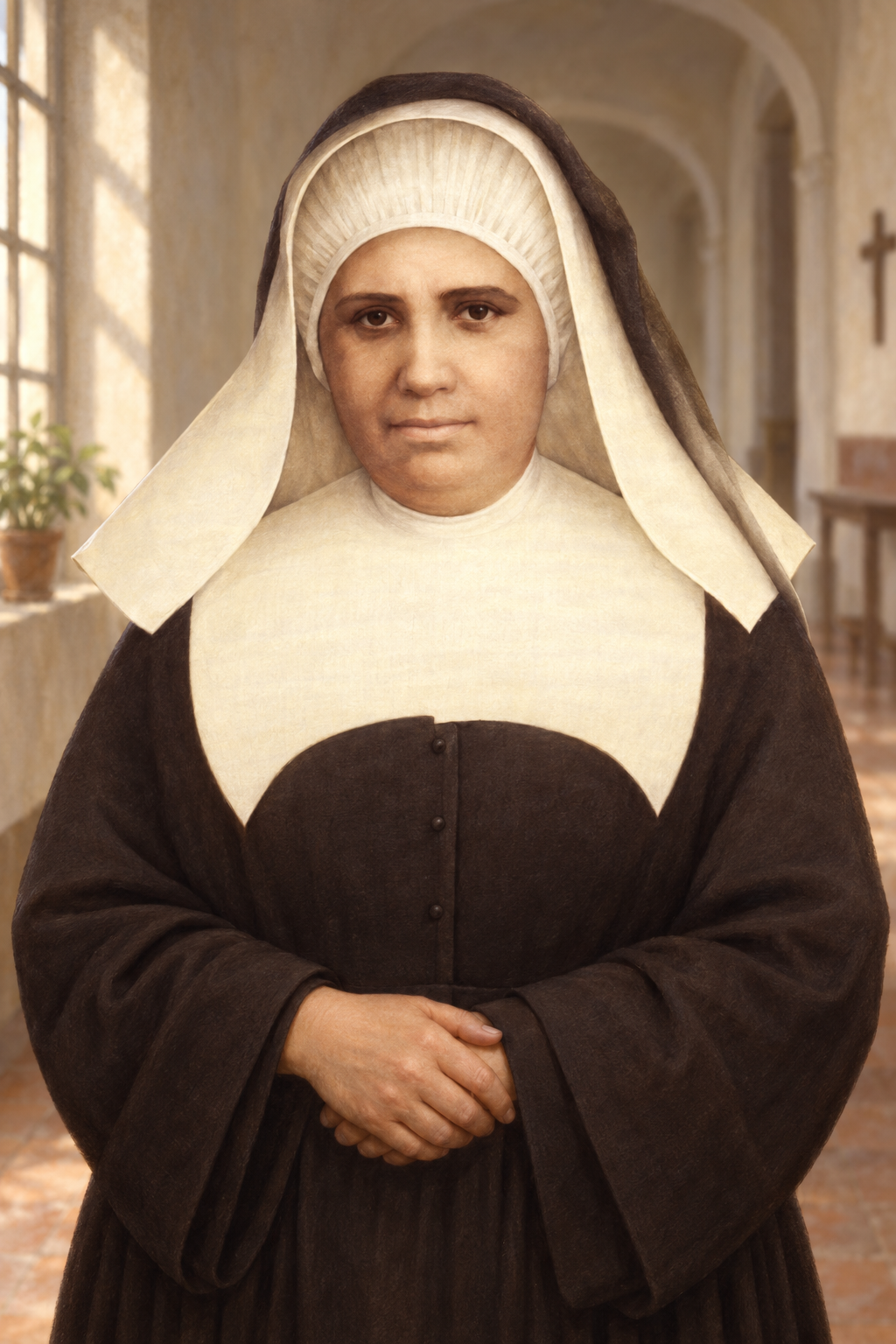
About María Rosa Molas
María Rosa Molas was born in Reus on 24 March 1815 into an artisan family. Her parents were José Molas and María Vallvé. The family knew her as Doloretes, a familiar form of the name Dolores. The congregation she later founded remembers this home as her first setting of religious formation, with her father as a spiritual guide and her mother’s example of service to people in need.
Her wish to enter religious life did not immediately lead her away from home. The account published by the Institute of Theology of Religious Life says she expressed that wish at sixteen, but her father opposed it. She waited. At nineteen she saw her mother care for people during a cholera outbreak and then die after contracting the disease. That account places the experience among the influences that shaped her understanding of service, linking care for the sick with a deeply personal loss.
On 6 January 1841 she entered the religious community working at the hospital in Reus. Her tasks brought her into close contact with sick people and with those receiving help through the Casa de Caridad. She also directed its school for girls. The biography written by María Esperanza Casaus presents these years as the beginning of a vocation that joined nursing, education and practical assistance. Her later work would continue across those different settings rather than being confined to one institution.
Political conflict also reached the people she served. The Vatican biography remembers an episode in which she and other sisters crossed a line of fire to ask General Zurbano to stop the attack on Reus. It credits their appeal with securing relief for the town. The episode belongs to the Church’s account of her public courage in the troubled years of the 1840s.
She arrived in Tortosa on 18 March 1849. There her responsibilities included the Casa de Misericordia, which served orphans and poor people, a public school and the Hospital de la Santa Cruz. These were concrete places in which the care she had begun in Reus continued. Casaus’s account describes an educator and religious sister responding to several kinds of need: children without family support, girls seeking education and people requiring treatment in hospital. Tortosa became the center of her later work.
The foundation of a new congregation grew out of a question about the community’s standing in the Church. On 14 March 1857 María Rosa and another sister went to the bishop’s offices with a petition signed by her and eleven other sisters. They belonged to three communities in Tortosa and asked to be accepted under ecclesiastical protection and spiritual direction. The official heritage route records an affirmative reply on 6 April. Municipal approval followed. On 14 November 1858 the community received the name Sisters of Consolation, chosen because its works were directed toward consoling their neighbors. This was a process of consultation, written request and recognition, involving the sisters together rather than an isolated declaration by their superior.
Her work included defending people whose needs could be overlooked within charitable institutions. The Vatican biography records her advocacy for wet nurses whose wages had not been paid. It also describes her refusal to allow a doctor to use foundling children for experimental operations. Her teaching qualification and public school work brought difficulties with civil authorities. Even after being removed from the public school, she helped organize a lazaretto when her services were needed. In this account, care meant both direct assistance and a willingness to question those exercising authority over vulnerable people.
Prayer formed another part of this active life. At her canonization, John Paul II described an interior experience that included desolation as well as consolation. He connected her contemplation of Christ with compassion expressed through care for older people, children, sick people and prisoners. The homily also singled out her contribution to the advancement of women. It interpreted her work as a joining of spiritual and human care: defending dignity and rights, building peace, and meeting the wounds of both body and spirit. This is the Church’s reading of the religious purpose that animated her service.
María Rosa died on 11 June 1876. Her religious family continued the work she had begun. The congregation’s own account remembers the difficulties, illness and social upheaval through which she had carried her responsibilities, alongside her concern for the people entrusted to her care.
Pope Paul VI beatified her in 1977, and John Paul II canonized her on 11 December 1988. The Dicastery for the Causes of Saints records her liturgical commemoration on 11 June.
The Sisters of Our Lady of Consolation continue to describe their mission through education, health and social care, and companionship with people facing vulnerability. Their work now extends across Europe, Latin America, Africa and Asia. The name she helped give the community remains a description of the service it seeks to offer: staying beside people in need through practical care and relationships that respect their dignity.
Her memory also remains part of the civic life of Reus. In 2015 the city hosted an exhibition about her life and the congregation for the bicentenary of her birth. The commemorations brought the religious community, former pupils and municipal institutions into a shared remembrance of a woman whose work had linked Reus and Tortosa.
Wondering how to weigh the stories and sources? Learn how to read a saint biography.