Biography
Saba Ji Hwang
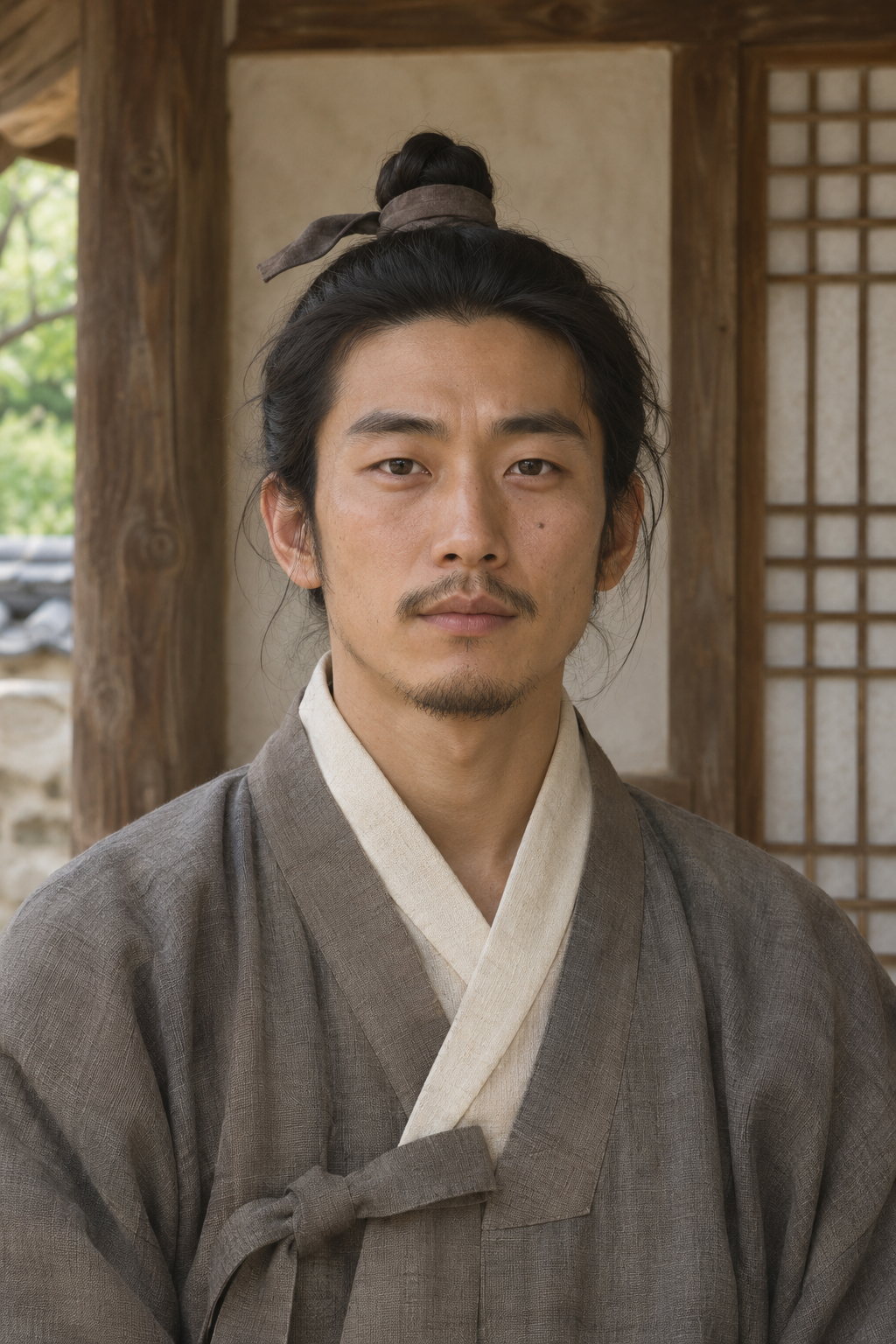
About Saba Ji Hwang
Saba Ji Hwang, also known as Ji Hong, was born in Seoul in 1767 into a family associated with music at the royal court. He sought Catholic instruction voluntarily after hearing that the religion was being taught in Korea. The official biography remembers him as honest and industrious.
His father had come to Seoul from Danyang and found work as a court musician, according to historian Bang Sang-geun. It also identifies Ji’s wife as Anna Kim Yeom-i. Her reported reception of instruction from her husband in 1791 provides evidence that he was already a Catholic by then. The precise year of his own conversion remains uncertain. The entry also describes Ji as a musician.
Kwon Yi-seon’s study of the early Myeongnyebang community places Ji among those baptized by Yi Seung-hun, alongside Kim Beom-u and Matthias Choe In-gil. This reconstruction associates him with the first generation of believers, although the personal encyclopedia entry leaves his exact conversion date open.
Lawrence Pak Chwi-deuk came to Seoul from the Myeoncheon area to learn the catechism from Ji. After receiving that instruction, Pak returned home and taught his neighbours. Ji’s work therefore reached beyond the capital through someone who carried the teaching back to Chungcheong-do. Pak’s later imprisonment and martyrdom belonged to a different persecution, but his connection with Ji preceded the envoy’s journeys to Beijing.
In 1793 the Catholics renewed their attempt to obtain a priest. Ji and John Pak were selected to travel with the Korean diplomatic party to Beijing. Yun Yu-il, who had already made the journey twice, remained at Uiju to prepare for the missionary’s passage across the frontier. The appeal came from a community that had suffered persecution and whose first attempt to receive a priest had failed. Ji’s task was to explain its circumstances to Bishop Gouvea and obtain a renewed promise of help.
Gouvea remembered Ji’s forty days in Beijing and his devotion while receiving confirmation, confession and Communion. He described the tears with which Ji received the sacraments and the impression this made on the local faithful.
The paired Catholic Times account describes the practical arrangements made to avoid another missed meeting. The bishop and Ji settled a time and place for the missionary’s arrival, together with signs by which the parties could recognize one another. Father Zhou Wen-mo was selected for the mission.
The first attempt to cross with Zhou in 1794 failed. By the time the travellers reached the frontier, the river ice was breaking and surveillance was intense. Zhou remained outside Korea, travelling among the churches in Manchuria while waiting for another winter. Ji returned to his own country. Later in the year, he went again to the border to bring the priest through.
Ji met Zhou at the border near Bonghwangseong and helped bring him across the Amnok River in December 1794. Yun Yu-il joined in the escort from Uiju, and the party reached Seoul after twelve days. The priest entered the house prepared by Matthias Choe In-gil at Gyedong in early 1795.
The travellers kept to quiet mountain roads to avoid the attention of the authorities. The journey took them almost two weeks, much of it spent sleeping in the open. Once the priest reached Choe’s house, he began studying Korean. On Easter Sunday, April 5, 1795, he celebrated Mass in Korea.
The refuge did not remain secret. Han Yeong-ik’s denunciation brought an order to arrest Zhou. The priest escaped to Kang Wan-suk’s house, and Choe stayed behind, impersonating him. Once the substitution was discovered, Ji and Yun were also arrested. The authorities questioned them about the priest’s entry and hiding place. The men who had arranged the journey were now being pressed to expose it.
At the police headquarters, Ji and his companions underwent repeated punishment but would not disclose Zhou’s whereabouts. They were beaten to death, and their bodies were secretly thrown into the river. The official biography dates their deaths to June 28, 1795.
The failed arrest and the deaths later became subjects of official controversy. Lee Won-sun describes Kwon Yu’s complaint that killing the three men had deprived the authorities of the opportunity to find Zhou. The petition treated their deaths as a failure of investigation. In Catholic memory, their refusal to reveal the priest’s refuge was remembered as protection of the missionary they had helped bring into the country.
Zhou later identified Ji in a written statement under interrogation. He recalled meeting him in the spring of 1794 and recorded that Ji had died at the police headquarters in 1795. His statement survives in the royal chronicle’s investigation record. He spoke of exchanging letters with two other Koreans he identified only by their surnames, Kwon and Choe. In naming Ji he was more precise: this was the man he had met before entering Korea.
A memorial grave for Ji was later established at Eonong, alongside those commemorating the other people involved in bringing the priest into Korea. The site remembers him with the wider network of helpers.
Wondering how to weigh the stories and sources? Learn how to read a saint biography.