Biography
Sabas of Collesano
About Sabas of Collesano
Sabas of Collesano helped establish a network of Greek monastic communities in southern Italy during the tenth century. His family shared that vocation: his father Christopher, mother Kale and brother Macarius were also remembered as holy people. Born in Sicily during the early decades of the century, Sabas followed his father into monastic life at Saint Philip’s monastery near Agira. Under the guidance of its abbot, Nikephoros, he joined Christopher at an outlying hermitage and eventually took responsibility for the monks gathering there.
Famine and warfare disrupted the family’s Sicilian life around 940. They crossed to Calabria, where relatives offered shelter, and Sabas and his brother moved into the Mercurion region. There they helped form another community around a church dedicated to the Archangel Michael. Further danger drove the monks toward the Sinni valley.
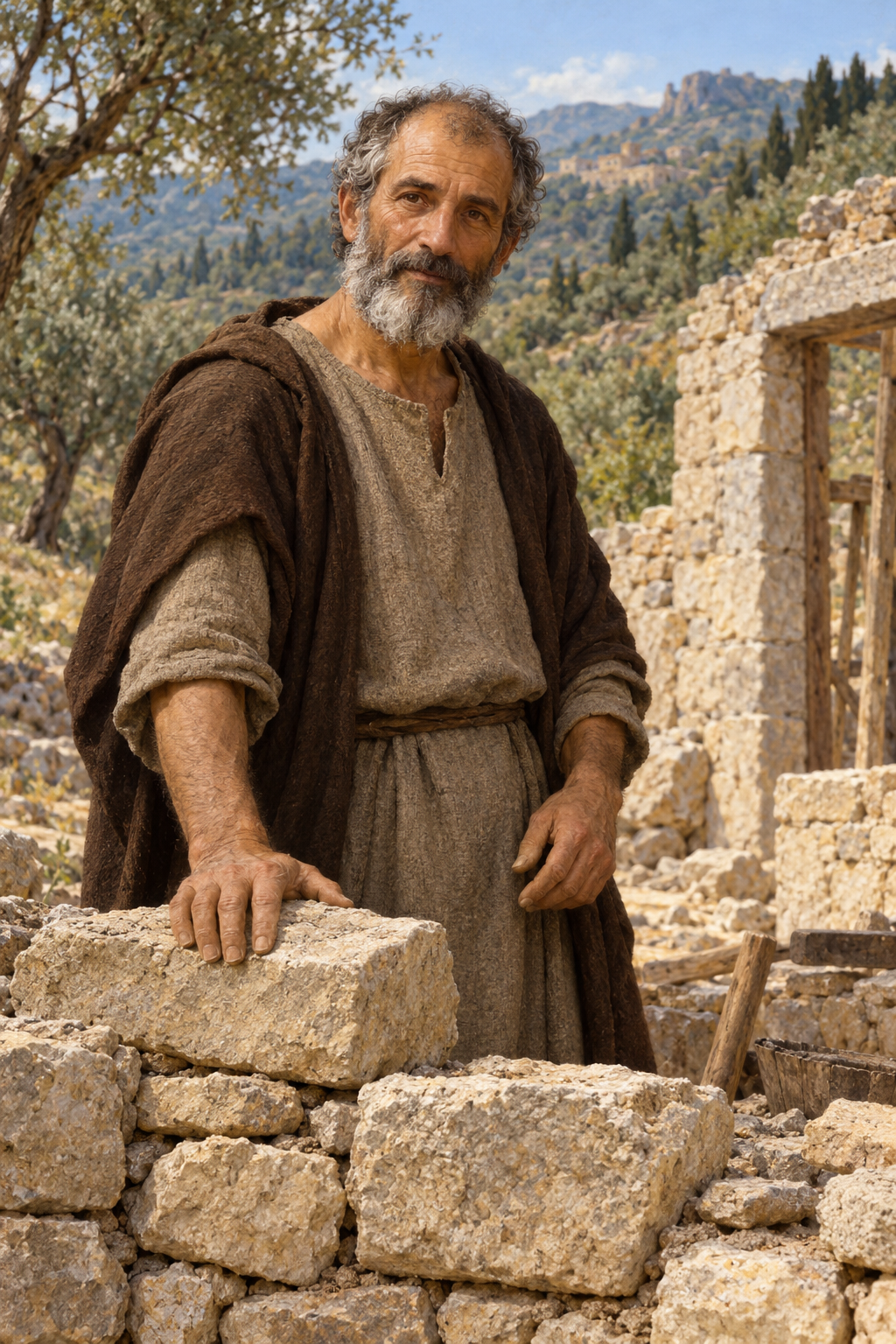
Monastery building meant more than erecting a church. André Guillou’s study emphasizes the practical labor described in the Lives: clearing woodland, making space for settlement and cultivating land to support the monks. Sabas and Macarius appear in this account as workers in both the Mercurion and Latinianon regions. The monastery near the Sinni also had defensive features. Its location near a fortified settlement and its protective wall show that the community’s response to danger included making its home more secure.
Orestes of Jerusalem, his biographer, describes a rhythm that combined solitude with shared worship. Sabas entrusted the care of the monastery to a monk named Macarius and withdrew for much of the week. He returned for the vigil and liturgy, received communion and ate with the brothers before seeking quiet again. The same passage says that, when his absence became too burdensome for the monk managing the community, he chose a less distant retreat.
Family obligations also shaped his choices. The Life says that he delayed a more remote retirement while his elderly parents needed his care. After their deaths he moved to the district of Lagonegro and built an oratory dedicated to the Apostle Philip. Visitors and monks again sought him out for counsel.
This movement between a common house and a nearby retreat was part of the monastic world Sabas inhabited. Guillou cautions against treating hermitage and monastery as successive stages in a simple institutional development. They could exist together, with an ascetic living close enough to receive support and return to communal life.
Adele Cilento reads these accounts as a distinctive celebration of family holiness. The relatives’ importance lies in their shared religious work and their support for communities under pressure, rather than in a prestigious ancestry. Kinship offered practical shelter during migration, while the new monasteries gathered people beyond the household. The accounts of Christopher and Macarius complement Sabas’s own Life, although their details do not always agree.
The historical evidence extends beyond the Life. The Byzantine prosopographical study identifies a later charter recording that a monastery dedicated to Basil had previously been entrusted to Sabas. It also considers him probably identical with the Greek abbot who appears in a January 986 agreement concerning a church near Vietri. That document names books, liturgical objects, textiles and livestock associated with the foundation.
The more dramatic accounts of political mediation need greater caution. The Life describes journeys to obtain the release of hostages connected with the rulers of Salerno and Amalfi. Its chronology and the rulers’ identities are difficult to reconcile, and the prosopographical study suggests that two episodes may duplicate one event. Sabas died at the monastery of Saint Caesarius in Rome, around 990. The year remains reconstructed: the prosopographical study favors 990, while the Italian biographical dictionary gives 991.
Cilento also emphasizes the author’s purpose in telling these stories. Orestes was a patriarch and diplomat, and his account presents Sabas as a protector and spokesman for vulnerable Christians. The reported miracles and interventions therefore belong to a deliberate portrait of holiness, not an impartial chronicle.
Catholic tradition commemorates Sabas in early February. The Norwegian Catholic account records both February 5 and February 6 among the dates associated with him, reflecting the variation in his remembrance. It also preserves his designation as “the Younger.”
Wondering how to weigh the stories and sources? Learn how to read a saint biography.