Biography
Sabas of Vatopedi
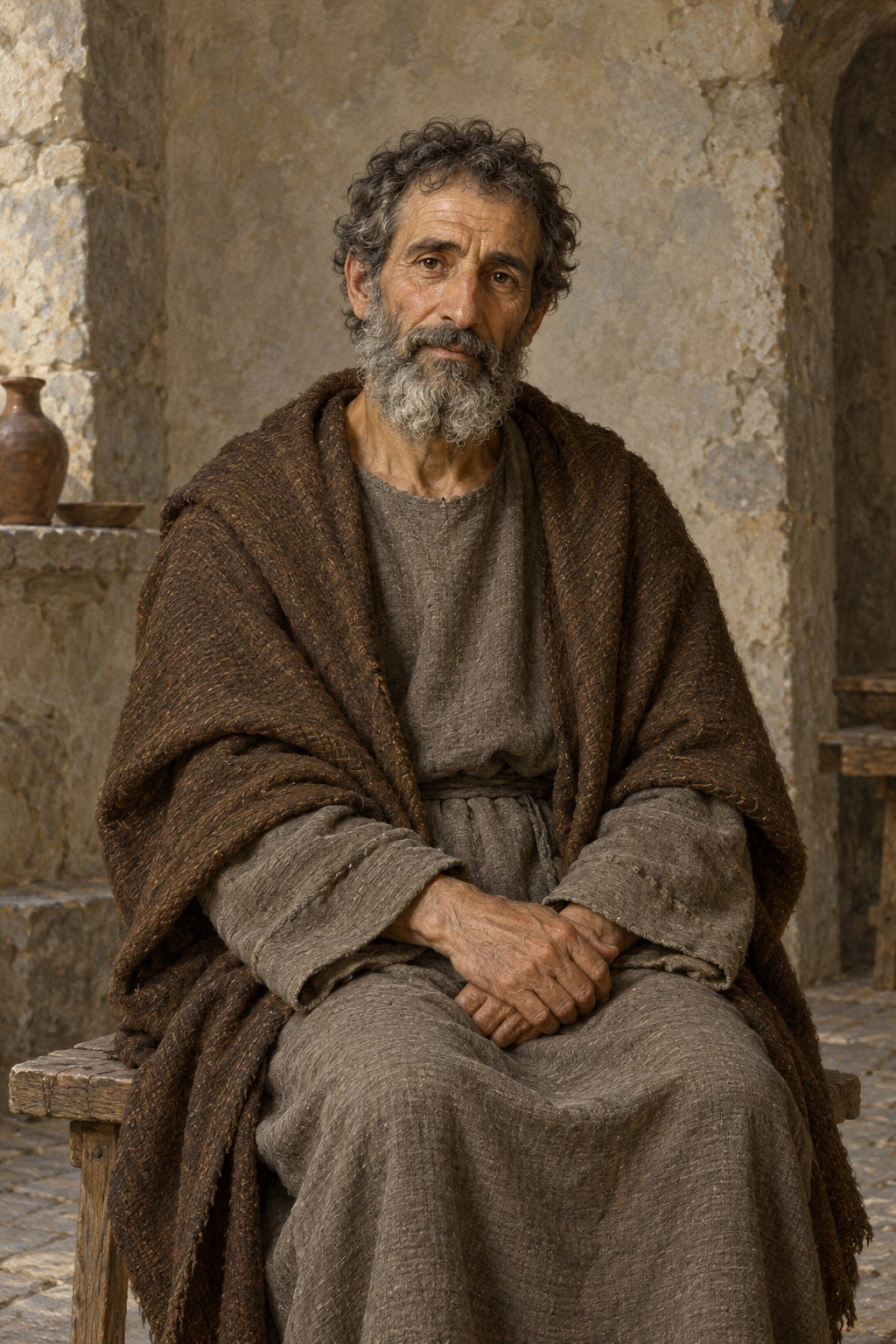
About Sabas of Vatopedi
Sabas of Vatopedi was a Byzantine monk whose life combined long periods of silence, travel and withdrawal with an unsuccessful effort to bring peace during civil war. Remembered as Sabas the Younger, he came from Thessalonike and eventually became the spiritual guide of Philotheos Kokkinos, who wrote his life.
His early name was Stephen. The Vatopedi account places his birth around 1283 and says that he left home at eighteen for Mount Athos. There he entered the discipline of an elder in a cell near Karyes, taking the monastic name Sabas.
His early tradition also remembers him declining ordination when his spiritual elder proposed that he accept it.
War interrupted this beginning. The Catalan Company, originally hired to fight for the Byzantine emperor, turned against Byzantine lands after its leader’s assassination. Its campaigns reached Macedonia and Mount Athos. José Simón Palmer’s study places Sabas’s departure within this wider upheaval, when monks had to decide whether to remain in their communities or seek safety elsewhere.
Palmer corrects an earlier account that had sent Sabas back to Thessalonike during the attacks. In Philotheos’s narrative, the elder went to the city, while Sabas remained at Vatopedi. The disruption of land routes prevented a reunion. Sabas then sailed toward the Holy Land by way of Cyprus.
In Cyprus, the biography presents him adopting the life later described as that of a fool for Christ. He gave up ordinary clothing and maintained silence while moving among settlements and solitary places. These actions made him vulnerable to ridicule and violence.
The study published by Vatopedi emphasizes how Philotheos distinguishes Sabas from more provocative examples of holy foolishness. Silence, rather than theatrical disruption, is central to this portrait. Sabas’s conduct is described as calm and approachable. The biographer also warns against treating the imitation of foolishness as a generally reliable path to virtue.
Philotheos’s account contains hostile encounters with a Latin nobleman and Latin monks on Cyprus. Mihail Mitrea reads these scenes as literary constructions shaped by Byzantine stereotypes as well as narratives of suffering. The biographer contrasts Sabas’s restraint with his attackers’ loss of control; his depiction should not become a general judgment about Latin Christians.
The same work describes a journey toward Sinai with a Muslim camel owner. Sabas is said to have given the man his own place on the animal and shared his food. Mitrea notes the contrast: the Muslim recognizes the monk’s generosity, while the Latin opponents in the earlier episodes fail to recognize his holiness.
The travel narrative carries Sabas through Palestine and other eastern Mediterranean lands before his return to Athos. Palmer also examines its account of Athens under Catalan rule. The passage preserves a Byzantine writer’s dismay at the city’s changed condition, but its disparaging language belongs to that writer’s perspective.
At Vatopedi, Sabas became Philotheos’s teacher. Their association was important but did not last for the whole of Sabas’s remaining life. Mitrea notes that Philotheos depended heavily on another disciple’s testimony for episodes he had not witnessed himself.
The Vatopedi study traces the biography’s sources to monks who had known Sabas on Athos, people acquainted with his eastern journeys, and a particularly close companion. Philotheos also contributed his own memories. The result combines personal recollection and collected testimony with the conventions of a saint’s life.
Sabas’s desire for retirement did not entirely remove him from public affairs. During the civil war of 1341–1347, Athonite monks pressed him to join an embassy to Constantinople seeking reconciliation. The effort failed. The monastery’s account also remembers him declining the patriarchal office offered by John VI Kantakouzenos.
He spent his last years at the Chora monastery in Constantinople. The Orthodox Encyclopedia records his death there and cautions against identifying him with Eudokimos, the unknown holy figure whose remains were discovered at Vatopedi in 1840. That later identification is a local tradition, not an established part of Sabas’s biography.
The year of his death is uncertain. The detailed study published by Vatopedi compares the chronology of the embassy with the reported years at Chora and discusses 1348 and 1349.
The Orthodox Encyclopedia places Sabas near the end of the Byzantine tradition of holy foolishness. It lists Greek commemorations on September 5 and June 15; the separate October 5 observance arises from the disputed identification with Eudokimos.
Vatopedi continues to honor him as a saint of its community.
Wondering how to weigh the stories and sources? Learn how to read a saint biography.