Biography
Salaberga of Laon
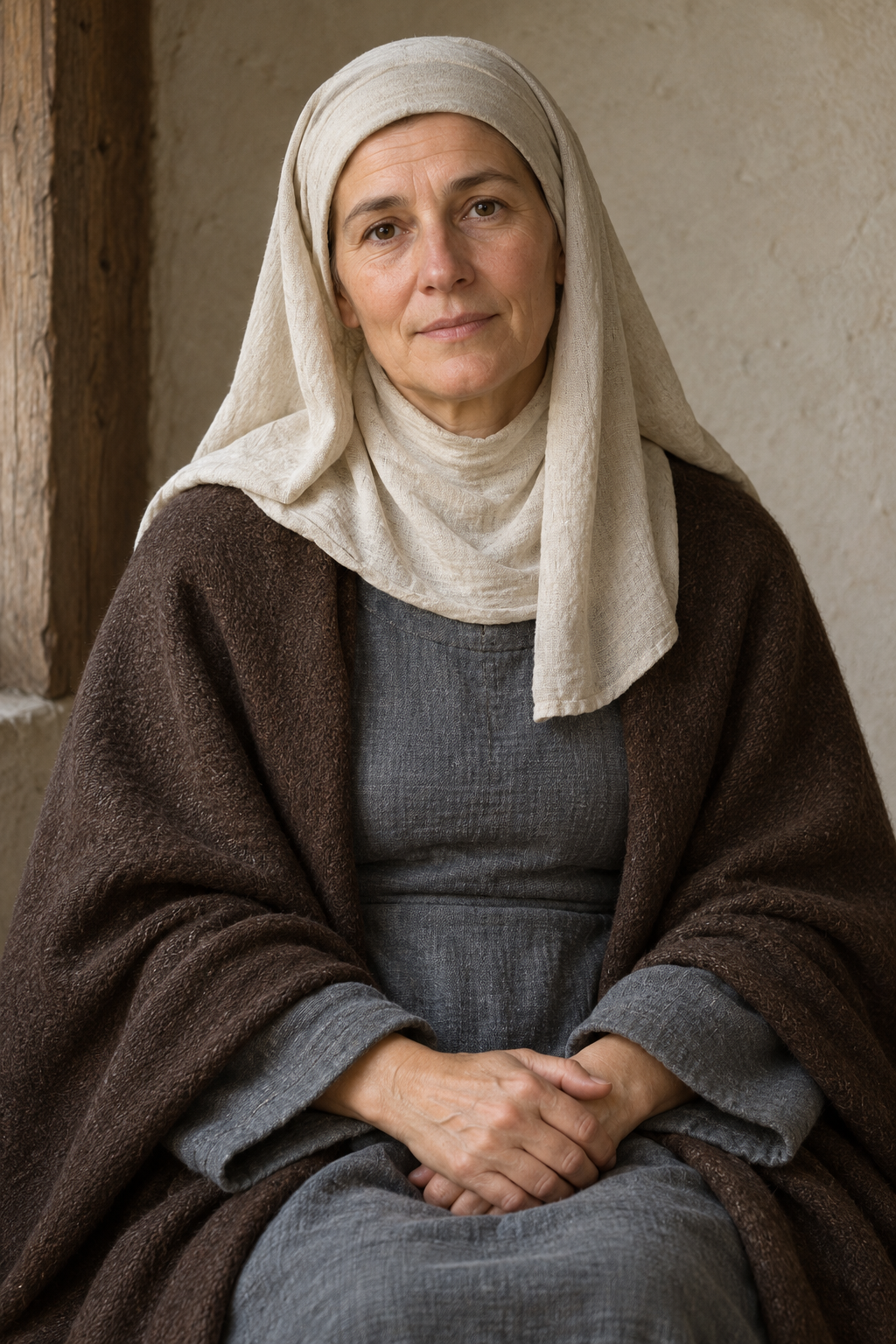
About Salaberga of Laon
Salaberga was a seventh-century mother and abbess associated with Laon. The French Catholic calendar Nominis describes her early widowhood and a second marriage undertaken under pressure from her parents. It remembers her second household for mutual charity and service to poor people. After raising five children, she used much of her property to establish a religious community.
Her early Life describes her decision to move the community to Laon. The author emphasizes the city’s defensive position and presents her decision as foresight of later warfare. That claim belongs to the Life’s interpretation of events. Bishop Attilo welcomes her arrival, and the community begins building churches and living quarters.
The Life also describes prayer as a shared responsibility. Salaberga divided the women into groups so that psalmody could continue by day and night, following monastic precedents. The author portrays her as cheerful, humble, generous with alms, and devoted to worship.
Historian Michèle Gaillard studies this Life alongside that of Salaberga’s daughter Anstrude, who succeeded her as abbess. In the published abstract of her study, Gaillard treats both texts as Merovingian compositions. She emphasizes their different purposes: Salaberga’s narrative is shaped by the interventions of religious men, while Anstrude’s contrasts her wish for peace with surrounding violence. These works offer evidence about powerful families, but their authors’ motives and judgments require careful scrutiny.
The Catholic Church in Norway’s account places her birth around 605 and her death around 665. These dates remain approximate: Nominis gives 670 in its heading. Her final illness and death among the sisters are described in the Life.
Nominis commemorates Salaberga on September 22 as a local feast. Her remembrance encompasses family life and the foundation and leadership of the community at Laon.
Wondering how to weigh the stories and sources? Learn how to read a saint biography.