Biography
Salvador of Horta
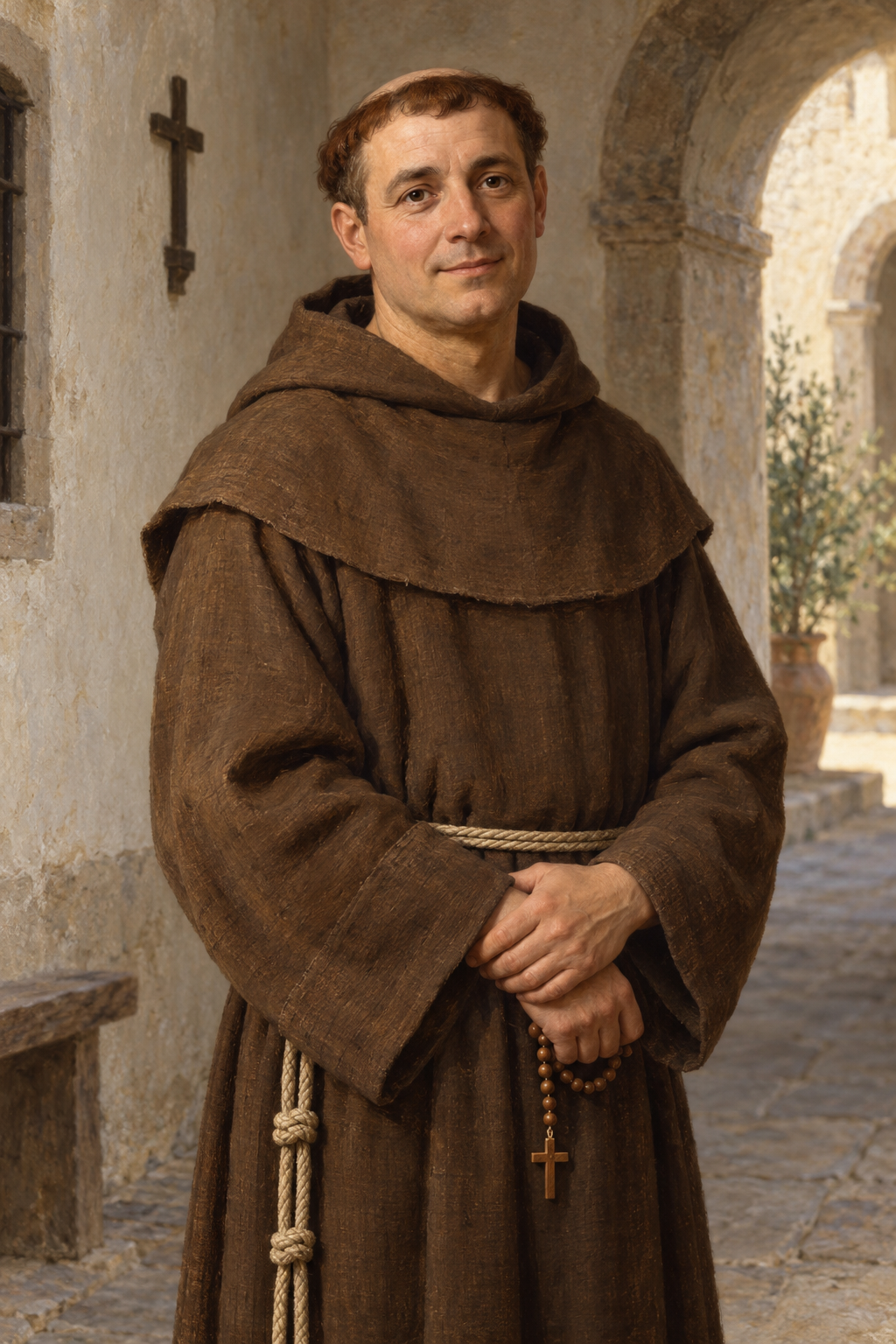
About Salvador of Horta
Salvador of Horta was a Catalan Franciscan lay brother whose reputation for healing drew crowds to the communities where he lived. Born at Santa Coloma de Farners in 1520, he died at Cagliari in 1567. He became known by Horta, the place most closely associated with his ministry.
His parents served in a hospital. After he was orphaned, he went to Barcelona and worked as a shoemaker. He later entered the Franciscan community of Santa Maria de Jesús and made his religious profession in 1542. His first assignments included Tortosa, where people began seeking him out because of the healings attributed to his prayers.
Franciscan devotional accounts remember him first through ordinary work. The Edelvives life describes a novice helping the cook, lighting the fire, washing dishes and cleaning pots. It presents his prayer as part of those tasks, with the names of Jesus and Mary on his lips while he worked. These details place his religious life in the kitchen and among the practical needs of the community.
At Tortosa he served as porter and collected alms. The same account describes his generosity toward poor people who came to the convent door. It also tells of families asking him to pray for sick children. In these stories, he blesses the sick and asks Mary’s intercession. The narrative presents these healings as signs of prayer and intercession. His reputation brought growing numbers of visitors, and the friars worried about the disruption to their common life. The account links his transfers with their attempt to restore quiet.
The historical study by Sara Caredda and Ramon Dilla Martí places his residence at Horta between 1547 and 1559. Later paintings spread the memory of the crowds who sought his blessing. The authors show that a Mexican painting placed the scene at Montserrat, although the biographies located it at Horta. His story could travel far beyond the places where he had actually lived.
He subsequently lived at Reus and Barcelona. The Catalan encyclopedia records that the Inquisition examined him in 1560 without imposing punishment.
His travels also took him to Madrid, where the Catalan encyclopedia records a visit to Philip II. The friar’s reputation had reached beyond the convents and towns where people ordinarily encountered him.
The devotional life recounts that a superior renamed him Ambrose and sent him to Reus. It portrays Salvador accepting the reprimand and departure without protest, emphasizing obedience amid the attention surrounding him.
In November 1565 he reached Cagliari. He joined the convent of Gesù e Maria, near the present church of Santa Rosalia, in the area later occupied by the tobacco factory. Chiesa Sarda remembers his years of cooking, prayer and care for people in need. His last home continued the pattern of domestic service that had marked his earlier religious life.
He died on 18 March 1567 after a serious illness. The Congregation of Rites’ account describes large crowds gathering around his body and a funeral attended by the archbishop, cathedral chapter, viceroy and members of religious orders. A Jesuit spoke about his life, and he was buried in the convent church. Devotion to him continued after his death.
The decree presents his vocation through humility, observance and penance. It connects the reputation for healing with his encouragement of confession, giving the stories a religious purpose beyond physical recovery.
Recognition by the Church developed over generations. The same decree records inquiries conducted in Sardinia and Spain in 1600, followed by further proceedings. In 1711 Clement XI confirmed the established cult. The canonization cause resumed in 1882; decrees concerning heroic virtue followed in 1927 and two miracles in 1937. On 21 November 1937, after the congregation had considered whether the cause could safely proceed, Pius XI authorized the concluding decree. The document distinguished the long history of public devotion from the formal steps still required for canonization.
Shoemakers also honored the former apprentice. Caredda and Dilla Martí document his patronage among guilds and confraternities in cities of the former Crown of Aragon. In Barcelona, he appeared among the saints represented on the shoemakers’ cathedral altarpiece inaugurated in 1692. The association preserved the memory of the trade he had practiced before entering religious life.
José Juárez’s Mexican painting adapted a composition by Rubens showing the miracles of Francis Xavier. The study traces how an established image of one missionary saint helped shape the representation of Salvador.
Cagliari’s devotion also carries a tradition of protection. Chiesa Sarda recounts a deathbed request that he protect the city, preserved by his biographer. It describes nine lamps at his tomb recalling a reported healing of the viceroy’s son. In 2015 the city marked 450 years since his arrival. The celebrations remembered the friar through the church that preserves his remains and through the continuing Franciscan community.
Pius XI canonized Salvador on 17 April 1938 in the Vatican basilica. His liturgical commemoration is 18 March. The Catholic Church remembers him as a religious of the Friars Minor, whose service joined practical care with prayer for others.
Wondering how to weigh the stories and sources? Learn how to read a saint biography.