Biography
Samuel David Ferguson
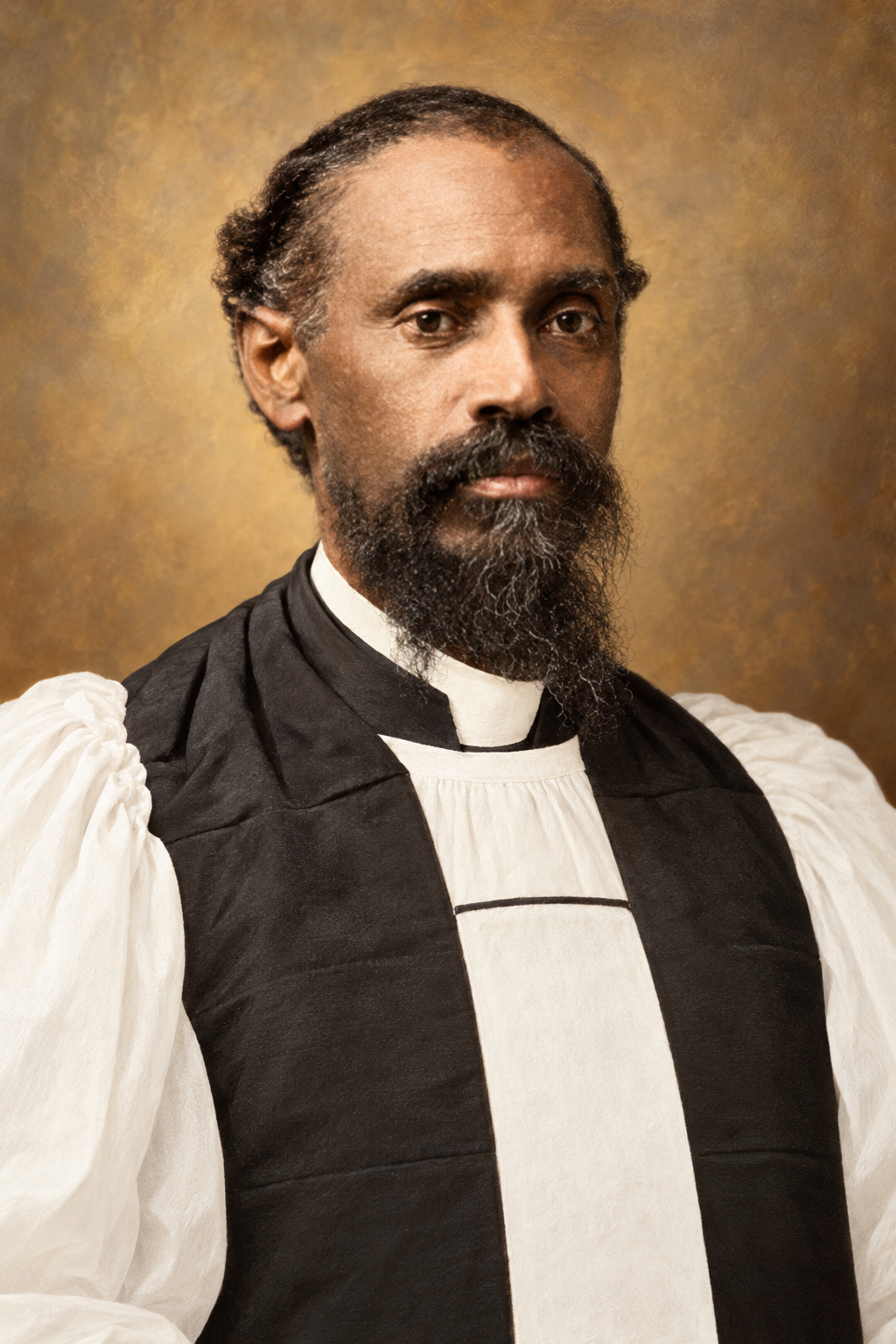
About Samuel David Ferguson
Samuel David Ferguson was a Liberian Episcopal bishop whose work joined education, the training of clergy, and the growth of local church leadership. Born in Charleston, South Carolina, he spent most of his life in Liberia. In 1885 he became the first Black member of the Episcopal Church’s House of Bishops. His long episcopate included the establishment of Cuttington, a school intended to serve both the church and the wider society.
He was born on January 1, 1842. His family moved to Liberia in 1848, when he was a child. His early career developed in mission schools: he taught boys at Cavalla and became master of the Mount Vaughan school. Teaching preceded and accompanied his ordained ministry, rather than appearing only after he became a bishop.
His mother had formerly been enslaved, and his father was a Baptist deacon. Ferguson studied under Bishop John Payne and entered the diaconate in 1865. He later became a priest and served Saint Mark’s Church in Harper, first as an assistant and then as rector. Accounts differ on whether his priestly ordination took place in 1867 or 1868; the sequence of teaching, ordination, and parish responsibility is clearer than that disputed year. His later ministry encouraged a Liberian national identity that could include both the descendants of American settlers and Indigenous peoples. Douglas describes education as central to this effort to overcome divisions and build a church with stronger local responsibility.
The mission handbook records that his father and two siblings died of fever after the family arrived in Liberia. Payne took charge of Ferguson’s schooling. Ferguson’s responsibilities eventually extended beyond teaching and parish worship to the practical administration of the mission. He served as its business agent and took part in the standing committee’s work, experience that preceded his election to the episcopate.
He was consecrated at Grace Church in New York on June 24, 1885. The church he was to lead stretched across several districts, and regular meetings of its clergy became one means of strengthening their common work. In a later commemorative lecture, his great-grandson Seward Montgomery Cooper describes Ferguson’s concern that competition between Christian denominations wasted resources and undermined their witness. He sought cooperation across church divisions while remaining firmly committed to Episcopal ministry.
Cuttington opened in 1889. A gift from Robert F. Cutting helped provide land and buildings, and the school employed Liberian staff. Its educational program joined theological study with agricultural and industrial instruction. Ferguson’s purpose was to prepare young people for the material and spiritual needs of their country. The undertaking drew on existing mission institutions and depended on teachers and supporters as well as the bishop who promoted it.
Historian Mary Antoinette Brown Sherman places that educational work within a difficult relationship between settlers from the Americas and Liberia’s Indigenous communities. She describes Ferguson as sharing prejudiced settler attitudes toward Grebo people without Western education. At the same time, he urged that educated Grebo Christians receive the opportunities, positions, and pay available to settlers. His vision of a shared nation challenged some exclusions while retaining the missionary assumptions through which he understood education and Christianity.
Sherman also emphasizes the practical purpose he assigned to schooling. Ferguson believed Liberians should be able to train for the ministry in Liberia. He connected the church’s financial independence with its members’ capacity to support themselves, and urged instruction in useful trades. This was an argument about the livelihood of students as well as the finances of the institution that educated them. His desired industrial training did not immediately become available in the form he proposed.
Girls’ education also formed part of the mission’s work. The mission handbook describes the movement of Saint George’s school to Bromley and the development of a building named for Julia Chester Emery. Its account names women whose teaching and organizing sustained these institutions. Reading that record alongside the bishop’s career helps keep their labor visible: schools were communities of pupils, teachers, donors, and church workers, not simply the achievements of one officeholder.
Cooper’s account also presents Ferguson as a critic of political conduct that contradicted Christian profession. In a charge on election abuses, he condemned bribery, fraud, and the willingness to sacrifice public obligations for party advantage. During conflict between settlers and Grebo communities, he opposed the view that suffering people should be abandoned. These interventions linked his ministry to questions of national belonging, moral responsibility, and the treatment of neighbors during political hostility. He also urged the Liberian church to regard support from the American mission board as encouragement for its own efforts. Financial assistance, in his view, should help local responsibility grow instead of permanently replacing it.
Ferguson died in August 1916; the mission handbook gives August 2.
An Episcopal parish commemoration remembers him on August 2 for his ministry and educational work in Liberia.
Wondering how to weigh the stories and sources? Learn how to read a saint biography.