Biography
Samuel Isaac Joseph Schereschewsky
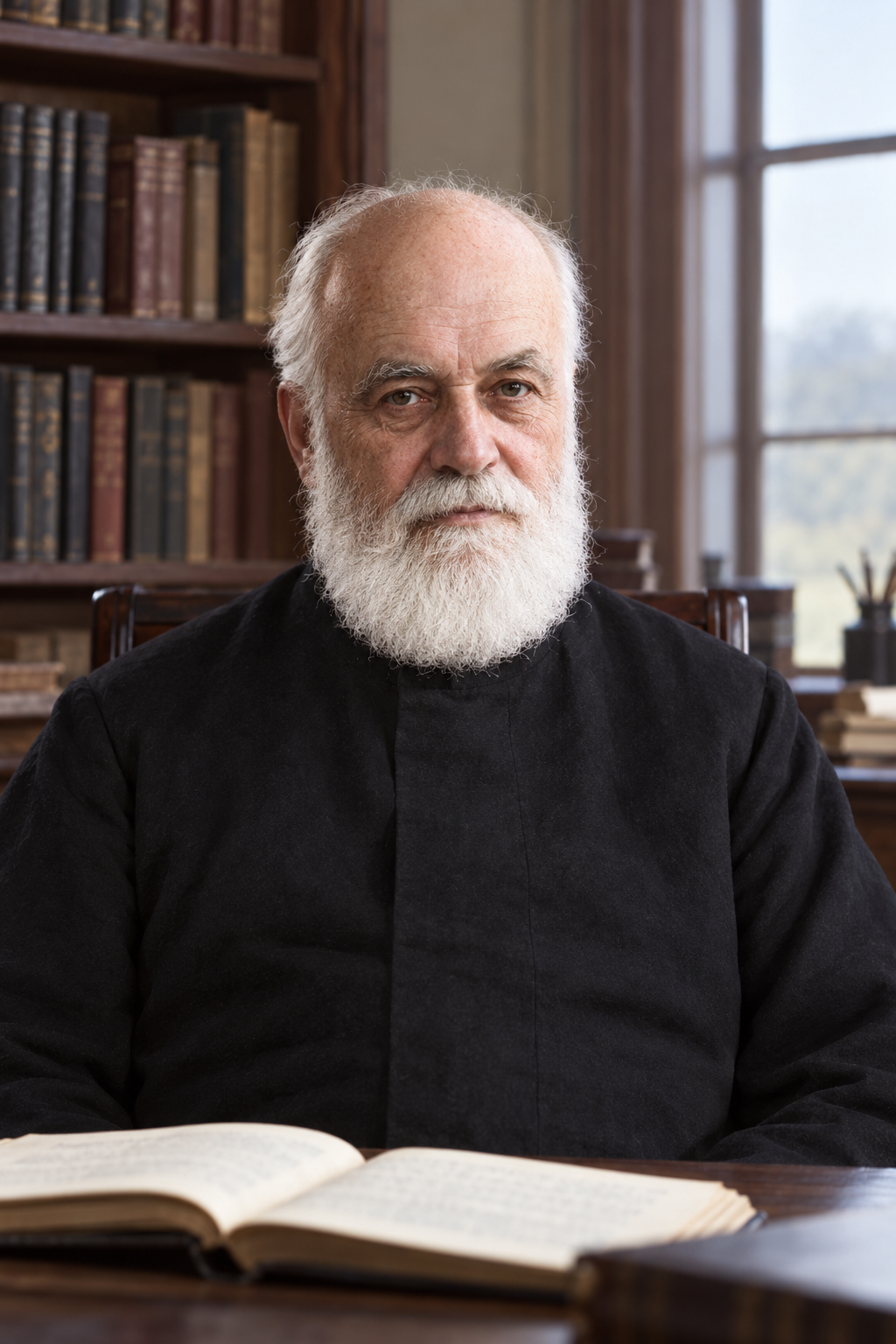
About Samuel Isaac Joseph Schereschewsky
Samuel Isaac Joseph Schereschewsky crossed several religious and linguistic worlds before becoming an Episcopal missionary and translator in China. Born in Tauroggen, Lithuania, on May 6, 1831, he later moved to the United States, where he attended both Presbyterian and Episcopal seminaries. His work included a Mandarin translation of the Old Testament and the establishment of St. John’s College in Shanghai.
He grew up in a Jewish family and studied Hebrew and Aramaic. After his parents died, a half-brother’s household cared for him. His interest in Christianity developed through reading and encounters with missionaries. In America he attended Western Theological Seminary before moving toward the Episcopal Church and General Theological Seminary. He volunteered for China after hearing Bishop William Jones Boone’s appeal for missionaries.
Boone ordained him deacon at St. George’s Church in New York in July 1859. He traveled to China that year and was ordained priest in Shanghai in October 1860. He later served as an interpreter for the American minister, Anson Burlingame, and lived in Peking while developing his translation work. His command of the language grew through sustained study rather than ending with his initial preparation for the mission.
He married Susan Mary Waring in 1868. She taught, worked with local women, and later became his secretary and principal source of daily care. Chinese assistants also contributed to the preparation of his translations. These working relationships belong to the history of the books alongside the linguistic gifts of the man whose name they carried.
In his own 1888 account, Schereschewsky carefully distinguished his part in a collaborative New Testament from his translation of the Mandarin Old Testament. He also described work on the Book of Common Prayer. Translation required decisions about readers as well as words: he wanted a literary Chinese style accessible to people with an ordinary education, rather than a form restricted to highly trained scholars.
Church leadership brought a different responsibility. On October 31, 1877, he was consecrated missionary bishop of Shanghai at Grace Church in New York. In the sermon, William Bacon Stevens acknowledged his reluctance to accept an office to which the bishops had twice elected him. Stevens charged him with strengthening a Chinese church and ministry that could eventually sustain themselves. That was the stated purpose of the commission, not a description of an outcome already achieved.
The sermon also explained the educational setting for the college Schereschewsky had proposed. Stevens wanted its students to study Chinese classics, Western science, and Christianity together, preparing teachers and clergy within China. He argued against sending candidates abroad for training that separated them from their language, households, clothing, and social relationships. Yet his respect for Chinese learning coexisted with harsh judgments about Chinese religions, which he portrayed as obstacles to be overcome through Christian education. These were the preacher’s arguments at the consecration, not a record of Schereschewsky’s own words. They show both the commitment to local ministry and the assumptions about religious superiority surrounding the American mission’s educational ambitions in the nineteenth century.
St. John’s College opened in Shanghai in 1879. Schereschewsky had raised support for it in America and acquired a site after returning to China. Illness in 1881 left him partly paralyzed, and he resigned the bishopric in 1883. He nevertheless continued translation work. In a March 1895 appeal written in Cambridge, Massachusetts, he explained that resigning his episcopal office had not meant abandoning his work as a missionary. He asked American church members to help meet the costs of printing and returning to China.
His 1888 account explains the practical method behind that continued work. He used a typewriter to represent Chinese in Roman letters; the text then had to be rewritten in Chinese characters before publication. The resulting books therefore required further skilled labor beyond his typescript. He also defended his choices for translating theological and clerical terms, while acknowledging that he might have exceeded his authority by combining English and American prayer books. He asked the church’s bishops to settle disputed questions through legislation.
Translation remained a contested undertaking among missionaries. At the Shanghai conference of 1890, a paper by Schereschewsky was presented in his absence. It advocated a version in a more accessible literary style. The conference’s wider debates led to committees considering united literary and Mandarin versions. His work thus belonged within a larger discussion about the languages and forms in which Chinese Christians would encounter scripture.
He returned to China in 1895 and moved to Japan in 1897. The revised Mandarin Old Testament appeared in 1899 and the Easy Wenli Bible in 1902. His later collaborators included the Chinese scholar Lian Yinghuang and a Japanese copyist.
Schereschewsky died in Tokyo on October 15, 1906.
His Episcopal commemoration falls on October 14, a distinct date from the death date recorded in the scholarly biographical reference.
Wondering how to weigh the stories and sources? Learn how to read a saint biography.