Biography
Samuel Seabury
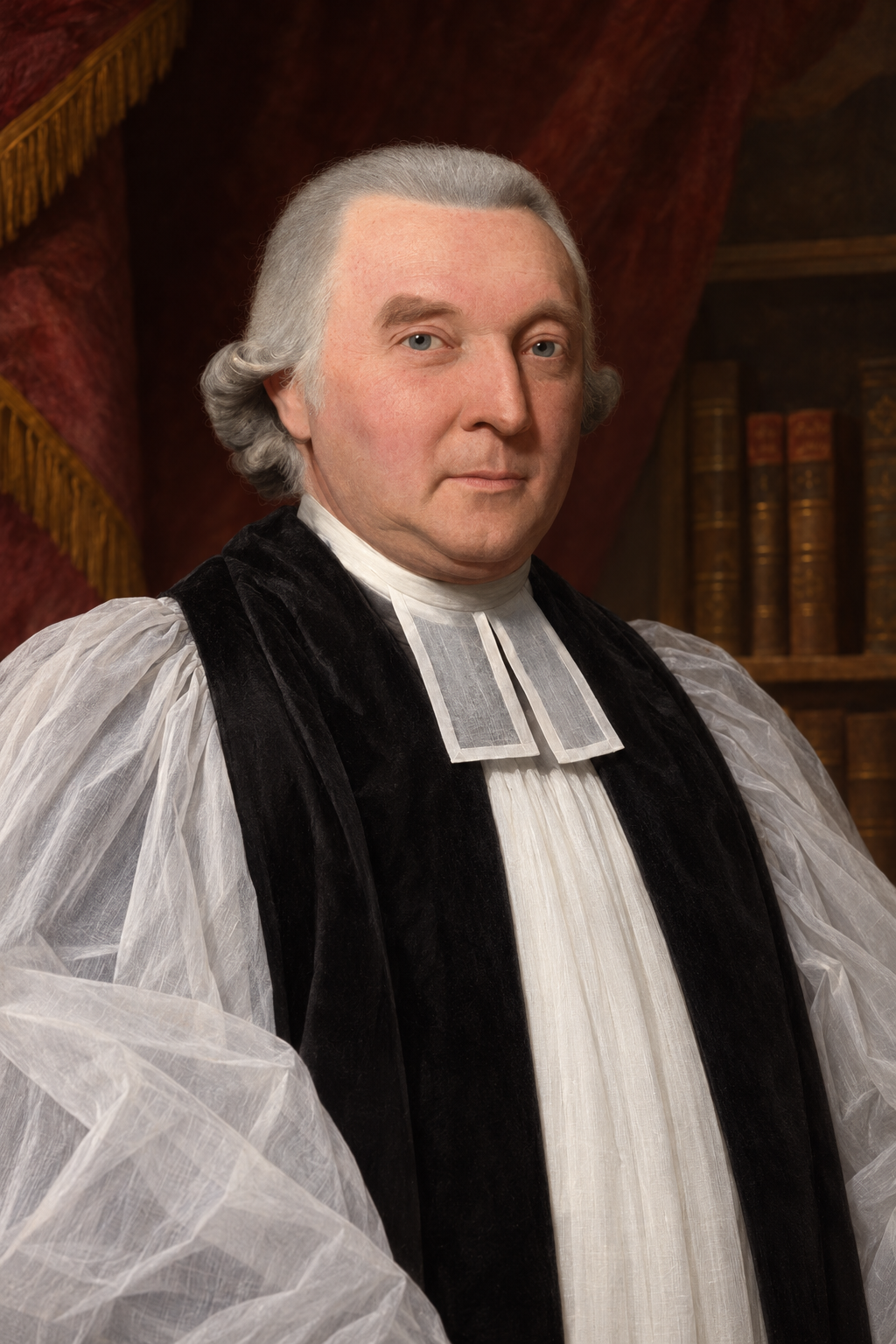
About Samuel Seabury
Samuel Seabury helped establish the Episcopal Church’s ministry after American independence, although he had opposed the Revolution. Born in North Groton, Connecticut, on November 30, 1729, he graduated from Yale in 1748. He studied theology with his father and medicine in Edinburgh before receiving ordination in England in 1753. His subsequent ministry took him to New Brunswick, Jamaica, and Westchester.
In Westchester, he encountered congregations divided over religious authority and reluctant to receive communion. He also sought funds to finish the stone church at Eastchester. His income included earnings from a private school. These local concerns existed alongside the larger argument over creating an American bishop who could ordain clergy without requiring them to travel to Britain.
During the political crisis of 1774 and 1775, he wrote the pamphlets known as the Letters of a Westchester Farmer. They opposed the Continental Congress’s boycotts and warned against abandoning established authority. Alexander Hamilton answered him in print. Seabury’s Loyalism brought threats and arrest, followed by a short imprisonment in New Haven. During the war he joined the British in New York, serving as a chaplain and practicing medicine.
After the war, Connecticut clergy chose him as their bishop. His search for consecration first took him to England, then to Scotland. In a letter reproduced in William Jones Seabury’s later memoir, he explained the difficulty of obtaining English authorization without political consent from America. He wanted an episcopate whose authority concerned the church rather than civil government. That account describes his purpose; it does not remove the political history that made the journey necessary.
The Scottish bishops agreed to act. On November 14, 1784, Robert Kilgour, Arthur Petrie, and John Skinner consecrated him in Skinner’s chapel in Aberdeen. A concordat followed the next day, recording the relationship between the Scottish church and the church in Connecticut. The ceremony provided the episcopal succession he had sought, while the agreement expressed a continuing bond between the two churches. The choice of Aberdeen reflected the bishops’ circumstances. Kilgour explained that he could not travel to Edinburgh and that Petrie was too infirm for that journey, making Aberdeen the practical meeting place.
Returning to pastoral leadership meant confronting practical losses as well as constitutional questions. In his 1786 charge to Connecticut clergy, Seabury described the withdrawal of salaries formerly supplied from England. He acknowledged that the missionary society’s charter no longer covered the independent states, while regretting the abruptness of the change. He urged clergy to live frugally and congregations to support their ministers. Independence had made local provision for worship and ministry an immediate responsibility.
The same address reveals his strong views about church government. He criticized revisions to worship and governance undertaken by conventions of clergy and lay delegates before bishops had been secured. For him, episcopal authority was inherited from the apostles and could not simply be redesigned. He urged recourse to early Christian writers and liturgies when considering changes. His defense of continuity was a theological position, and other church leaders did not necessarily share his conclusions.
Communion was central to his pastoral teaching. In An Earnest Persuasive to Frequent Communion, published in 1789, he addressed people who stayed away because they feared receiving unworthily. He argued that the remedy was repentance and preparation, rather than continued absence. He also questioned a translation of Paul’s warning that, in his view, had intensified fearful consciences. His explanation treated the sacrament as a means of spiritual nourishment, not a reward reserved for people already free of weakness.
At the close of that appeal, he described monthly communion as the prevailing practice and expressed a wish that it would become part of every Sunday’s worship. This was an aspiration, not a claim that all his congregations had adopted it. His published appeal joins instruction about the sacrament with the practical concern that church members should actually receive it.
His household also participated in slavery. Historic New England’s Witness Stones research identifies Nell and her daughter Rose among the people Seabury enslaved. Its account transcribes an inventory made after his death in which Nell, aged thirty-eight, and Rose, about nine, were assigned monetary values. The record’s provision for Rose’s eventual freedom did not mean that she was free during his lifetime.
The same research traces Rose’s birth to June 1787 and records that it was registered several years later. It does not establish what became of either woman after Seabury died. Their presence must therefore be remembered without inventing a later freedom, reunion, or fate. His work in building church institutions coexisted with treating people as property.
Seabury later provided episcopal oversight in Rhode Island and served as presiding bishop. He died in New London, Connecticut, on February 25, 1796. His November 14 Episcopal commemoration recalls the consecration through which he brought an American episcopate into being.
Wondering how to weigh the stories and sources? Learn how to read a saint biography.