Biography
Sebastian Kwon Sang-mun
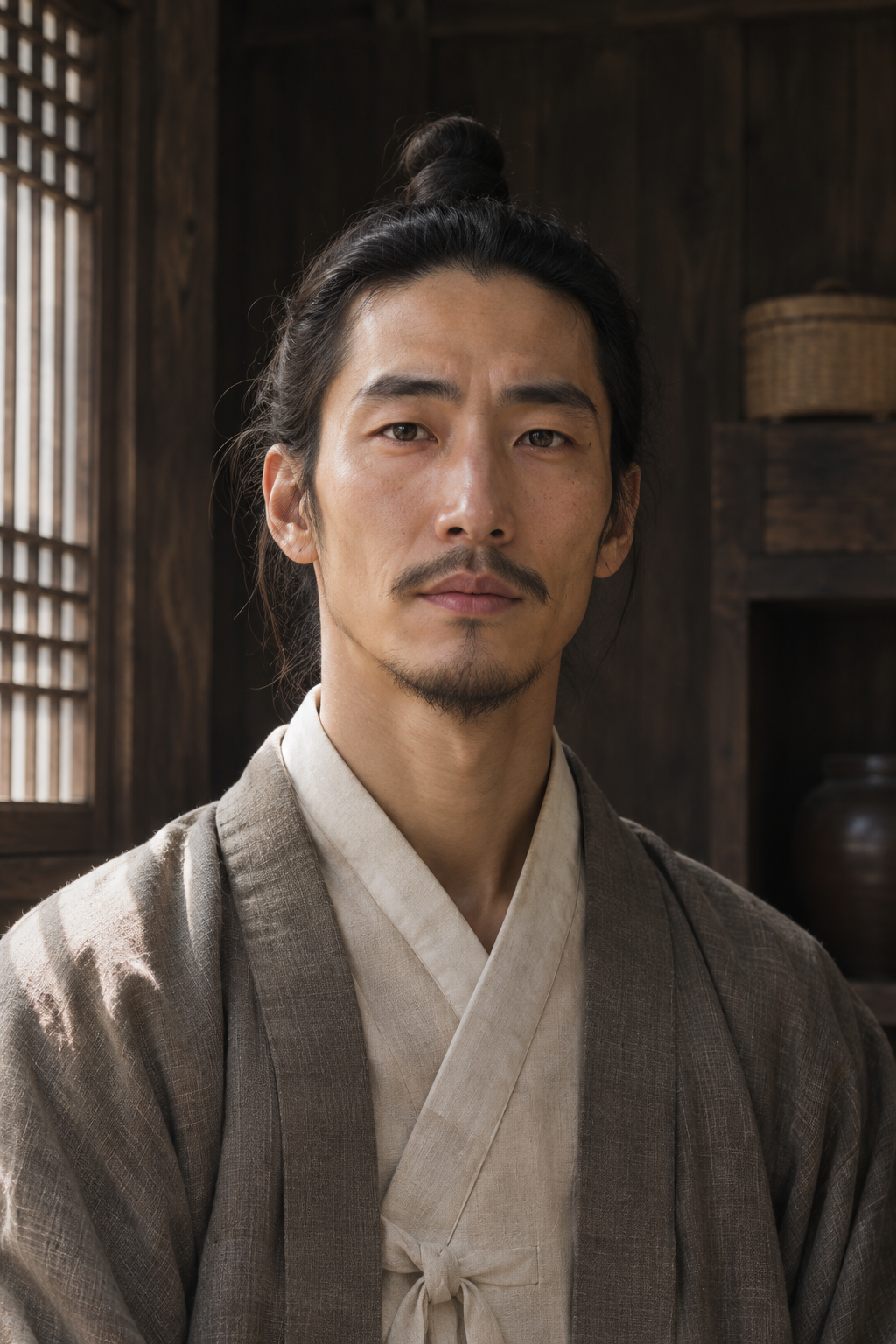
About Sebastian Kwon Sang-mun
Sebastian Kwon Sang-mun grew up in Yanggeun in Gyeonggi Province. His father, Francis Xavier Kwon Il-sin, helped establish the Catholic Church in Korea. His father’s older brother, Ambrose Kwon Cheol-sin, taught several of its first members. The Korean bishops give 1769 as Sebastian’s birth year. As a young man he studied Christian teaching and gathered for prayer with neighbors, among them Paul Yun Yu-il and his brother.
Learning had long held a place in the Kwon household. An ancestor had lost his government office in a political upheaval and settled at Yanggeun. Even after their withdrawal from office, the family continued to educate their children and exchange ideas with other scholars. Sebastian’s paternal grandfather, Kwon Am, knew An Jeong-bok, the scholar whose daughter married Sebastian’s father. Their marriage joined two families already accustomed to learning from each other.
Church historian Cha Ki-jin dates Sebastian’s birth to 1768. Cha describes him as a boy preparing for the civil service examinations until his father embraced Christianity. The brothers of the Kwon family lived close together, sharing what they had. Religious disagreement also reached across the family. An Jeong-bok objected so strongly to his son-in-law’s new faith that he stopped visiting. Sebastian also lost his mother while he was still young.
A surviving exchange of letters shows what worried his mother’s family. In 1784 An Jeong-bok wrote to Sebastian’s uncle about the change he had noticed in his letters. The uncle wanted to give up his previous line of study to concentrate on cultivating his inner life. An took this as evidence of the influence of Catholic ideas. Men whom Sebastian knew as close relatives were already divided over what constituted a good education and a faithful life.
In the spring of 1785 Sebastian and his father attended a gathering at Kim Beom-u’s house in Seoul. Officers broke it up. Kim, whose family belonged to a lower social rank than the Kwons, remained in custody. Sebastian accompanied his father and others to the minister of justice to ask for the return of a confiscated religious image and to be punished alongside their host. The minister refused.
In 1791 the authorities seized Sebastian’s father during a persecution prompted by a dispute over ancestral rites. A later Catholic account places his death in the spring of 1792. He had been punished before being sentenced to exile and died on the way to Yesan. Sebastian drew back from the Church after his loss.
At home Sebastian turned his attention to providing for the family. He married and had two sons. At the urging of the elders, he became the adopted son of his uncle Ambrose, who had no heir. Although Sebastian had withdrawn from religious life, old friendships endured. When his grandmother died in 1793, Hwang Sa-yeong came to pay his respects.
James Zhou Wen-mo’s arrival in Korea brought Sebastian back to active Catholic life. Sebastian went to the capital to receive the sacraments, visiting the priest with fellow Catholics before returning to Yanggeun. In 1795 it was Zhou who needed a place to stay. Sebastian sheltered him for three days and received instruction from him.
The account of his uncle remembers the two men receiving the sacraments together and listening as Zhou explained the faith. Since his brother’s death Ambrose had rarely gone out or met with other Christians. A visit to the family home allowed him to meet the priest alongside his adopted son. It also placed both men in danger. Ambrose himself was denounced to officials at Yanggeun in 1799.
In Yanggeun he had taught alongside Justin Jo Dong-seom as well as Paul Yun Yu-il. A neighbor’s accusation brought Sebastian to prison in 1800, before the persecution spread across the country the following year. He was taken back and forth between the local office at Yanggeun and the provincial government. Lee Seung-hun’s diocesan profile says he disclosed both his own activities and the family’s history under repeated questioning. He eventually appeared before the police and the Ministry of Justice in Seoul.
While Sebastian remained in custody, officials arrested Ambrose in March 1801. Questioned about Zhou and other Christians, he refused to identify them. Ambrose died during his fifth interrogation in early April. The two men who had once welcomed the priest together had now faced separate proceedings over their connections with him.
The Church’s account remembers a moment of weakness during Sebastian’s interrogation in Seoul. He said that he would give up his religion, then withdrew the statement. Although the accounts differ in their placement of his concessions during the long proceedings, they agree that he affirmed his faith again before he was sentenced.
The order sent Sebastian back to Yanggeun so that his execution would serve as a warning to his neighbors. He was beheaded there on January 30, 1802. Today the Catholic shrine at Yanggeun remembers him among those local families who sustained the first generations of the Church.
Wondering how to weigh the stories and sources? Learn how to read a saint biography.