Biography
Secundus of Asti
About Secundus of Asti
Secundus, known in Italian as Secondo, is venerated as Asti’s martyr patron. His life story is legendary. He is distinct from the namesake saints associated with Salussola and Pinerolo.
In the traditional account, visits to imprisoned Christians draw Secundus toward their faith. He meets Calogerus, travels with the prefect Sapricius and eventually receives baptism. After bringing communion to the imprisoned Marcian and burying him after his execution, Secundus refuses to renounce Christianity. The narrative ends with his own execution outside Asti. Its miraculous episodes and uncertain participants place it within devotional storytelling rather than a contemporary judicial record.
A recent account in the diocesan newspaper describes the later manuscript tradition and a different proposal made by the local historian Pietro Daquino. Daquino suggested that the saint remembered at Asti had been a sixth-century bishop involved in relations between the city and the Lombards. The article also reports radiocarbon testing of a bone attributed to the saint and a proposed second-century date. Dating a bone cannot by itself establish whose remains it contains; neither proposal supplies a secure personal chronology.
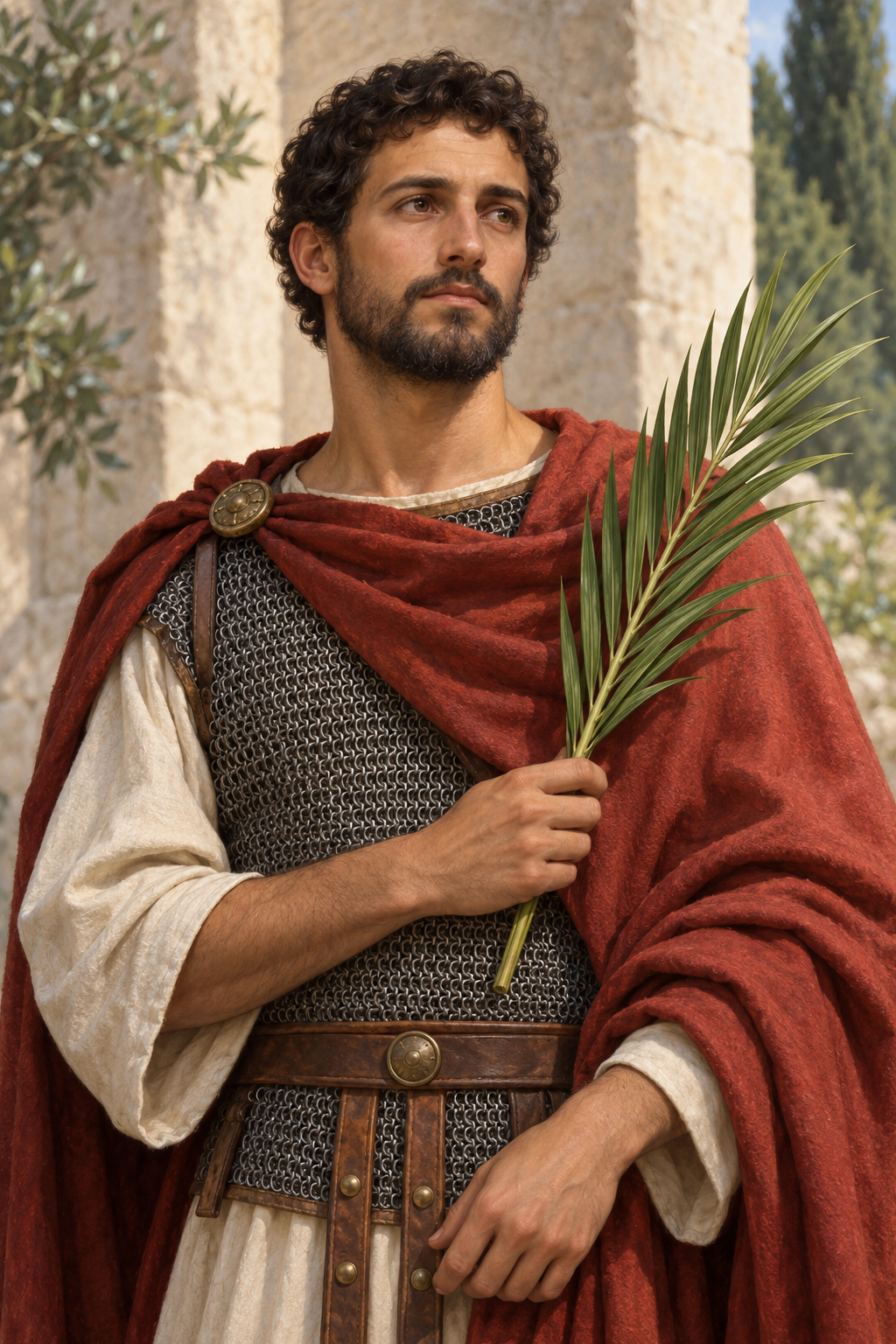
The same account describes changes in his imagery. Medieval and later artists represented him as a standing figure or a mounted soldier, carrying a palm, a banner or a model of the city. These objects express martyrdom and civic protection. They show how Asti understood its patron, rather than providing an eyewitness portrait or reliable evidence about the equipment he personally used.
One surviving sandstone statue offers a tangible example of that later devotion. Italy’s cultural heritage catalogue dates it to about 1380–1390 from the style of its clothing. It once stood above the rose window of the collegiate church. During nineteenth-century restoration work, its condition and perceived lack of artistic value nearly led to its destruction. Ernesto Maggiora Vergano intervened, offered support for the restoration and obtained permission to preserve the sculpture in his own home. Its survival depended on that act of preservation.
Devotion also travelled beyond Italy. Secondo Guasti and his wife built a church in the California community that bore their family name, using craftsmen from Mexico and Italy. Dedicated in 1926, San Secondo d’Asti later became part of the Diocese of San Bernardino. An east window represents the saint in Roman military clothing, holding buildings that stand for Asti while an angel offers the crown and palm of martyrdom. The parish thus preserves a link between its immigrant founder’s background and its own worship.
The Catholic commemoration falls on March 30, while Asti’s solemn local celebration takes place on the first Tuesday in May. The city and diocese continue to honour Secundus as their patron. That continuing devotion is clearer than the recoverable details of his ancient life.
Wondering how to weigh the stories and sources? Learn how to read a saint biography.