Biography
Seraphin of Montegranaro
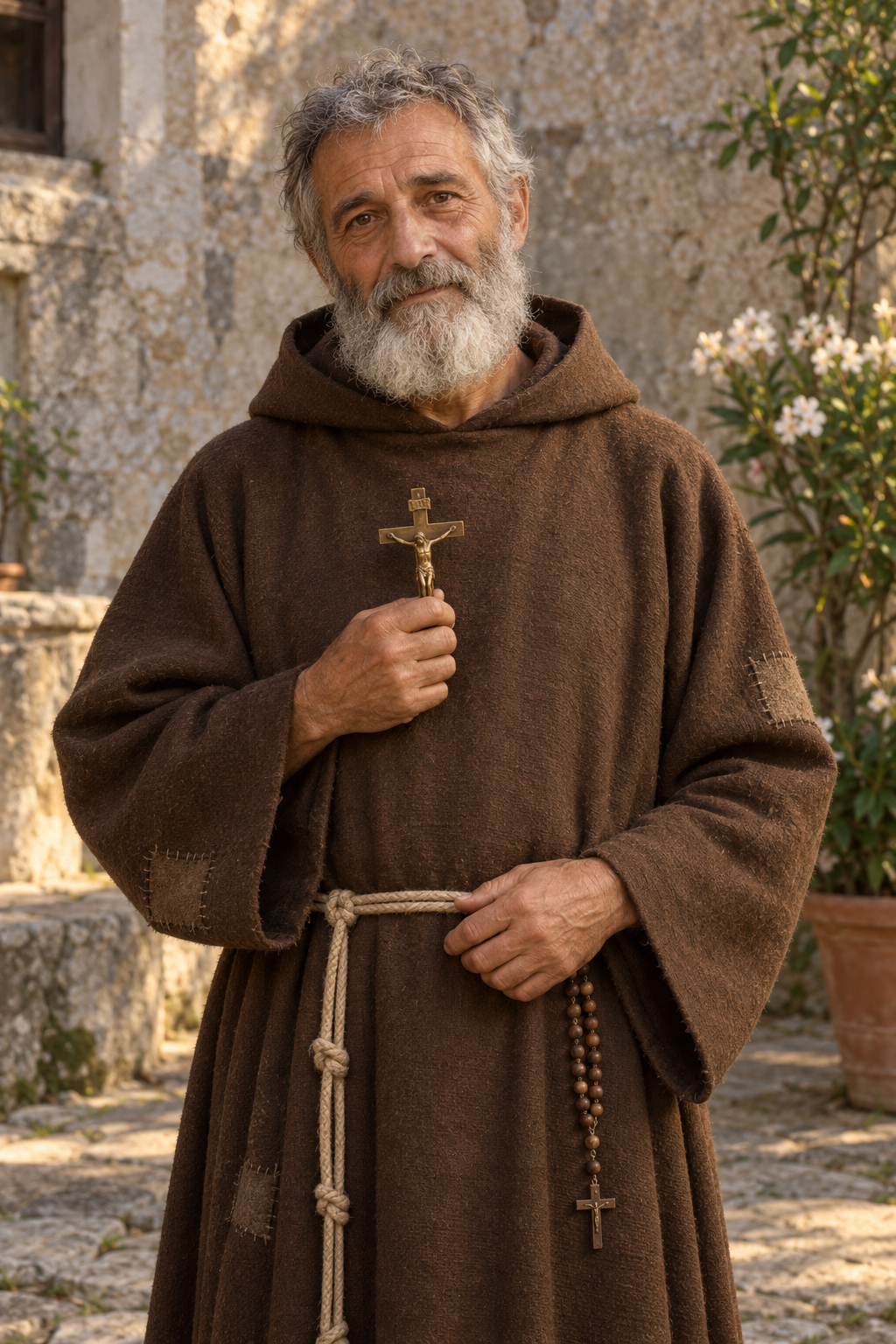
About Seraphin of Montegranaro
Seraphin of Montegranaro was a Capuchin lay brother whose baptismal name was Felice. His birthplace was Montegranaro in the Marche. He spent his religious life within that region, moving among its friaries before becoming especially associated with Ascoli Piceno. The short biography maintained by the Causes of Saints remembers his patience and the consolation he offered through devotion to the crucifix and the rosary.
His birth is usually placed around 1540. Historian Giammario Borri examined the conflicting chronologies and the surviving records behind them. No baptismal record for Felice survives. Documents discussed in the study identify his parents as Girolamo and Teodora and place the family within the building trade. His father had died before 1552. Borri also traces the customary 1540 date to early proceedings for Seraphin’s cause, including an article presented in 1610 that gave his birth as approximately that year. The study distinguishes that evidence from attempts to infer a precise birthday or novice year from inconsistent chronicles.
Owen O’Sullivan’s Capuchin account describes a childhood shaped by poverty and by his mother’s religious instruction. Felice developed a devotion to Mary and visited the shrine at Loreto. After his parents’ deaths he worked under his elder brother, a bricklayer. The brother’s violent temper made the work painful: the account describes insults and blows even when Felice tried to carry out his tasks well. It remembers his patient response without disguising the harshness of the treatment.
A desire for religious life brought him into contact with the Capuchins. Costanzo Cargnoni relates that a young woman from Loro Piceno encouraged him to consider their way of life. His first approach at Tolentino did not bring immediate acceptance. He eventually entered the novitiate at Jesi, near Tabano, and received the name Serafino. The chronology of his formation and later residences is less certain than the broad outline of his vocation. Cargnoni explicitly notes the difficulty of arranging the vivid recollections of witnesses into an exact sequence. His residences included Loro Piceno, Corinaldo, Ostra, Ancona, Sant’Elpidio and Montolmo, now Corridonia. Ascoli was where he lived longest and where witnesses preserved memories of his work and character.
Religious life also brought discouragement. Cargnoni recounts testimony given by Brother Angelo of Macerata in 1627 about Seraphin’s struggles under a demanding superior. The narrative presents prayer before the Blessed Sacrament and the rosary as his response to humiliation and thoughts of leaving. Its reported heavenly voice belongs to the devotional testimony preserved by the cause.
His service involved ordinary manual work. Ilarino da Milano lists cooking, gardening, building and collecting alms among his duties, carried out in several houses and especially at Ascoli. The same account describes a man who encouraged, corrected and comforted the people who sought him out. His short talks moved his fellow friars. Seraphin also wanted to leave for missionary work. Lawrence of Brindisi, serving as the order’s minister general, declined that request and kept him at Ascoli. His vocation therefore continued among the people who already knew him, rather than taking the overseas course he had hoped to follow.
His concern for hungry neighbors sometimes strained the household’s resources. O’Sullivan recounts that during a famine Seraphin reduced his own food so that he could give more away. Another remembered episode describes him pulling vegetables from the friary garden when people at the door needed food and nothing else remained. The superior reproved him; the account adds that the community nevertheless found enough to eat.
Prayer accompanied that practical service. In his 2004 commemoration, John Paul II described long hours before the tabernacle at night, devotion to Christ’s Passion and a brass crucifix carried when blessing the sick. The letter also recalls his narrow, bare room and patched clothing. As an alms collector he walked dusty roads and sought out people living in poverty. At the friary door he welcomed those who came for help. The pope particularly remembered his work as a peacemaker within families, combining direct appeals with encouragement and material solidarity.
Ferdinand Heckmann’s account emphasizes that Seraphin lacked formal education yet was sought for spiritual counsel by people of influence. It also records the reputation for miraculous gifts that grew around him. These stories form part of his devotional reception; the enduring personal portrait is of an approachable brother whose life of prayer drew others to seek his advice. He died at Ascoli Piceno on 12 October 1604. His tomb there became a place of devotion.
The Church’s formal recognition came much later. He was beatified by Benedict XIII on 18 July 1729 and canonized by Clement XIII on 16 July 1767. His liturgical commemoration is listed on 12 October.
The official English title of John Paul II’s anniversary letter identifies him as patron of Ascoli Piceno. The city’s connection with him is thus remembered through both his local service and its continuing public devotion.
Wondering how to weigh the stories and sources? Learn how to read a saint biography.