Biography
Severus of Ravenna
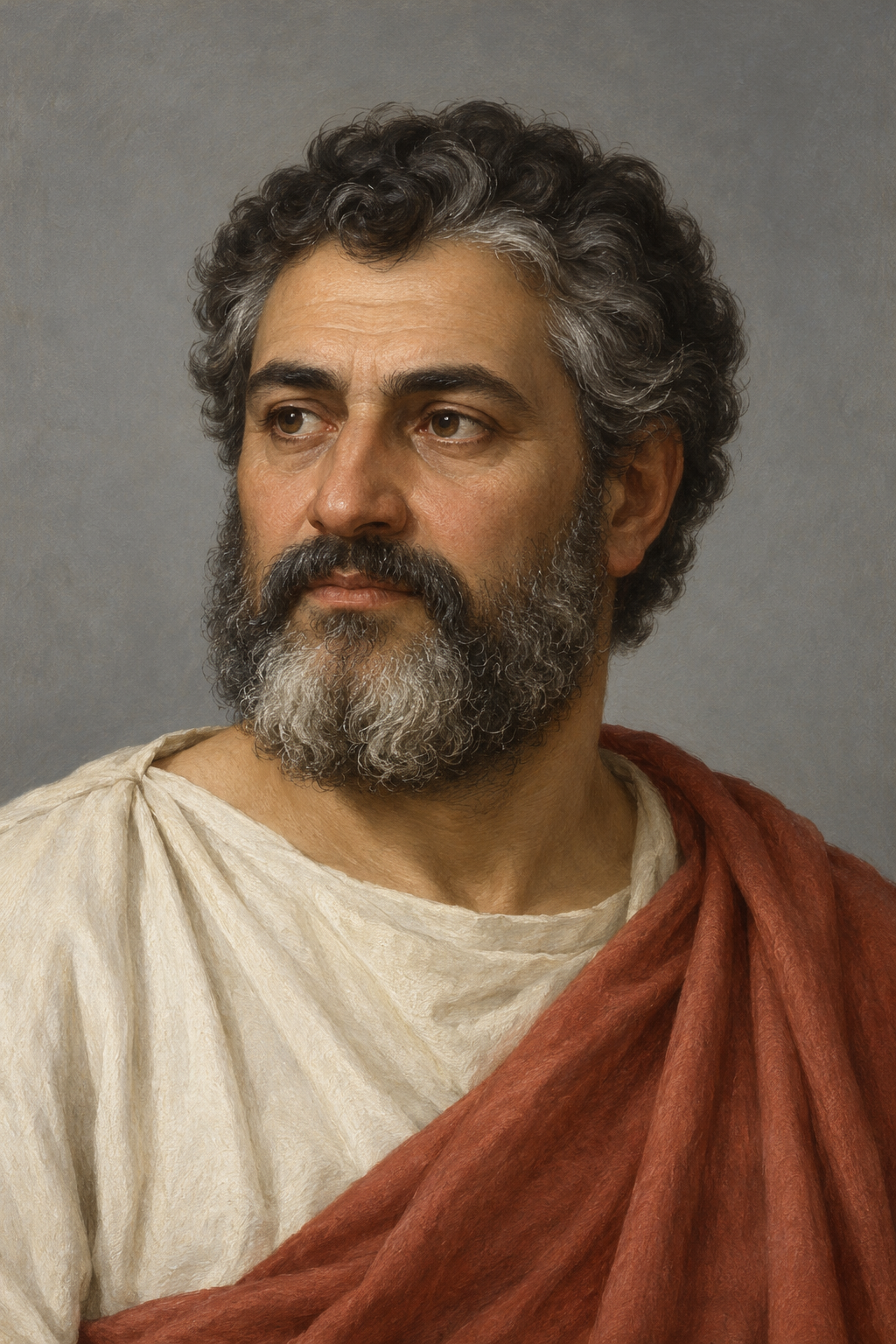
About Severus of Ravenna
Severus was bishop of Ravenna in the fourth century. His participation in the Council of Sardica in 342–343 gives a firm point in an otherwise uncertain chronology. His name appears among its signatories and in the letter addressed to Pope Julius.
The stories that fill out his life were written much later. Gardini notes that the ninth-century writer Agnellus acknowledged the absence of a written history available to him. The famous account of a dove choosing Severus as bishop belongs to this later legendary tradition, rather than to contemporary documentation of his election.
His veneration nevertheless left substantial traces in the landscape. A large basilica dedicated to him was built at Classe in the later sixth century. Archaeologists have identified its three-aisled plan and mosaic pavements, with animal and geometric decoration. Earlier Roman buildings lie beneath the church. These remains illuminate the setting in which his memory was honored, rather than supplying the missing details of his childhood or ministry.
His memory also took root in Germany. The parish history of St. Severi in Erfurt dates the arrival of relics attributed to him to 836. A sarcophagus associated with him remains in the church, which continues as a place of Catholic worship.
The connection between Erfurt and Ravenna has continued in modern times. In 1981, Bishop Joachim Wanke and the Erfurt parish priest visited Ravenna and presented a relic associated with Severus. Such exchanges reflect a shared devotion across the two cities.
The Enciclopedia Cattolica names him as a patron of weavers, wool spinners and police officers. These are traditions of devotion; they do not by themselves establish his occupation before becoming a bishop.
Wondering how to weigh the stories and sources? Learn how to read a saint biography.