Biography
Shio of Mgvime
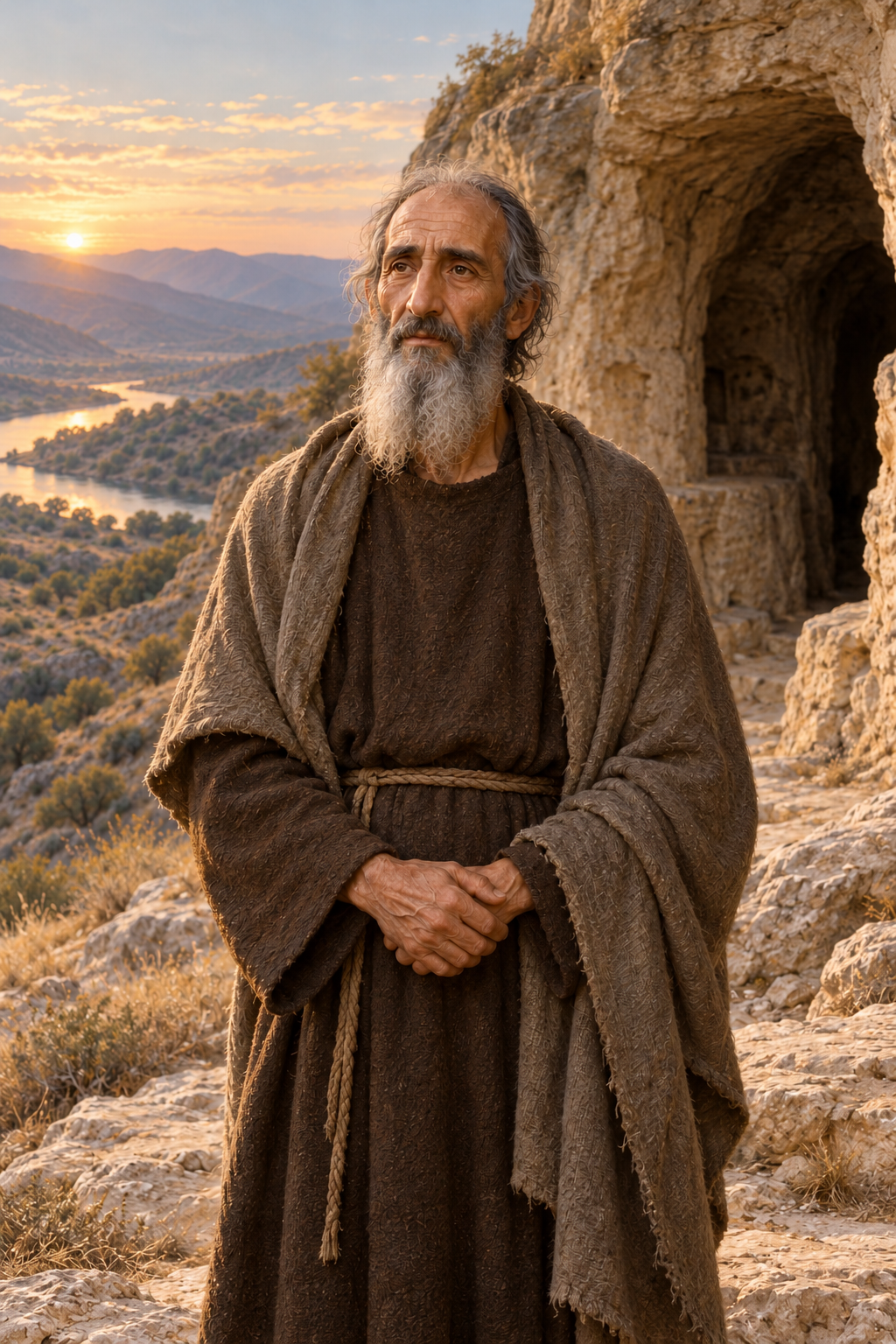
About Shio of Mgvime
Shio of Mgvime is remembered as a monastic founder in sixth-century Georgia. His name remains attached to Shiomghvime, a monastery near Mtskheta whose name joins Shio with the Georgian word for a cave. The community grew around a grotto associated with him. His surviving life was written centuries later, so its detailed stories cannot be read as a contemporary record.
According to the life preserved by the Orthodox Church in America, Shio became a disciple of John of Zedazeni. It describes him giving away his property and freeing his family’s slaves before entering monastic life. He later accompanied John to Georgia and settled among the Sarkineti caves. These episodes belong to the tradition through which the Church remembers his renunciation and vocation.
The same account tells how Evagre, a ruler who encountered Shio while hunting, joined him in the wilderness. Others followed, and a community formed around their life of prayer. Shio eventually entrusted its leadership to Evagre and withdrew into a secluded pit or well. The story presents solitude and responsibility for other monks as successive parts of his calling.
The historian Emma Loosley Leeming cautions against using the later lives to settle the founders’ ethnic origins or reconstruct their journeys in detail. The evidence does not establish all the identities and events as later writers portrayed them. Medieval devotion itself is more visible: an eleventh- or twelfth-century carved screen from the monastery depicts Evagre being led to Shio by a dove. This records the story’s place in religious art, rather than proving the miraculous encounter.
The monastery’s buildings also belong to different periods. Georgia’s National Tourism Administration dates the Church of John the Baptist to the sixth century and the Dormition church commissioned by David the Builder to the early twelfth. It records later destruction and extensive rebuilding in the nineteenth century. The complex visited today therefore preserves a long history of renewal as well as the memory of its early founder.
The monastic rule associated with Shiomghvime is another part of that later history. Salome Zviadadze’s study dates this typicon to the beginning of the twelfth century and connects its translation with Arsen Ikaltoeli and its use with David the Builder’s new monastery. It should not be treated as a surviving rule written personally by Shio. His memory continued within a community whose worship and buildings changed over many centuries.
Wondering how to weigh the stories and sources? Learn how to read a saint biography.