Biography
Sigfrid of Växjö
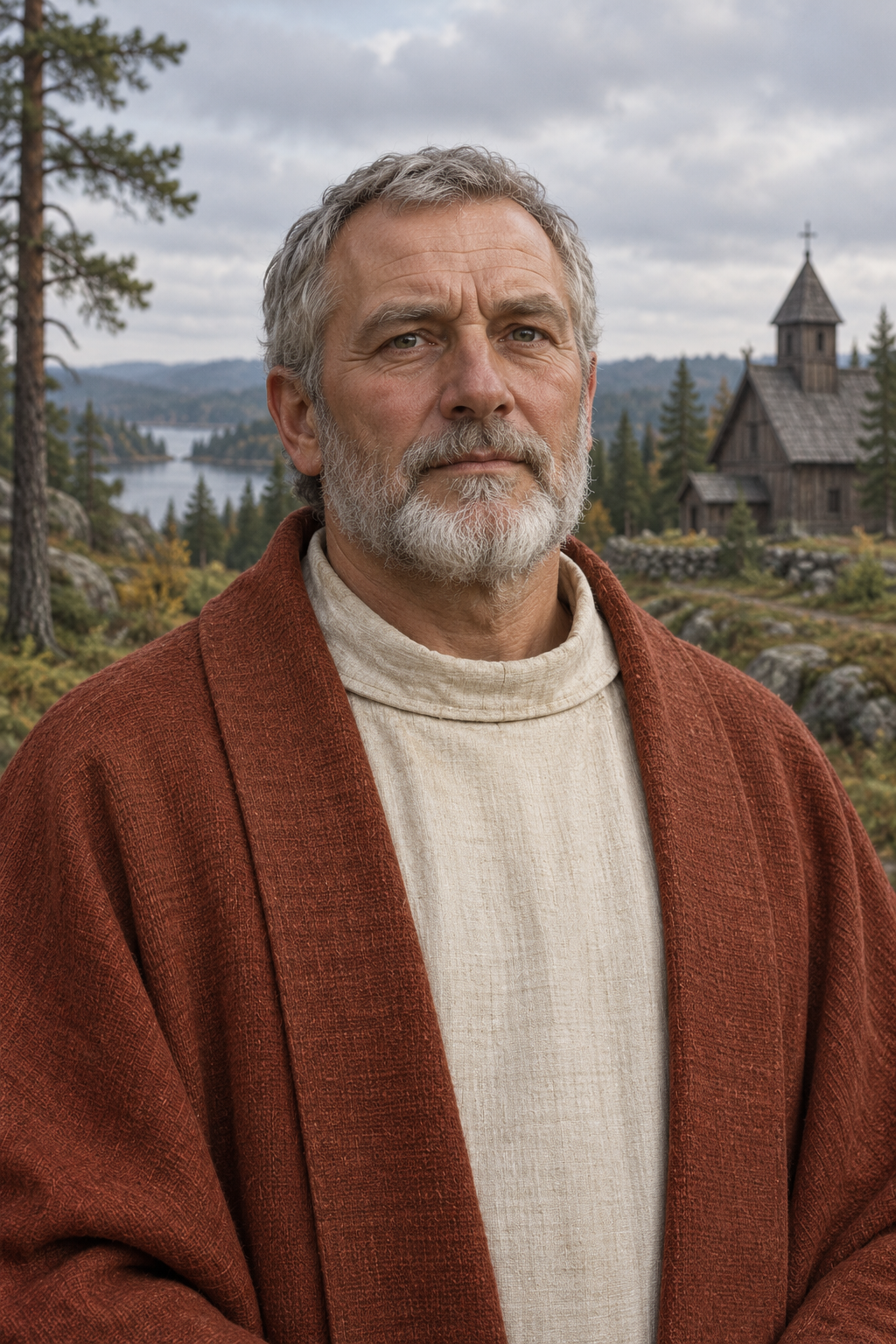
About Sigfrid of Växjö
Sigfrid is remembered as an English missionary bishop associated with the Christianization of Sweden in the eleventh century. The Church of Sweden’s account at Växjö distinguishes evidence for a missionary of that name from the much fuller stories later told about him. His connection with Växjö, including the tradition that he was buried there, remains possible rather than established.
The historical problem extends beyond conflicting dates. Per Einar Odden’s account for the Catholic Church in Norway notes that scholars have considered whether the surviving reports concern two or even three men. It also rejects the later claim that Sigfrid was archbishop of York. A single, detailed itinerary cannot safely be reconstructed from these traditions.
In Växjö’s legend, Sigfrid travels with three nephews, Unaman, Sunaman and Vinaman. An angel directs him to build a church. While he continues his journey, his companions remain behind and are killed. Light over a lake leads him to their remains. These are episodes in the saint’s medieval legend, not independently verified events.
The legend also served an institutional purpose. The Växjö account dates its earliest known form to around 1200 and describes it as a defense of the newly established diocese. Sigfrid became its patron saint. His remembered mission gave the younger institution a story linking it with Sweden’s Christian beginnings.
That connection does not make him the diocese’s first resident bishop. Writing for its anniversary, the historian Lars Aldén identifies Balduin, appointed around 1170, as the first bishop in that succession. He places Sigfrid instead in the diocese’s prehistory: a remembered missionary bishop whose work preceded the settled institution.
Aldén also follows the diocese through a later change of church allegiance. It belonged to the Roman Catholic Church until the sixteenth-century Reformation, after which it became part of Sweden’s Evangelical Lutheran Church. The continuing use of Sigfrid’s name in diocesan memory spans that division.
The Swedish National Historical Museums records Sigfrid as a bishop and confessor, commemorated on February 15. Its account notes two rhymed liturgical offices composed in his honor. His familiar artistic attribute is a vessel containing three heads, recalling the story of his companions. The museum also identifies him as co-patron of Växjö Cathedral alongside John the Baptist.
His reputation extended beyond Växjö. Odden records a national patronal celebration from 1474 and describes the February feast as Sefframäss or Siffermäss, a name also attached to a local annual market. The evidence for his medieval commemoration is more secure than the proposed dates of his life. Those dates, and the disputed claim of a twelfth-century papal canonization, are therefore left open here.
Wondering how to weigh the stories and sources? Learn how to read a saint biography.