Biography
Simon Kim Gang-i
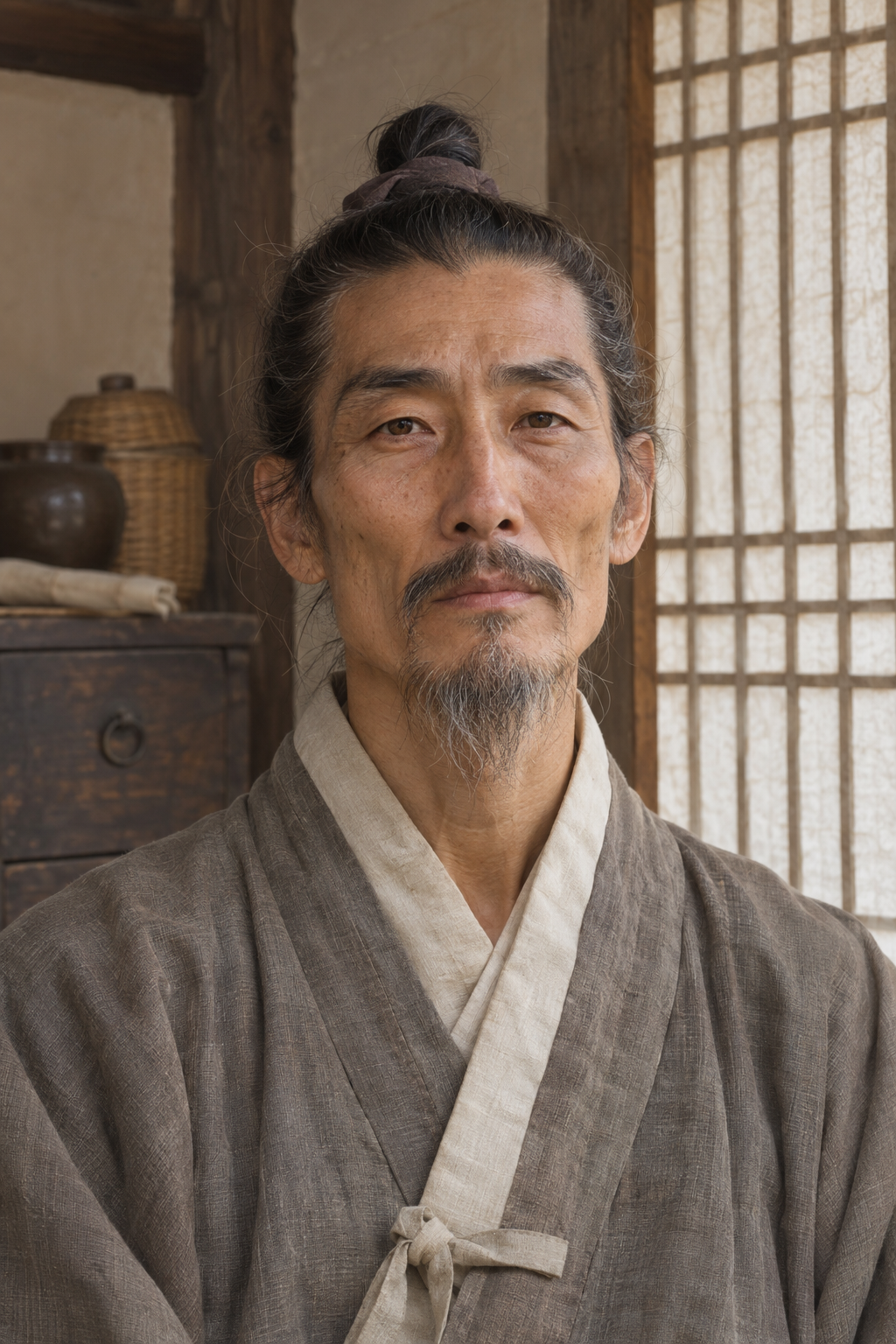
About Simon Kim Gang-i
Simon Kim Gang-i came from a prosperous jungin family in Seosan, Chungcheong-do. He became a Catholic as an adult, before the arrival of the Chinese priest James Zhou Wen-mo. His younger brother, Thaddeus Kim Chang-gwi, shared his new faith. The brothers left their property behind and moved away from their hometown to Gosan in Jeolla-do. Simon was remembered there as a prominent Catholic leader, whose commitment grew through contact with the priest.
The older encyclopedia estimates his birth around 1755, a decade earlier than the current bishops’ estimate. Neither account supplies a complete birth date. The uncertainty does not establish a precise age at his conversion.
Among Catholics he was also known by the name Yeo-saeng.
When Zhou visited Gosan in the early summer of 1795, Simon repeatedly went to the place where he was staying. He received the sacraments and learned Catholic doctrine from him. His instruction thus continued after his first conversion. The priest’s arrival gave him access to sacramental life in the community where he and his brother had settled.
Historian Yeo Jin-cheon traces Simon’s instruction to the Catholic Kim Jong-ak and notes that he also accompanied Zhou on several occasions. The connections continued through his own teaching and the village communities he helped establish.
In 1801 the authorities sought Simon as a leader of the Catholics. He escaped their search, but his wife was arrested. Cha Ki-jin records that she remained in prison for a year and obtained release only after money was paid. The family’s move to Gosan had not sheltered it from the persecution. While Simon was travelling and hiding, his wife was held by the same officials who wanted to find him.
To support himself and conceal his movements, Simon became a travelling merchant, carrying goods on his back. He continued teaching the faith while going from place to place. His work brought him into contact with people who became Catholics. Eventually he sought a more settled life and moved to Meorusan in Jinbo with several of these new believers. Together they formed a small Catholic village, maintaining their religion away from the communities they had left.
Oh Se-taek describes Simon looking for somewhere to farm after the persecution subsided. He settled in Meorusan, then moved again through several places before making his home in Uljin. Uljin then belonged to Gangwon-do, an important detail in his later transfer between prisons. Simon’s repeated changes of home linked Catholic households across provincial boundaries; the people who accompanied him were fellow believers as well as families seeking somewhere to live.
An informer who had formerly been his servant identified him during the persecution of 1815. Simon was arrested with his brother and his nephew Andrew Kim Sa-geon and taken to Andong. Officers seized his property. In custody he found other Catholics suffering from hunger, and he approached the local official to ask for the return of what had been taken. The official agreed. Simon distributed the recovered possessions among the hungry prisoners. Oh singles out both the unusual restitution and Simon’s decision to share it: he used the property to relieve the people confined around him.
After questioning at Andong, Simon and Thaddeus were sent to Wonju, the administrative centre of Gangwon-do. Cha explains their transfer by the custom of trying prisoners in the province where they had lived. More interrogation and punishment followed. Thaddeus eventually renounced the faith and was exiled. Simon did not follow him. Their paths, joined when they had left Seosan together, now separated in the provincial prison.
Thaddeus was sent to Boseong in Jeolla-do. The brothers were therefore separated not only by their decisions under questioning, but by exile and continuing imprisonment.
Simon’s nephew Andrew, the son of Thaddeus, had accompanied his father and uncle through the successive moves to Gosan, Meorusan and Uljin. After release from the first arrest, he continued his Catholic life. He was arrested again in 1827 and remained a prisoner for years, carrying the family’s history into another persecution.
Repeated punishment left Simon severely wounded. Dysentery further weakened him until he could scarcely move. He had been sentenced to death, but the sentence was not carried out: he died in the Wonju prison. The current bishops’ biography gives December 5, 1815, explicitly identifying November 5 as its lunar date. Its estimate of his birth is about 1765; no precise birthday is recorded.
Simon’s family history continued beyond his death. Seo Jong-tae identifies Vincent Kim Yang-beom and Philip Kim Seon-haeng as his second son and grandson. Both later lived at Geodeori and served a priest as assistants. During the renewed persecution they fled; Philip was arrested and killed in Suwon in 1867. Vincent was arrested that year while visiting his daughter-in-law and also died after punishment in Suwon. Simon’s descendants thus appear in the histories of another generation of Catholic communities and imprisonment.
Wondering how to weigh the stories and sources? Learn how to read a saint biography.