Biography
Simon Kim Gye-wan
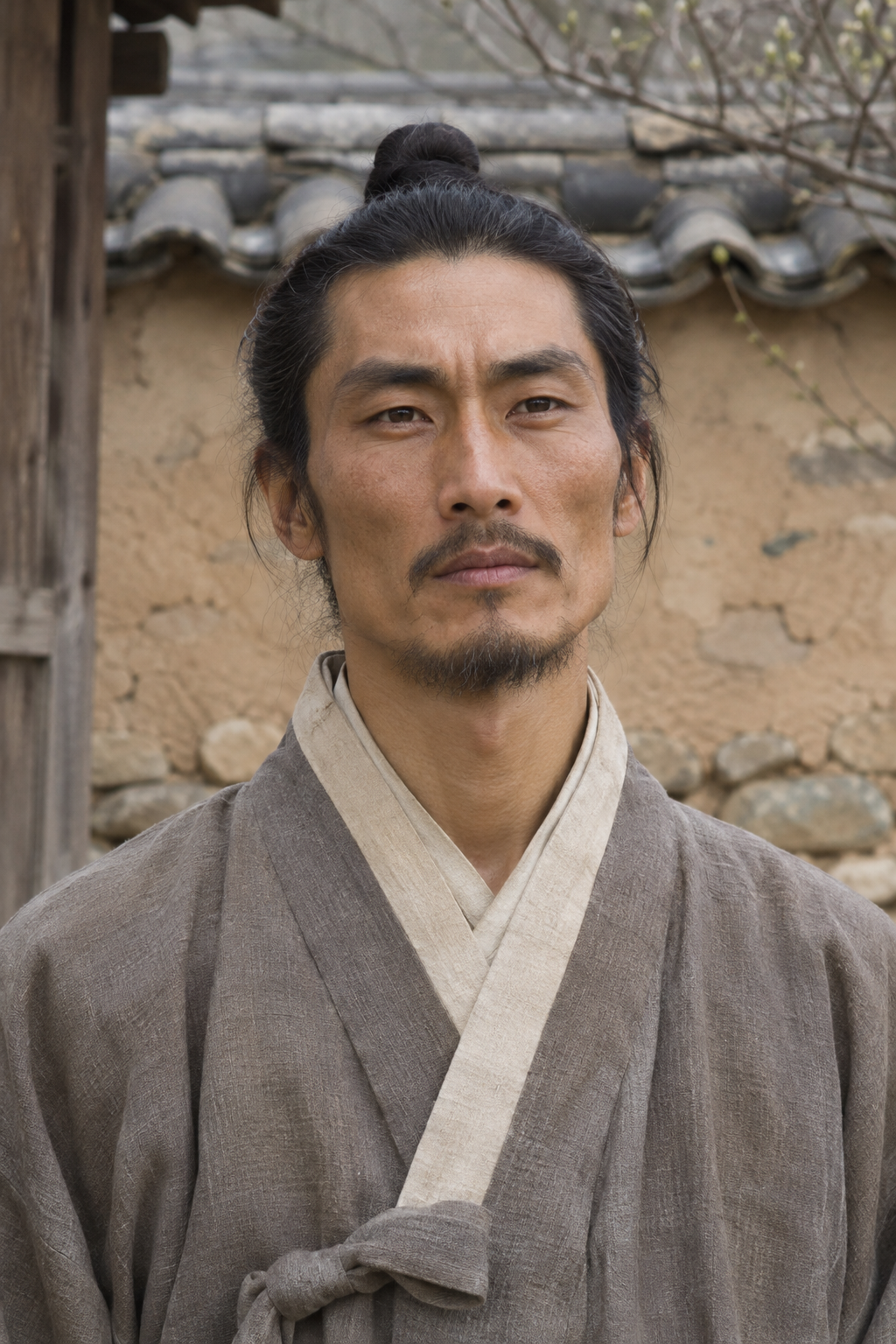
About Simon Kim Gye-wan
Simon Kim Gye-wan lived in Seoul, where he operated a pharmacy. In 1791 Thomas Choe Pil-gong gave him Christian books to read. Their teaching persuaded him to become a Catholic, and John Choe Chang-hyeon baptized him. Arrested during the persecution that year, Simon weakened and was released. He afterwards returned to his faith.
After Father James Zhou Wen-mo arrived, Simon helped arrange the priest’s lodging. He studied with fellow believers, received the sacraments and assisted Zhou in his ministry.
Yeo Jin-cheon’s account names several people with whom Simon practised his faith: Choe Chang-hyeon, Augustine Jeong Yak-jong, Alexis Hwang Sa-yeong, Anthony Yi Hyeon and Yi Hap-gyu. Yeo also records two occasions when Simon met Zhou at Jeong’s house and received instruction. These named meetings place him among the Catholics who kept teaching and worship possible across different households.
Jeong Min identifies Simon’s pharmacy as being in Yangdaejeondong. He reports that Simon contributed one hundred nyang towards the house Philip Hong Pil-ju obtained for the priest, alongside gifts from other Catholics.
Many of the people who helped keep this part of the Seoul church together lived by a trade. Jeong Min traces a community near the Small West Gate that included employees of the government storehouses and a family that sold straw sandals. He identifies Simon and Yi Hap-gyu as two of the leading Catholics outside the aristocracy. When reconstructing the households that met near the gate, however, Jeong can give only a tentative identification for a man known simply as Kim. More is known of Simon’s friendship with Yi than of his presence at every gathering held by Yi’s relatives.
When Choe Pil-gong was arrested late in 1800, Simon hid at Juliana Kim Yeon-i’s home. The following year searches forced him to move again. Historian Jeong Min reconstructs a period when Simon, Yi Hap-gyu and Hwang Sa-yeong sheltered together under Columba Kang Wan-suk’s direction. He identifies Kim Baek-sim and Kim Sim-won as names for the same Simon, explaining why the records can appear to describe different men.
Jeong follows the three men from Juliana’s house into the hills near Samcheongdong and then to another Catholic home, whose frightened owner refused to shelter them. They separated. The historian notes differences in dates and movements among their statements. His reconstruction conveys their precarious circumstances without establishing an exact itinerary that every witness reported alike.
The Ministry later named Jeong Yak-jong, Hwang Sa-yeong and Yi Chu-chan as Simon’s associates. It treated his borrowing books from Thomas as evidence against him and recorded his Christian name as Seoman.
Even the surname in one account of Simon’s trial needs care. The first volume of the Sahakjingui gathered examinations and judgments concerning thirty-seven people condemned during the persecution. These papers preserve details of the police and ministry proceedings that have not survived in other records. In the section where one would expect to find Kim Gye-wan, the text calls the prisoner Hyeon Gye-wan. The Catholic Encyclopedia identifies this as a copying error. Counting the two names as different prisoners would lose the connection between the surviving testimony and the Seoul pharmacist who gave it.
Simon’s elderly father was arrested while he remained in hiding. The official account says Simon was captured while trying to obtain news of his family. Questioned at the police bureau and Ministry of Punishments, he continued to profess his faith. He was beheaded on January 29, 1802. The bishops leave the execution place uncertain between the Small West Gate and Saenamteo.
In his study of Saenamteo, Yang In-seong describes a low stretch of sand near the Noryang ferry on the north side of the Han River. He explains that official records often refer to it simply as the sand ground. Yang cites Bang Sang-geun’s identification of Simon, Anthony Hong Ik-man and Gervase Son Gyeong-yun among the prisoners executed there. This later research supports Saenamteo as one proposed location for Simon’s death.
His Christian name also traveled beyond Korea. Jeong Min found it in the letter Korean Catholics sent to the bishop in Beijing and the pope in 1811. The Korean form Sim-won could pass as an ordinary personal name. In the letter the writers used the characters for Kim Seo-man instead. In Jeong’s reading this choice let readers in China recognize the baptismal name Simon. A man whose movements had once been difficult even for the authorities in Seoul to trace could thus be named for fellow believers who spoke another language.
For a painting commemorating Simon, Tak Hui-seong chose the arrest of his father. Two officers flank the older man outside a tiled house. A third figure kneels nearby as they take him away. Reproduced in the Jeonju diocesan bulletin, the scene gives the father a place at the center of a story usually told through his son. It recalls what sent Simon out from hiding to look for news of his family.
Wondering how to weigh the stories and sources? Learn how to read a saint biography.