Biography
Simon Stock
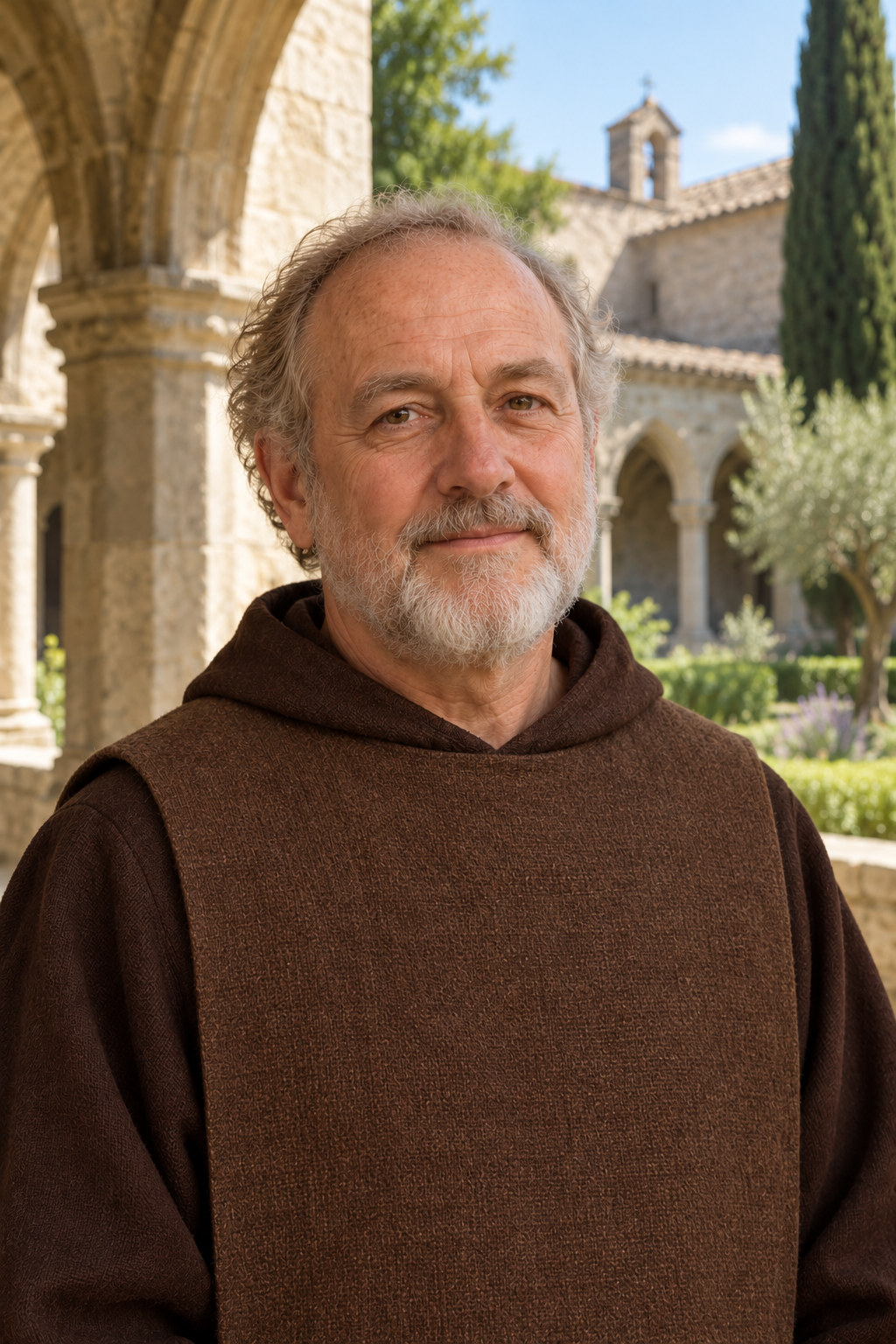
About Simon Stock
Simon Stock is remembered as an early leader of the Carmelites, at a time when their communities were adapting from a hermit’s way of life to that of mendicant friars. The Spanish Carmelite province places his possible election at the general chapter held in London in 1254. The date remains a possibility rather than a secure starting point for his leadership.
The surviving evidence supports only a sparse biography. Adrian Staring’s account in the New Catholic Encyclopedia points to fourteenth-century records supporting his English origin, service as prior general, death and reputation for holiness. It rejects the familiar claim that he became general in 1245 or 1247: another man, Geoffrey, held the office in 1249. The change to the Carmelite rule in 1247 therefore cannot simply be credited to Simon.
A distinction between the man and the stories attached to him is central to Richard Copsey’s study. Reviewing modern Carmelite scholarship, Copsey finds reasonable grounds for a holy prior general who died at Bordeaux and whose tomb became a center of local devotion. He argues, however, that the story of a holy Simon receiving a vision developed separately before being joined to the prior general’s biography. That reconstruction is a scholarly argument, not a point on which every historian he discusses agrees.
His death is associated with Bordeaux, but its year is disputed. The Spanish Carmelite province gives 1261, while Staring gives 1265.
The familiar devotional account tells of Mary giving Simon the Carmelite scapular. The Province of Saint Elias presents the episode as tradition and explains the garment as a sign of belonging to Mary and following Christ. The scapular worn as part of the religious habit is a long garment; the smaller form commonly worn by lay people has two cloth panels joined over the shoulders.
Copsey’s study traces the expansion of the story through late medieval Carmelite writing. It also examines purported testimony attributed to Simon’s secretary, Peter Swanyngton, which was circulated in the seventeenth century. Those fragments were exposed as forgeries. They cannot establish the vision as a documented event in Simon’s life.
The Spanish province likewise acknowledges the limited historical evidence for the vision. It explains the scapular as a sacramental expressing trust and a commitment to service, rather than an object with magical power. In that interpretation, the tradition calls its wearers to attend to their neighbors’ needs.
Simon’s feast is May 16. Staring records that several Carmelite houses observed it during the Middle Ages and that the whole order adopted it in 1564 with Vatican approval. He distinguishes this recognized devotion from a formal canonization, which he says did not occur. Stories of Simon living in a hollow tree belong to the later legendary biography.
Wondering how to weigh the stories and sources? Learn how to read a saint biography.