Biography
Stanislaus Han Jeong-heum
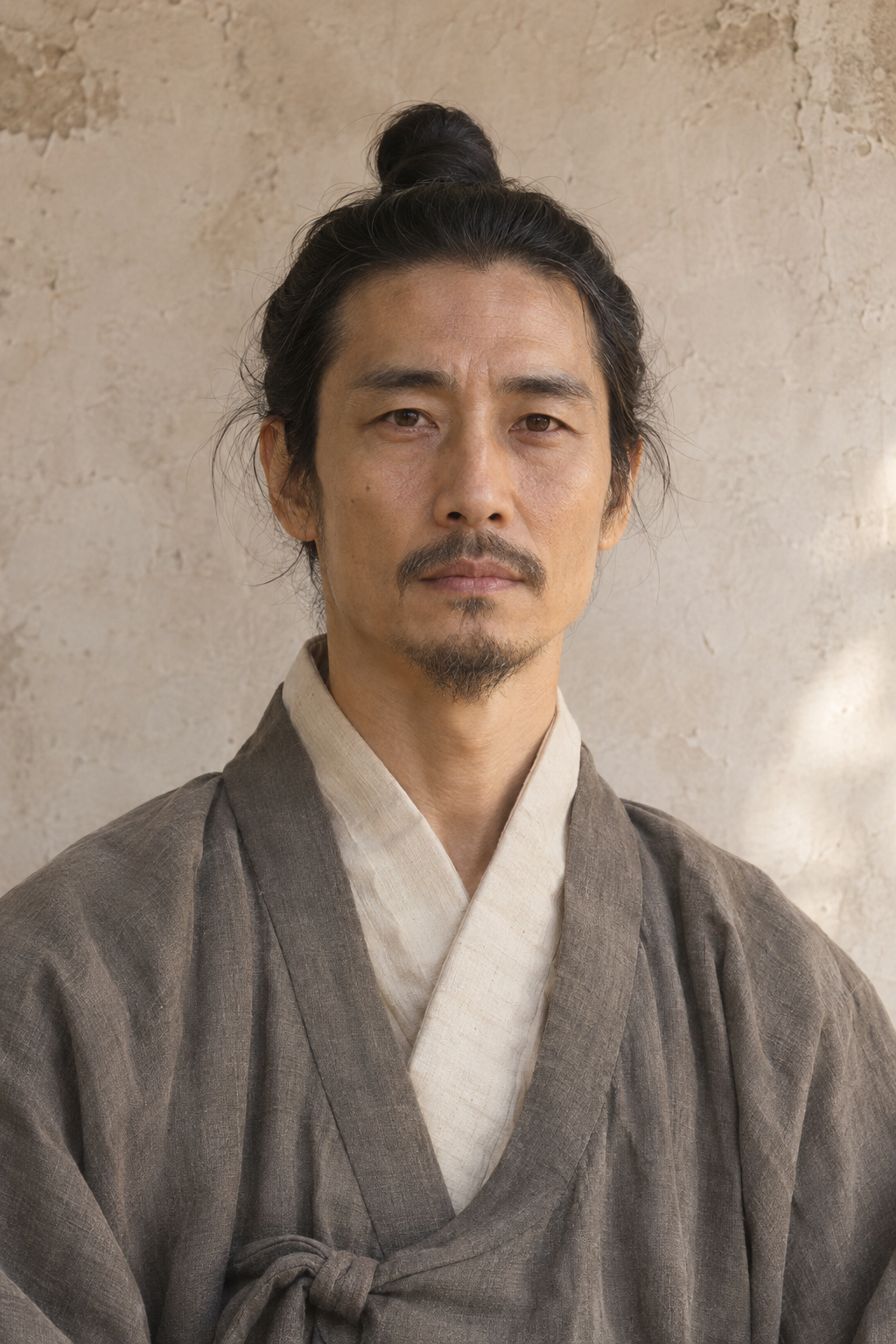
About Stanislaus Han Jeong-heum
Stanislaus Han Jeong-heum grew up in Gimje in Jeolla Province. Though his family belonged to the yangban, the Korean gentry, it was poor. As an adult he went to live in the household of a distant relative, Augustine Yu Hang-geom, near Jeonju. Stanislaus taught the children. Augustine, in turn, introduced their tutor to the Catholic faith.
The Korean Catholic Encyclopedia places his reception of the sacraments during James Zhou Wen-mo’s visit to Jeonju in 1795. It also records his rejection of ancestral rites in accordance with the Catholic teaching he had accepted.
A modern study of the local pilgrimage sites follows his role as a tutor more closely. Priest and historian Lee Yeong-chun identifies the Chonam community as the setting of his work alongside Augustine. Lee considers it likely that his pupils included John Yu Jung-cheol, John Yu Mun-seok, their cousin Matthew Yu Jung-seong and the later exile Yu Seom-i. This wider pupil list is a reasoned reconstruction of the household, rather than a surviving school register.
During the persecution of 1801, Stanislaus was arrested with Augustine and taken to the provincial authorities in Jeonju. The received account says he resisted repeated interrogation and punishment. Andrew Kim Cheon-ae and Matthias Choe Yeo-gyeom were imprisoned with him. The encyclopedia remembers their companionship before the men were sent to Seoul for further questioning.
Their imprisonment brought people with different histories into the same investigation. Authorities were examining a proposal to seek help from abroad by bringing a Western ship to Korea. Augustine and several others were questioned about that proposal. The diocesan history distinguishes Stanislaus from those accused of arranging it. His association with Augustine explains why the two men appear together in accounts of the arrests. It does not establish his participation in the appeal for a ship.
Andrew Kim had served in Augustine’s household, where Stanislaus had taught. Matthias Choe had been brought from another district after his own arrest. Father Yeo Jin-cheon’s account describes the three prisoners encouraging one another. It also distinguishes an initial order to put them to death, dated the sixteenth day of the fifth lunar month, from the later order directing that they be sent home for execution. They remained in custody between the two decisions.
In Seoul the prisoners were questioned at police headquarters and then by the Ministry of Punishments. The Diocese of Jeonju recalls that Stanislaus refused to plead for his life. The same proceedings determined the fate of all three men, but they parted before the sentences were carried out.
On August 21, 1801, the Ministry of Punishments condemned them and ordered their return to their own districts for execution. Stanislaus was taken back to Gimje and beheaded on August 26. The Church’s biography gives his age as forty-five.
The precise execution spot is less secure than the town in which he died. Lee’s 2025 account says no record identifies the spot and regards the former prison or marketplace as probable locations. It distinguishes this reconstruction from the later shrine at Yochon Church, nearby. Bishop Kim Seon-tae proclaimed and blessed the Gimje martyr shrine there on August 27, 2023. The memorial preserves a local connection with Stanislaus without establishing an exact place where his execution occurred.
At the request of the parish in Yochon, the Diocese of Jeonju reconsidered the name by which pilgrims knew the place. The earlier designation identified it as the Gimje magistrate’s execution ground. After consultation with priests who studied the region’s church history and review by the priests’ council, the diocese adopted a simpler name, the Gimje Martyr Shrine.
Wondering how to weigh the stories and sources? Learn how to read a saint biography.