Biography
Stephen Harding
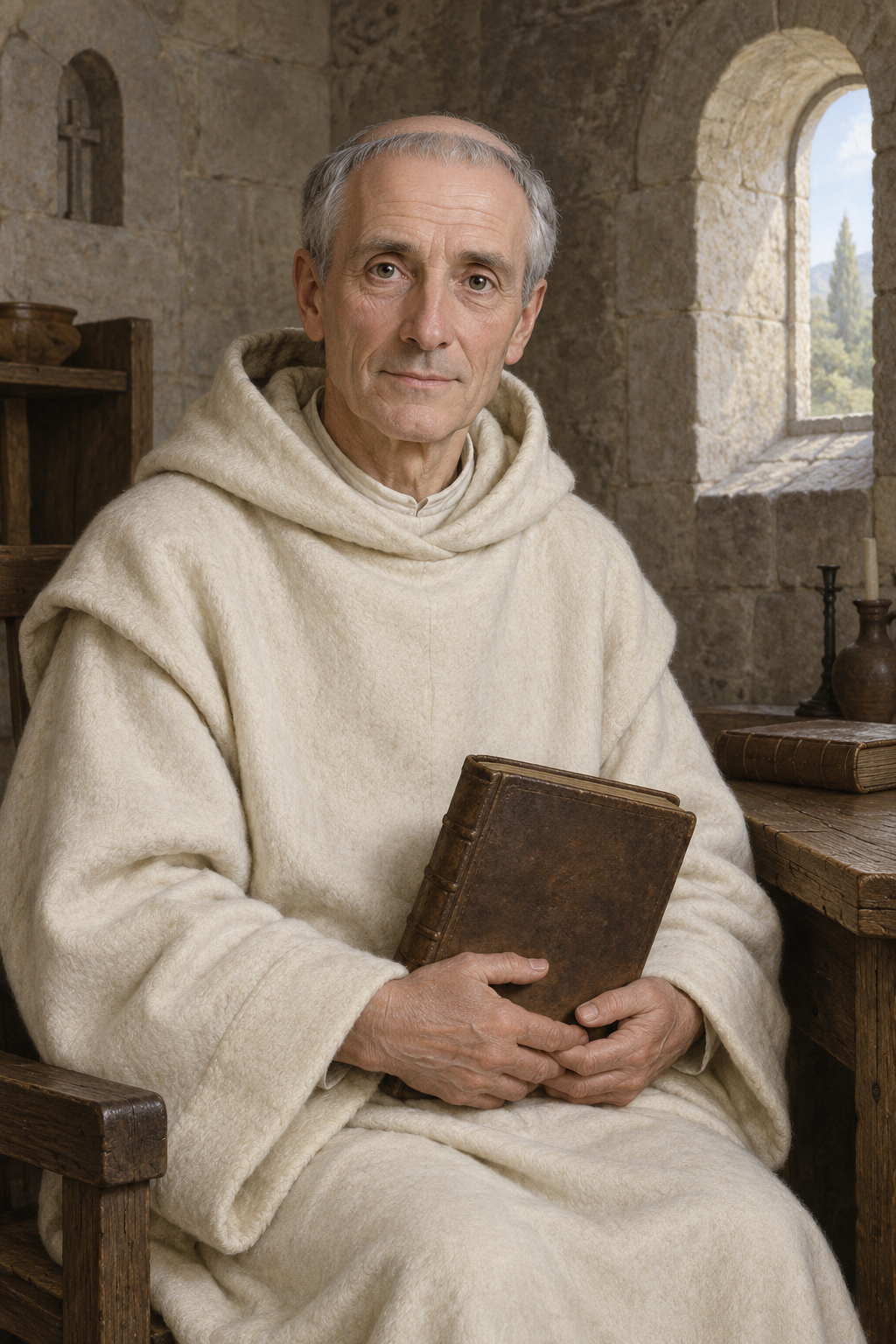
About Stephen Harding
Stephen Harding was an English monk whose work at Cîteaux helped turn a small religious community into a growing family of monasteries. His early life is less certain than his later responsibilities. He was educated at Sherborne in Dorset, but the details of his family are unknown. Travel took him to the continent and to Rome before he joined Robert’s community at Molesme in Burgundy. The attraction was a life of prayer, poverty and work shared with others.
At Molesme, Stephen became one of the supporters of a stricter observance of the Rule of Saint Benedict. The monks who sought this change were not simply looking for a new residence. They wanted their daily life to correspond more closely to the vows they had made. Gilbert Huddleston’s account places Stephen among the group that left with Robert for Cîteaux. When Robert returned to Molesme, Stephen served under Alberic before eventually succeeding him as the third abbot.
The early Exordium Cistercii remembers the foundation in 1098 as a common undertaking supported by church authorities and the duke of Burgundy. Robert’s return to Molesme did not end it. Alberic continued the work, and Stephen followed him. The narrative describes a community worried that its demanding way of life would attract no successors. It then recalls the arrival of a large group of novices, including clerics and laymen. Its account gives growth a religious meaning: what had seemed a fragile beginning became a source of new communities.
Bernard of Clairvaux and his companions became part of that growth in the early 1110s. New houses included La Ferté, Pontigny, Clairvaux and Morimond. Stephen’s responsibility therefore expanded beyond the needs of one cloister. The new monasteries required a way to remain united while their own abbots governed their daily affairs. The Charter of Charity and the system of chapters and visitations addressed that problem. Papal approval came in 1119.
The Exordium associates Stephen with the preparation of the Charter as the community began to send out new foundations. It presents the document as a means of preventing division and protecting mutual peace. That purpose matters as much as the growth in numbers. A group of monasteries could share an origin yet gradually lose a common direction. The early account sees deliberate arrangements for unity as part of the founder’s care, rather than a distraction from prayer. The narrative also records approval by the abbots and apostolic authority, showing that the arrangement involved wider consent.
The Charter survives in more than one form. In the later recension represented by the Dallas abbey’s excerpt, the language begins with a refusal to enrich one house at the expense of another. Daughter communities are not to be burdened with material exactions for the mother house’s benefit. Spiritual responsibility remains: communities are to help one another keep their purpose and observance. This received text expresses a relationship of care within a shared religious discipline. It should not be mistaken for a surviving manuscript written entirely by Stephen himself.
The same passage connects unity with practical details. Monks moving between houses should encounter a common understanding of Benedict’s Rule, similar chant, suitable books and shared usages. These arrangements were intended to prevent discord in everyday actions. Charity required attention to how people actually prayed and lived together. Agreement over books and customs thus formed part of a larger effort to make common life possible across distance.
Stephen’s concern for books also appears in the Bible associated with his name. Alessia Trivellone’s study explains that a notice dated 1109 records his work to correct the Latin text. He compared available copies and consulted Jewish scholars about the Hebrew scriptures. The manuscript was completed in stages, with the second original volume finished by 1111. This was learned work directed toward the community’s religious life. A medieval marginal instruction shows that part of the Bible was read during meals.
The surviving books also complicate an image of early Cîteaux as concerned only with bare simplicity. The Bible contains elaborate illumination. Trivellone treats this artistic effort as evidence of the community’s ideals and notes that narratives of extreme early poverty require qualification. Its production involved more than one scribe and illuminator. The book was a shared achievement of the abbey’s workshop, rather than proof that Stephen personally painted every image.
The CNRS manuscript catalogue identifies the surviving Latin volumes at Dijon and dates the fourth volume to around 1109–1111. Its association with Cîteaux provides a material link to the scholarly and devotional work of Stephen’s community. The manuscripts preserve more than a later recollection of his name.
Old age and failing sight led Stephen to withdraw from leadership in 1133. He died on March 28, 1134. The Cistercian tradition remembers him with Robert and Alberic as one of its three founders, whose different responsibilities helped sustain the same undertaking.
Wondering how to weigh the stories and sources? Learn how to read a saint biography.