Biography
Stephen Pongrácz
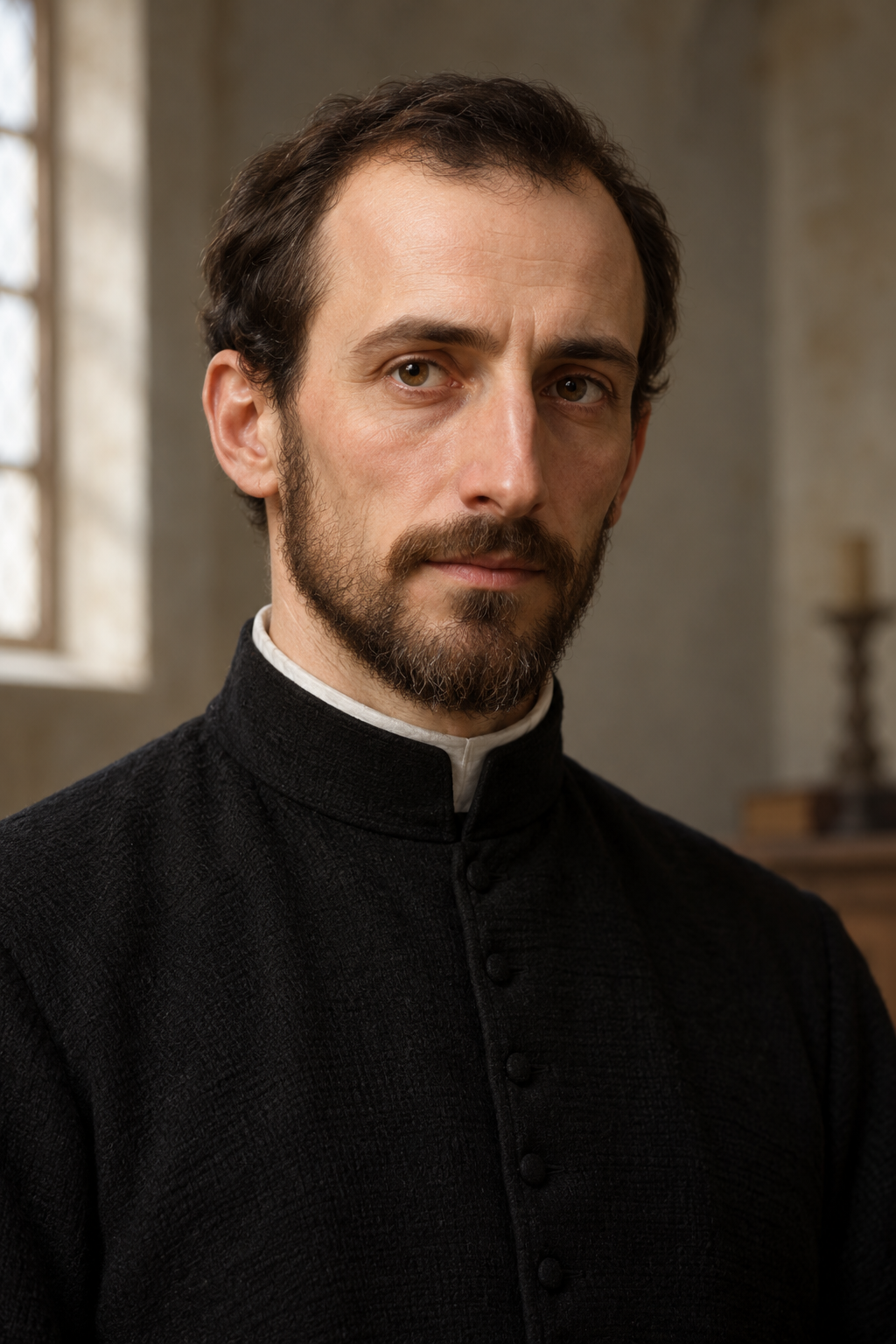
About Stephen Pongrácz
Stephen Pongrácz came from a Hungarian noble family in Transylvania. He studied at the Jesuit college in Cluj before entering the Society of Jesus at Brno in 1602. Philosophy studies in Prague and theology in Graz prepared him for the priesthood. He then served at the college in Humenné, where his responsibilities included overseeing studies and preaching. The Vatican biography places his appointment to Košice in 1619, as chaplain to imperial Hungarian troops and to the city’s Hungarian Catholic civilians.
The Hungarian Jesuit archives fill in some of the years between his entry and his final assignment. After philosophy in Prague, he spent 1608 reviewing his studies at Laibach and substituting for teachers when needed. From 1609 to 1611 he taught at Klagenfurt and worked as a librarian. His theological studies at Graz occupied 1612–1615, and he was ordained in 1615. The same record places his preaching and school leadership at Humenné in 1616–1618. It also records that he and Mark made their annual spiritual retreat together in July 1619, before the city’s capture.
His work in Košice was shared with another Jesuit, Melchior Grodziecki. Tom Rochford’s account distinguishes their pastoral responsibilities by language: Pongrácz served Hungarian speakers, while Grodziecki worked among Slavic-speaking Catholics and Germans. The small Catholic community had needed priests, and the king’s representative had requested their help. Their ministry took place in a city where Calvinism predominated and where military allegiance and religious identity were closely connected.
When an army supporting Gabriel Bethlen, prince of Transylvania, advanced on Košice, the two Jesuits returned from work in surrounding towns. They were joined by Mark Križevčanin, a diocesan priest. After soldiers took control of the city in September 1619, the three were confined. Rochford’s account describes soldiers demanding that they abandon Catholicism. When they refused, they were tortured; Pongrácz survived the initial assault but died afterward.
The church accounts agree on the violent death of the three priests, but do not present every detail in the same way. The local archdiocesan history places the assault during the night of September 6–7 and describes the public reaction to the bodies being discarded. It remembers indignation at the treatment of the priests and the beginnings of devotion to them. Later, their remains were recovered for a more dignified burial through the intervention of Katarína Pálfyová.
The Vatican biography reports that the killings also distressed members of the Protestant population. It records Cardinal Péter Pázmány’s early efforts toward recognition of the martyrs and their eventual beatification in 1905. These details distinguish the actions of the killers from the response of every person belonging to their religious community.
John Paul II canonized Pongrácz and his two companions at Košice on July 2, 1995. In his homily, he praised the Hungarian Jesuit’s service and refusal to surrender his faith under coercion. He also honored Christians of other confessions who had suffered violence, specifically recalling the evangelical victims killed at Prešov. The occasion was framed as a rejection of religious violence and an invitation to respect conscience, rather than a renewal of the divisions in which the priests had died.
The same homily connected the three martyrs’ different national backgrounds with a contemporary need for mutual understanding. John Paul II urged friendship and cooperation, particularly between Slovaks and the Hungarian minority, and respect for the rights and duties of both majorities and minorities. Their shared remembrance was presented as a reason to strengthen relationships across inherited divisions.
The Archdiocese of Košice commemorates the martyrs on September 7. Its account identifies the site of their deaths with the sacristy of the present Premonstratensian university church, built by the Jesuits in their honor.
The archdiocese names the three martyrs as its co-patrons alongside its principal patron, the apostle Andrew.
Wondering how to weigh the stories and sources? Learn how to read a saint biography.